

The Purity of the Gospel

In a world full of noise, opinions, and ever-changing values, the Christian gospel stands as a clear and unwavering beacon of truth. Its message is simple, yet profound: salvation by grace alone, through faith alone, in Christ alone. The purity of the gospel is not something we invent or evolve—it is something we receive, guard, and proclaim.

I realize some who read this may not know exactly what the gospel is. At its core, the gospel is the good news that God, in His love and mercy, took on human form in the person of Jesus (Colossian 2:9), walked among us (John 1:14), lived a perfect life knowing that no person ever could (2 Corinthians 5:21), allowed humanity to hang Him on a cross to be a sacrifice for our sins (Romans 5:8), was buried and rose from the dead three days later (1 Corinthians 15:3-4), giving us the hope of new life and a future resurrection. This message is not about human achievement or moral performance. It’s about divine intervention—God doing for us what we could never do for ourselves. It is unearned, undeserved, and freely given.

The gospel is pure, and holy, and beautiful. And that is why everyone needs to hear it. It does, however, pact a punch. The gospel requires we take a hard and accurate view of ourselves, our needs, our shortcomings, our brokenness, and our sin. Only then can we see the beauty that is the gospel.

When we dilute or modify the gospel—adding works, subtracting grace, changing who Jesus is, softening the reality of sin, or removing the need for repentance—we rob it of its saving power. A compromised gospel may feel more comfortable or inclusive to some, but it cannot save anyone. We have to fight the desires for what is “good in our own eyes” and embrace what is actually good for us. Humility. Embracing grace. Accepting God’s love. Allowing Him to transform us more and more into His own likeness. That is when we become the best version of ourselves. That is when we experience the deepest joys and peace that every soul searches for.

The gospel’s purity is what makes it powerful. It tells the hard truth about sin but offers the glorious truth about redemption. It doesn’t offer self-help; it offers a new self in Christ.

Many voices today claim to speak for God. Some offer “prosperity,” “comfort,” or “love is love” as gospel substitutes, but these fall short of the cross. The true gospel does not promise comfort or success; it promises forgiveness, transformation, and eternal life through Jesus.

Jesus said, “I am the way, the truth, and the life. No one comes to the Father except through me” (John 14:6). That statement is both exclusive and inclusive—exclusive in that Jesus is the only way, but inclusive in that He invites all who will believe.

As followers of Jesus, we are called to preserve the purity of the gospel message, not tamper with it. Jude writes, “Contend for the faith that was once for all delivered to the saints” (Jude 1:3). The gospel is not ours to edit—it is God’s truth to trust, live out, and share. May we never lose sight of the beautiful simplicity and power of the gospel. In Christ alone, by grace alone, through faith alone—that is our eternal hope. And it can be yours too.

“He is the image of the invisible God, the firstborn of all creation. For by him all things were created, in heaven and on earth, visible and invisible, whether thrones or dominions or rulers or authorities—all things were created through him and for him. And he is before all things, and in him all things hold together. And he is the head of the body, the church. He is the beginning, the firstborn from the dead, that in everything he might be preeminent. For in him all the fullness of God was pleased to dwell, and through him to reconcile to himself all things, whether on earth or in heaven, making peace by the blood of his cross.”‬‬

Colossians‬ ‭1‬:‭15‬-‭20‬ ‭ESV

Peace in Christ brothers and sisters.

This is the Way part four

In this fourth part of the series, we look at the character of a believer when it’s tested by life’s pressures. That character is derived from the posture of one’s heart, which has been devoted to its Savior.

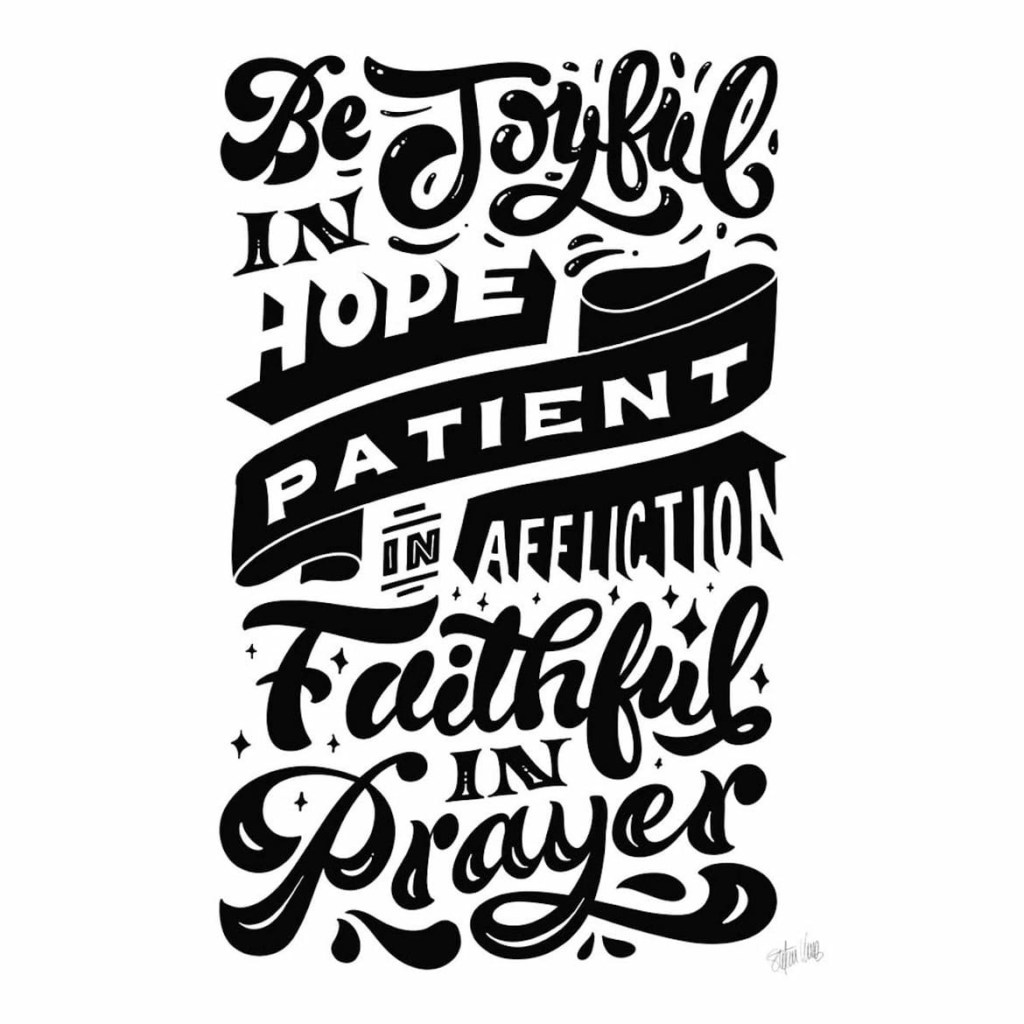
Be joyful in hope, patient in affliction, faithful in prayer.

Romans 12:12

Life doesn’t always unfold the way we envision it. Unexpected trials, long seasons of waiting, and moments of heartbreak can leave us disoriented. Yet in the middle of life’s unpredictability, Romans 12:12 offers a steadying reminder—a threefold call that aligns our hearts with God’s rhythm: hope, patience, and prayer.

Be Joyful in Hope

Hope is not mere wishful thinking. Biblical hope is rooted in the certainty of God’s promises. It’s not optimism based on circumstances but assurance anchored in who God is. Paul encourages us not just to have hope, but to rejoice in it.

Why joy? Because our hope is alive. It points beyond the temporary trials of today to the eternal glory that awaits. When we rejoice in hope, we’re acknowledging that God is still at work, even when we can’t see it. Our joy becomes an act of trust.

Be Patient in Affliction

Affliction tests our endurance like little else. Whether it’s grief, illness, anxiety, or injustice, suffering has a way of wearing us down. But patience in affliction doesn’t mean passive resignation—it means active endurance. It’s a quiet strength that says, “I will not give up, because I know God hasn’t given up on me.”

This patience is forged in the fire of faith. It’s a discipline that requires us to rely not on our own strength, but on God’s sustaining grace. In waiting patiently, we grow in character, empathy, and spiritual depth.

Be Faithful in Prayer

When the future is uncertain, prayer becomes our lifeline. Paul reminds us to be faithful in it—not just praying occasionally or when life gets hard, but making it a habit, a rhythm, a conversation that keeps us connected to the heart of God.

Prayer isn’t always about finding answers; it’s about finding God. It’s where we bring our fears, our doubts, our joys, and our confusion. And in return, we often find peace that transcends understanding.

Putting It All Together

Romans 12:12 isn’t just a single verse—it’s a spiritual posture. It teaches us how to live in the tension of “already, but not yet.” Already redeemed, but not yet restored. Already loved, but not yet home.

In a world full of chaos, this verse gives us a blueprint for peace: Hope anchors us. Patience steadies us. Prayer connects us. All of these helps us be a reflection of God’s light to a world in desperate need of hope.

Peace in Christ brothers and sisters.
This is the Way part three

Welcome to the third post about this wonderful journey of following Jesus and the path we devote ourselves to walking. The topic for today will hopefully convict those of us who have found complacency a companion and encourage those trailblazers to keep up the good work.

Never be lacking in zeal, but keep your spiritual fervor, serving the Lord.

Romans 12:11

This verse is a powerful call to action. In a world that often drains our energy and dulls our passion, Paul reminds us to keep our hearts burning with spiritual fire as we serve the Lord. Let’s take a closer look at what that means—and how we can live it out.

Never Be Lacking in Zeal

Zeal means energy, eagerness, and enthusiasm. It’s that excited drive that pushes us to do something with all our heart. Paul isn’t saying we’ll always feel energetic or joyful—he’s saying don’t let your fire die out.

Life has a way of wearing us down: routines get boring, challenges come, and our love for God and people can grow cold if we’re not careful. Paul’s challenge is to guard that spark, to stay spiritually awake and alert.

Ask yourself: Am I coasting through my faith, or am I still excited to grow, love, and serve?

Keep Your Spiritual Fervor

The word fervor comes from a Greek word that literally means “to boil.” Paul wants us to keep our spiritual lives hot—not lukewarm. This doesn’t mean fake emotional hype. It means staying alive in our relationship with God—regularly praying, reading the Word, worshiping, and staying connected to the Holy Spirit.

Spiritual fervor is not something we generate on our own. It’s the result of staying close to Jesus.

Serving the Lord

The purpose of all this energy and passion? To serve. Zeal and fervor aren’t just for our benefit—they’re meant to overflow into action. Serving God means loving others, using our gifts, showing up when needed, and living with purpose.

Passion that doesn’t serve becomes self-focused. But when we direct it toward God and people, we reflect Jesus—who lived with fire and poured out His life for others.

How to Stay Spiritually Ignited

Spend time in prayer and the Bible even when you don’t feel like it. Surround yourself with passionate believers who inspire you. Worship regularly—in private and with others. Use your gifts in your church or community. Remember your “why”—you’re serving the Lord, not people’s approval.

Romans 12:11 is a gentle yet urgent reminder: don’t let your faith go cold. Keep your spiritual fire alive. Stay passionate. Serve with joy. Because when we serve the Lord with zeal, we reflect His love and light in a weary world.

Peace, fire, and a passion for godliness, brothers and sisters.