Letting Jesus In

Recently my daughter prayed and asked Jesus to help her to let Him in. Keep in mind, she has already accepted Jesus as her Lord and Savior. But, as all followers of Jesus know, we have to continue to pursue that relationship the rest of our lives. I think this is what her precious 11 year old heart was searching for.

In this post I would like to present a picture of what it looks like to let Jesus in. From the beginning of the relationship to the end.

The Invitation

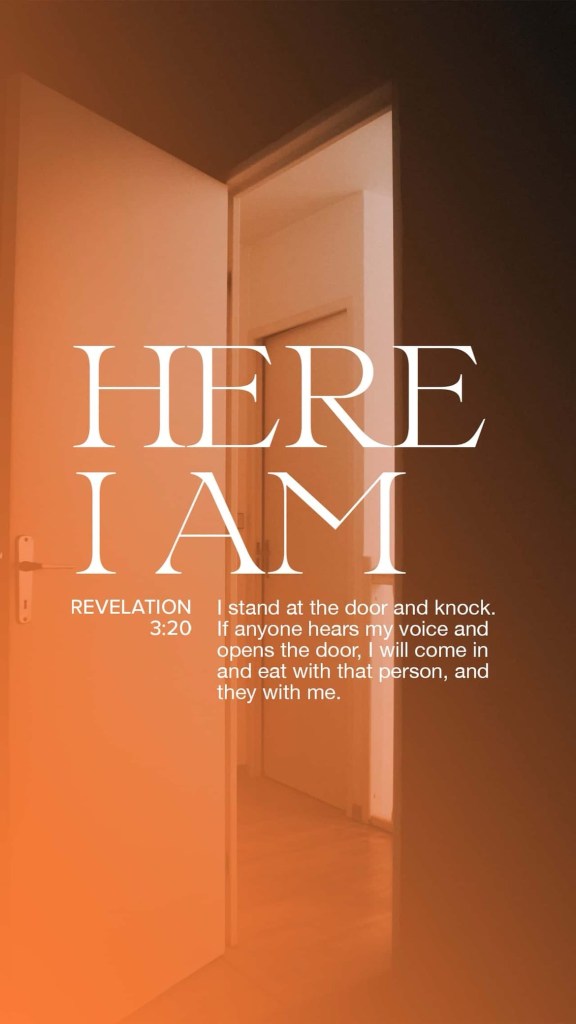
Here I am! I stand at the door and knock. If anyone hears my voice and opens the door, I will come in and eat with that person, and they with me.

Revelation 3:20

This powerful image shows Jesus as someone who initiates relationship, but waits to be welcomed in. Jesus never forces His way into our lives. Opening the door represents faith, surrender, and a desire for fellowship with Him.

Yet to all who did receive him, to those who believed in his name, he gave the right to become children of God.

John 1:12

Letting Jesus in means receiving Him—not just as a visitor, but as your Savior, King, and the center of your life. Believing in Him opens the door to being born again into God’s family.

If you’re like me, you have probably had to repeat this process more than once. I did at the age of 12, and was baptized. I did again at the age of 27 when my faith became of central importance. I have also had many moments since when I am disconnected and I hear Him knocking again. These aren’t salvation moments, I know I am saved and redeemed. These are sanctifying moments. Those reminders that I am not where I am meant to be in my headspace and heart. Those subtle, and sometimes not so subtle redirecting moments.

The Process

I will give you a new heart and put a new spirit in you…

Ezekiel 36:26

When Jesus enters your life, He doesn’t just visit—He renovates. He gives a new heart, replacing coldness or stubbornness with a heart that wants to obey and love Him.

To have found God and still to pursue Him is the soul’s paradox of love.

AW Tozer

Walking with Jesus means both finding and continually seeking Him—never settling for a distant relationship. Always wanting more. Always going deeper.

And we all, with unveiled face, beholding the glory of the Lord, are being transformed into the same image from one degree of glory to another. For this comes from the Lord who is the Spirit.

2 Corinthians 3:18

I think we can all agree that the Christian walk should be a progressive one in the sense that we are moving forward and upward and deeper. And it should also be transformative in the sense that we are more like Jesus in attitude, action, speech, and motivations the longer we know Him. Not to say that we won’t make mistakes or have our “moments”. But it should be a general upward and life altering change throughout life.

Nearness to God brings likeness to God. The more you see God, the more of God will be seen in you.

Charles Spurgeon

Every day should be a commitment to reflect on whether this is true in us.

The Commitment

I have been crucified with Christ and I no longer live, but Christ lives in me…

Galatians 2:20

Letting Jesus in is more than a one-time moment. It means allowing Him to live in you, shape your thoughts, and guide your actions. His presence becomes your source of strength and purpose. Letting Jesus in means surrendering to His Lordship (rulership, authority which overrides our own.) in Medieval times Lords controlled the land, your life, your freedom, your movement, your purpose. They also provided everything their vassals needed in food, land, and protection. Those were imperfect people and an imperfect system. But the analogy works in many ways. Our Lord is not a despot. His heart is for the flourishing of His people. Far too often, I afraid, we treat Jesus as a guest to be entertained or invited in when we need Him. But He is owed so much more.

For by him all things were created, in heaven and on earth, visible and invisible, whether thrones or dominions or rulers or authorities—all things were created through him and for him. And he is before all things, and in him all things hold together.

Colossians 1:16-17

Jesus deserves to be the captain of your ship because He built the ship, maintains the ship, and owns the ship.

Discipleship is the process of becoming who Jesus would be if he were you.

Dallas Willard

A true walk with Jesus transforms your character to reflect Him in your unique life and context. Remember, our mission is to help bring His kingdom wherever we are and wherever we go. I tell my kids (and have to remind myself) all of the time that our sole purpose is to love God and make Him known. What better way to do that than to allow Him to steer our very motivations for life, love, purpose, relationship, and more?

Remain in me, as I also remain in you.

John 15:4

Letting Jesus in is ongoing. It’s not just a decision, but a relationship of remaining close to Him, hearing His voice, and living connected to His love every day. Abiding With Jesus is a Lifelong Commitment.

Letting Jesus in is ongoing. It’s not just a decision, but a relationship of remaining close to Him, hearing His voice, and living connected to His love every day. Abiding With Jesus is a Lifelong Commitment.

Francis Chan

There are very real pitfalls. Those of apathy…of distraction…misalignment…misjudgments…and the like. To let Jesus in is something we have to contend for, hold on to, and adamantly desire. The Christian life is just that, a lifelong lifestyle.

The Christian does not think God will love us because we are good, but that God will make us good because He loves us.

CS Lewis

It is imperative to remember that walking with Jesus is not about earning love but being changed by it. There is so much grace and so much love in the pursuit.

Peace in Christ brothers and sisters.
This is the Way part six

This is the sixth post in a series where we are looking at the gospel way. What it means to follow Jesus. Today’s may be the most challenging yet. It confronts every single one of us. We have all faced unkind and even hateful people. So did Jesus. And He calls us fi respond just like He did.

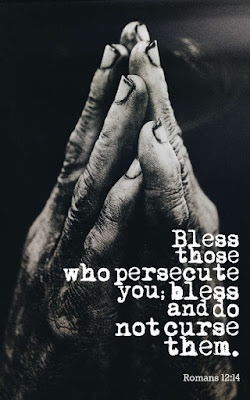
Bless those who persecute you; bless and do not curse.

Romans 12:14 (NIV)

This verse doesn’t come naturally. In fact, it might be one of the hardest commands in Scripture. Our instincts cry out for justice—or at the very least, distance—when we are wronged. But Paul, inspired by the Spirit, challenges us to respond in a radically different way: with blessing.

A Countercultural Command

In a world that praises revenge, canceling, and self-protection, blessing our enemies seems foolish. Yet Paul’s instruction echoes the very words of Jesus:

“Love your enemies and pray for those who persecute you.” (Matthew 5:44)

The way of Christ isn’t about repaying hurt with more hurt. It’s about overcoming evil with good (Romans 12:21). When we bless someone who has wounded us, we are not approving their actions—we are rising above them. We are choosing mercy over bitterness, grace over retaliation.

What Does “Bless” Really Mean?

To bless someone in this context means to:

Speak well of them. To wish them good and not harm. Pray for their repentance, healing, or restoration. Refuse to return insult for insult.

This is an act of spiritual maturity and surrender. It means trusting God to be the righteous judge while we walk in the love and humility He has shown us.

Why Should We Bless?

Because God blessed us when we didn’t deserve it. Romans 5:8 reminds us, “While we were still sinners, Christ died for us.” We were enemies of God, yet He chose to bless us with grace. Because it frees us. Bitterness is a prison. Forgiveness and blessing set us free. They release us from being defined by someone else’s actions and allow us to walk in peace. Because it reflects Jesus. When Jesus hung on the cross, mocked and beaten, He prayed, “Father, forgive them.” If we belong to Him, we are called to mirror that kind of love—even when it’s costly.

How Do We Live This Out?

Start with prayer. You may not feel like blessing those who hurt you—but bring that honestly to God. Ask Him to soften your heart. Guard your words. Refuse to gossip or curse the one who wronged you. Instead, speak truth with grace. Seek peace, if possible. You may not be able to restore the relationship, but you can refuse to fuel hostility.

Romans 12:14 is a call to higher ground. It’s a reminder that we are citizens of a different kingdom—one marked by love, not vengeance. This kind of living doesn’t come from our own strength; it flows from a heart surrendered to Christ.

Let’s be people who bless when it’s hardest. Because in doing so, we show the world a glimpse of the Savior who blessed us first.

Peace in Christ brothers and sisters.

Freedom Through Forgiveness

Therefore, my friends, I want you to know that through Jesus the forgiveness of sins is proclaimed to you. Through him everyone who believes is set free from every sin, a justification you were not able to obtain under the law of Moses.

Acts 13:38-39

In these powerful verses, the Apostle Paul delivers a revolutionary truth at the heart of the Christian gospel. Speaking to both Jews and Gentiles in the synagogue at Pisidian Antioch, Paul announces something radically new: forgiveness and freedom through Jesus Christ.

Paul begins with good news: “through Jesus the forgiveness of sins is proclaimed to you.” This is not forgiveness earned or negotiated—it is proclaimed. That word carries weight. It means the message is public, certain, and available to all who hear it. The gospel doesn’t whisper forgiveness—it declares it loudly for sinners, doubters, and outcasts alike.

In a world weighed down by guilt and striving, this message still breaks chains. In a world that has so many who are trying to figure out who they are, struggling with their gender identity, battling impure sexual desires, the gospel has the power to set them free. Free from guilt and free from brokenness. Our forgiveness is not based on merit or rituals, but on the person and work of Jesus. This includes the mistakes we regret, the habits we hide, and the guilt we carry. Jesus doesn’t offer partial freedom. He offers total release. This is a bold claim, but it’s the core of the gospel: Christ sets us free.

Paul contrasts this freedom with what the law of Moses could not do. The law was holy and good, but it could only reveal sin—it couldn’t remove it. It could show us our need for righteousness, but it couldn’t make us righteous. I know people who unfortunately cling to the Old Testament, believing the law can save. Elevating law over Jesus. Clinging to a form of self righteousness. Only Jesus, through His death and resurrection, could provide the justification the law could never achieve. In Christ, we’re not just forgiven—we’re declared righteous before God. This is grace, not earned status. It’s a gift, not a wage.

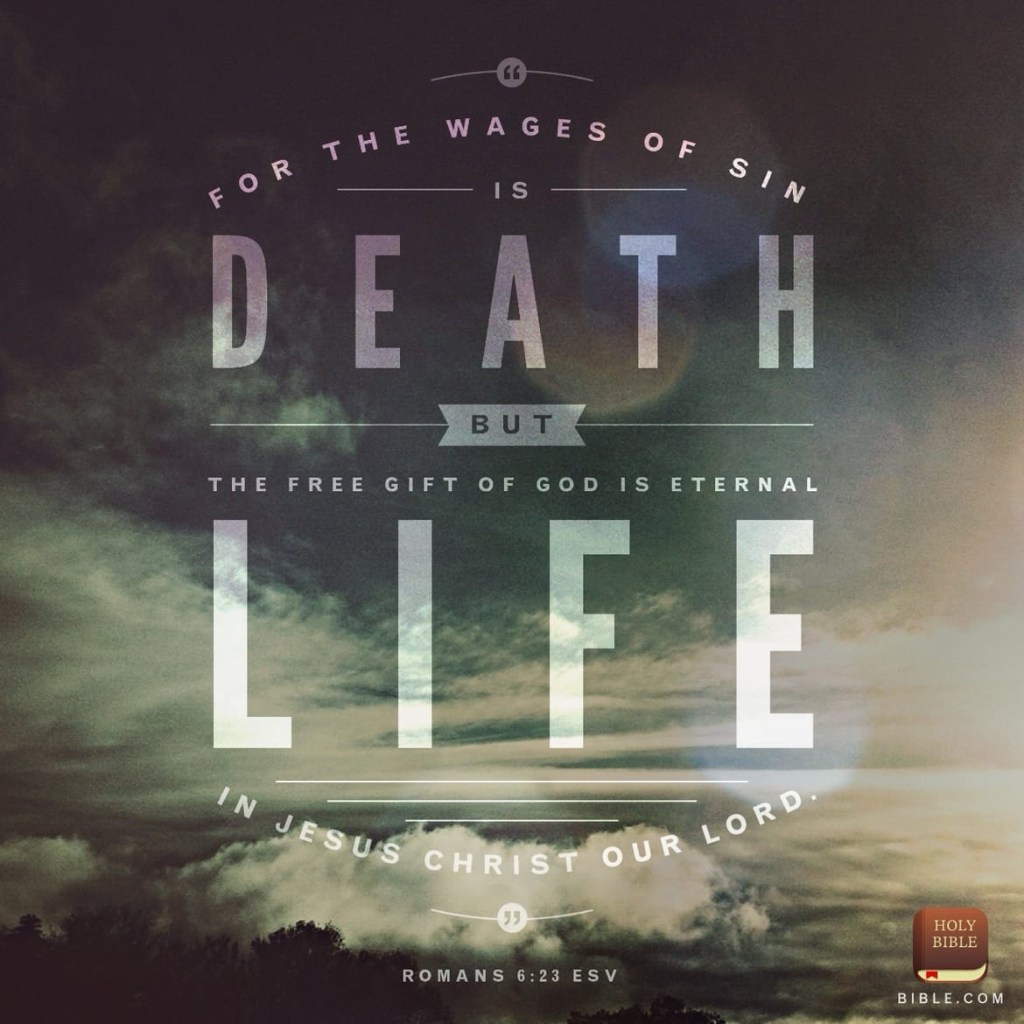
“For the wages of sin is death, but the free gift of God is eternal life in Christ Jesus our Lord.”

Romans‬ ‭6‬:‭23‬ ‭ESV

So today, let these words encourage your heart:

• You are forgiven.

• You are free.

• You are justified by faith, not by works.

Let this message be the one you proclaim to others, too. Because in Christ, freedom isn’t a dream—it’s a reality. Now let the weight fall off your shoulders. Love Jesus and make Him known. Run after the One who has set you free.

Peace in Christ brothers and sisters.
This is the Way part five

It’s been a few weeks since we looked at the Way of Christ as described in Romans 12. Today’s topic is one that I have been honored to experience with many believers in the last 16 years. It was a major attraction into the fold of Christ. When believers give of their time and resources to genuinely seek to meet the needs of others, and open their hearts, homes, and lives to hurting or lost people, the family of Christ grows and people’s lives are changed.

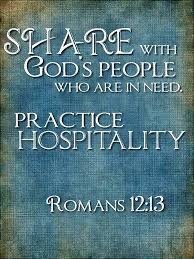
Share with the Lord’s people who are in need. Practice hospitality.

Romans 12:13 (NIV)

In just a few short words, Romans 12:13 captures the heart of Christian community: generosity and hospitality. These aren’t just nice suggestions—they’re tangible expressions of the love that Christ calls us to show.

Share with the Lord’s people who are in need

The early church was known for its radical generosity. In Acts 2 and 4, believers shared everything they had so that “there were no needy persons among them.” This wasn’t socialism—it was sacrificial love. When someone in the family of faith lacked food, shelter, or support, the others stepped in. We are called to do the same. It might look like: Giving to a single mom who’s struggling to pay bills. Donating food or clothes to a local ministry. Covering a medical expense, school need, or gas money for a friend in the church. It could be sponsorship of children in developing countries who lack basic needs. Because the church is more than those in our building. It includes every believer around the globe.

Sharing isn’t always financial, either. Sometimes what people need most is time, presence, or a listening ear. The heart behind it is this: What I have is not mine to hoard—it’s God’s to share.

Practice hospitality

Hospitality means welcoming others into your space, your life, and your heart. In the original Greek, this phrase means “pursue the love of strangers.” It goes beyond entertaining—it’s about making others feel seen, safe, and cared for.

Hospitality might mean: Inviting a new family from church over for dinner. Opening your home for Bible study or prayer. Welcoming someone who feels out of place and helping them find belonging.

Hospitality doesn’t require a Pinterest-worthy house or gourmet food. It just requires a heart that says, “You’re welcome here.” And the “here” is wherever you are. Hospitality goes beyond the four walls of our homes and church.

Why This Matters

These two simple actions—sharing and showing hospitality—are powerful witnesses to the world. In an age marked by individualism and isolation, generosity and hospitality stand out as bright lights. They show that the body of Christ is a family. That we serve a God who welcomes and provides. That our faith is more than words—it’s lived out in love.

Lord, help us to live with open hands and an open heart. Teach us to notice the needs of others and respond with joy. Let our homes and our lives reflect Your generous, welcoming love.

When we live out Romans 12:13, we bring the warmth of God’s love to life in the everyday moments. May we be known as people who give freely and welcome fully—for in doing so, we reflect the very heart of Christ.

Peace in Christ brothers and sisters.

The Purity of the Gospel

In a world full of noise, opinions, and ever-changing values, the Christian gospel stands as a clear and unwavering beacon of truth. Its message is simple, yet profound: salvation by grace alone, through faith alone, in Christ alone. The purity of the gospel is not something we invent or evolve—it is something we receive, guard, and proclaim.

I realize some who read this may not know exactly what the gospel is. At its core, the gospel is the good news that God, in His love and mercy, took on human form in the person of Jesus (Colossian 2:9), walked among us (John 1:14), lived a perfect life knowing that no person ever could (2 Corinthians 5:21), allowed humanity to hang Him on a cross to be a sacrifice for our sins (Romans 5:8), was buried and rose from the dead three days later (1 Corinthians 15:3-4), giving us the hope of new life and a future resurrection. This message is not about human achievement or moral performance. It’s about divine intervention—God doing for us what we could never do for ourselves. It is unearned, undeserved, and freely given.

The gospel is pure, and holy, and beautiful. And that is why everyone needs to hear it. It does, however, pact a punch. The gospel requires we take a hard and accurate view of ourselves, our needs, our shortcomings, our brokenness, and our sin. Only then can we see the beauty that is the gospel.

When we dilute or modify the gospel—adding works, subtracting grace, changing who Jesus is, softening the reality of sin, or removing the need for repentance—we rob it of its saving power. A compromised gospel may feel more comfortable or inclusive to some, but it cannot save anyone. We have to fight the desires for what is “good in our own eyes” and embrace what is actually good for us. Humility. Embracing grace. Accepting God’s love. Allowing Him to transform us more and more into His own likeness. That is when we become the best version of ourselves. That is when we experience the deepest joys and peace that every soul searches for.

The gospel’s purity is what makes it powerful. It tells the hard truth about sin but offers the glorious truth about redemption. It doesn’t offer self-help; it offers a new self in Christ.

Many voices today claim to speak for God. Some offer “prosperity,” “comfort,” or “love is love” as gospel substitutes, but these fall short of the cross. The true gospel does not promise comfort or success; it promises forgiveness, transformation, and eternal life through Jesus.

Jesus said, “I am the way, the truth, and the life. No one comes to the Father except through me” (John 14:6). That statement is both exclusive and inclusive—exclusive in that Jesus is the only way, but inclusive in that He invites all who will believe.

As followers of Jesus, we are called to preserve the purity of the gospel message, not tamper with it. Jude writes, “Contend for the faith that was once for all delivered to the saints” (Jude 1:3). The gospel is not ours to edit—it is God’s truth to trust, live out, and share. May we never lose sight of the beautiful simplicity and power of the gospel. In Christ alone, by grace alone, through faith alone—that is our eternal hope. And it can be yours too.

“He is the image of the invisible God, the firstborn of all creation. For by him all things were created, in heaven and on earth, visible and invisible, whether thrones or dominions or rulers or authorities—all things were created through him and for him. And he is before all things, and in him all things hold together. And he is the head of the body, the church. He is the beginning, the firstborn from the dead, that in everything he might be preeminent. For in him all the fullness of God was pleased to dwell, and through him to reconcile to himself all things, whether on earth or in heaven, making peace by the blood of his cross.”‬‬

Colossians‬ ‭1‬:‭15‬-‭20‬ ‭ESV

Peace in Christ brothers and sisters.
This is the Way part four

In this fourth part of the series, we look at the character of a believer when it’s tested by life’s pressures. That character is derived from the posture of one’s heart, which has been devoted to its Savior.

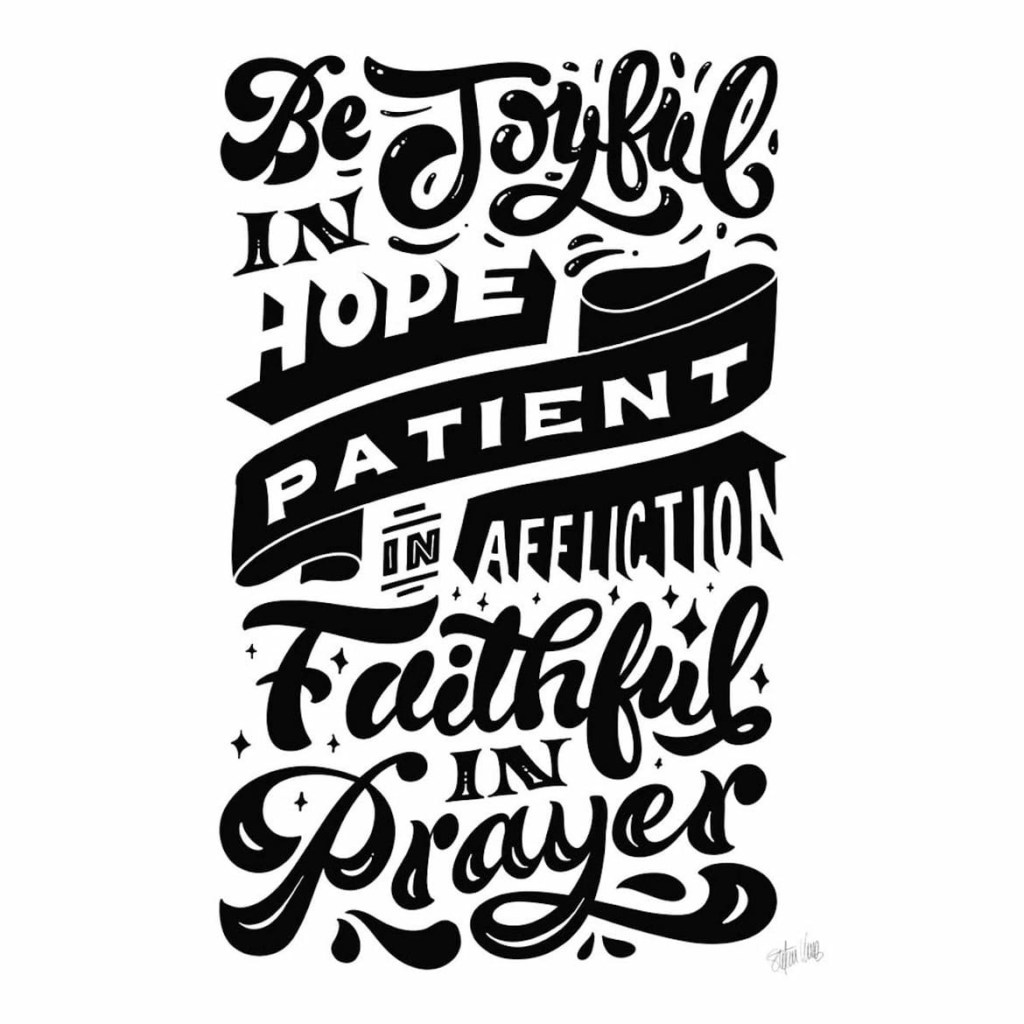
Be joyful in hope, patient in affliction, faithful in prayer.

Romans 12:12

Life doesn’t always unfold the way we envision it. Unexpected trials, long seasons of waiting, and moments of heartbreak can leave us disoriented. Yet in the middle of life’s unpredictability, Romans 12:12 offers a steadying reminder—a threefold call that aligns our hearts with God’s rhythm: hope, patience, and prayer.

Be Joyful in Hope

Hope is not mere wishful thinking. Biblical hope is rooted in the certainty of God’s promises. It’s not optimism based on circumstances but assurance anchored in who God is. Paul encourages us not just to have hope, but to rejoice in it.

Why joy? Because our hope is alive. It points beyond the temporary trials of today to the eternal glory that awaits. When we rejoice in hope, we’re acknowledging that God is still at work, even when we can’t see it. Our joy becomes an act of trust.

Be Patient in Affliction

Affliction tests our endurance like little else. Whether it’s grief, illness, anxiety, or injustice, suffering has a way of wearing us down. But patience in affliction doesn’t mean passive resignation—it means active endurance. It’s a quiet strength that says, “I will not give up, because I know God hasn’t given up on me.”

This patience is forged in the fire of faith. It’s a discipline that requires us to rely not on our own strength, but on God’s sustaining grace. In waiting patiently, we grow in character, empathy, and spiritual depth.

Be Faithful in Prayer

When the future is uncertain, prayer becomes our lifeline. Paul reminds us to be faithful in it—not just praying occasionally or when life gets hard, but making it a habit, a rhythm, a conversation that keeps us connected to the heart of God.

Prayer isn’t always about finding answers; it’s about finding God. It’s where we bring our fears, our doubts, our joys, and our confusion. And in return, we often find peace that transcends understanding.

Putting It All Together

Romans 12:12 isn’t just a single verse—it’s a spiritual posture. It teaches us how to live in the tension of “already, but not yet.” Already redeemed, but not yet restored. Already loved, but not yet home.

In a world full of chaos, this verse gives us a blueprint for peace: Hope anchors us. Patience steadies us. Prayer connects us. All of these helps us be a reflection of God’s light to a world in desperate need of hope.

Peace in Christ brothers and sisters.

This is the Way part three

Welcome to the third post about this wonderful journey of following Jesus and the path we devote ourselves to walking. The topic for today will hopefully convict those of us who have found complacency a companion and encourage those trailblazers to keep up the good work.

Never be lacking in zeal, but keep your spiritual fervor, serving the Lord.

Romans 12:11

This verse is a powerful call to action. In a world that often drains our energy and dulls our passion, Paul reminds us to keep our hearts burning with spiritual fire as we serve the Lord. Let’s take a closer look at what that means—and how we can live it out.

Never Be Lacking in Zeal

Zeal means energy, eagerness, and enthusiasm. It’s that excited drive that pushes us to do something with all our heart. Paul isn’t saying we’ll always feel energetic or joyful—he’s saying don’t let your fire die out.

Life has a way of wearing us down: routines get boring, challenges come, and our love for God and people can grow cold if we’re not careful. Paul’s challenge is to guard that spark, to stay spiritually awake and alert.

Ask yourself: Am I coasting through my faith, or am I still excited to grow, love, and serve?

Keep Your Spiritual Fervor

The word fervor comes from a Greek word that literally means “to boil.” Paul wants us to keep our spiritual lives hot—not lukewarm. This doesn’t mean fake emotional hype. It means staying alive in our relationship with God—regularly praying, reading the Word, worshiping, and staying connected to the Holy Spirit.

Spiritual fervor is not something we generate on our own. It’s the result of staying close to Jesus.

Serving the Lord

The purpose of all this energy and passion? To serve. Zeal and fervor aren’t just for our benefit—they’re meant to overflow into action. Serving God means loving others, using our gifts, showing up when needed, and living with purpose.

Passion that doesn’t serve becomes self-focused. But when we direct it toward God and people, we reflect Jesus—who lived with fire and poured out His life for others.

How to Stay Spiritually Ignited

Spend time in prayer and the Bible even when you don’t feel like it. Surround yourself with passionate believers who inspire you. Worship regularly—in private and with others. Use your gifts in your church or community. Remember your “why”—you’re serving the Lord, not people’s approval.

Romans 12:11 is a gentle yet urgent reminder: don’t let your faith go cold. Keep your spiritual fire alive. Stay passionate. Serve with joy. Because when we serve the Lord with zeal, we reflect His love and light in a weary world.

Peace, fire, and a passion for godliness, brothers and sisters.

Equipped

I don’t know about you all but I feel like I am always in preparation mode. As a parent, spouse, teacher, business owner, you name it, I am preparing and planning. Preparing to start the day, throughout the day, and in ending the day. It is an integral part of every single day of my life.

When I was an athlete, I had to train. Conditioning, technique, and strength training were all essential. My diet had to be fine tuned, I watched tape to see what I could fix, and would go to camps and tournaments out of season so I could be successful. As a teacher, I have to prepare lessons, gather materials, assess learning, reflect on student performance, plan and replan to make sure the students receive a quality education. But there is another role, the most essential role of my life, that I need to prepare for even more.

For we are his workmanship, created in Christ Jesus for good works, which God prepared beforehand, that we should walk in them.

Ephesians 2:10

Teaching and sports are great things, but they aren’t THE thing. We are God’s workmanship, His children, His image-bearers. Just as we prepare for tasks in our daily lives, God calls us to be ready for every good work He sets before us..that He’s already prepared for us.

“Do you not know that in a race all the runners run, but only one receives the prize? So run that you may obtain it. Every athlete exercises self-control in all things. They do it to receive a perishable wreath, but we an imperishable. So I do not run aimlessly; I do not box as one beating the air. But I discipline my body and keep it under control, lest after preaching to others I myself should be disqualified.”

1 Corinthians‬ ‭9‬:‭24‬-‭27‬ ‭ESV‬‬

We keep our eyes on the prize (knowing Jesus and making Him known) and we don’t go about it aimlessly. Our spiritual life should reflect the intentionality and dedication that athletes at the highest level would dedicate to their trade. Let’s take a look at the training regiment.

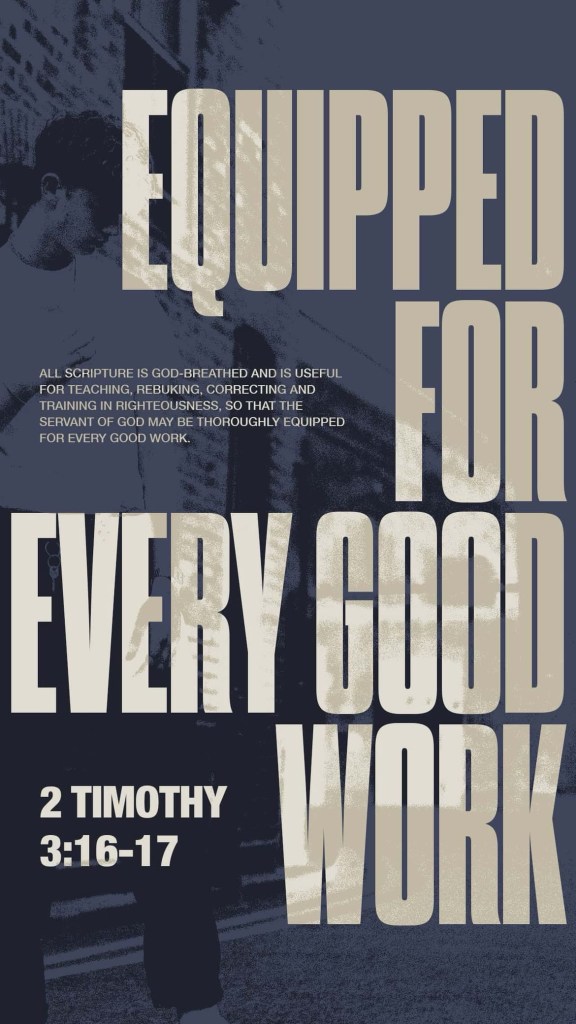
All Scripture is breathed out by God and profitable for teaching, for reproof, for correction, and for training in righteousness, that the man of God may be complete, equipped for every good work.

2 Timothy 3:16-17

1. The Source of Our Equipping: God’s Word

“All Scripture is breathed out by God”

Scripture is inspired by God, making it divine in origin and purpose. It is trustworthy, authoritative, and sufficient for our spiritual growth. The Bible is the most factually based book in world history. No other book in history claiming to be God’s word even comes close to matching these facts.

1. Written by 40 men over a period of 1500 years and ALL subjects, prophecies, and evidence agrees.

2. It was written in three very different languages by people who lived on three different continents.

3. The authors of the Bible lived in very different time periods, very different places, and had different occupations but ALL focused on God’s redemption of mankind.

4. Over 300 prophecies were about Jesus, made hundreds of years before he was born, and He fulfilled ALL of them exactly how they said it would happen. The odds of a single person fulfilling just eight messianic prophecies are estimated to be one in 100 quadrillion.

5. Hundreds of other non-messianic prophecies have been made and fulfilled just as the bible said. They were fulfilled exactly to the day and exactly how they were predicted and they occurred sometimes hundreds of years after they were made.

Just as a carpenter relies on tools for precision, we rely on God’s Word to shape our worldview, guide us in decision making, and know how to be in relationship with God and others. Spend time in the Word daily—it’s not optional but essential for being equipped. We should be meditating on it, memorizing it, praying through it, and speaking.

2. The Purpose of God’s Word: To Shape Us

“Profitable for teaching, reproof, correction, and training in righteousness”

Teaching: Helps us understand who God is, who we are, and His will for us.

Reproof and Correction: Reproof means to convicts us of sin and then provides the correction that redirects us to the right path. It is a mirror into the soul. Like Psalm 119:105 says, “Your word is a lamp to my feet and a light to my path.”

Training in Righteousness: Helps us grow in godly character and holiness. So much of the world gets their ideas of righteousness, or right living, from the culture or their own emotions. Even a lot of believers who interpret God’s will through their own emotions. That’s a pitfall from a lack of wisdom that can only come through knowing God’s word.

A sculptor chisels away excess stone to reveal a masterpiece. In the same way, God’s Word refines us. The more we know God’s word the more we should be changed by it. Let the Word challenge and transform you. Like Jesus said, “Not everyone who says to me, ‘Lord, Lord,’ will enter the kingdom of heaven, but the one who does the will of my Father who is in heaven.” Don’t just read it—let it read you.

3. The Result of Being Shaped by God’s Word: Readiness for Good Works

“That the man of God may be complete, equipped for every good work.” (the greek word is anthropos which means human or person of God, not man specifically)

God doesn’t just call us to good works; He equips us for them through His Word. The good works we are called to include acts of service, evangelism, generosity, and godly living. The Bible doesn’t just tell us to talk about God but do so boldly, not just to love but to love sacrificially, not just to give but to give generously and without asking for anything in return, not just to serve but to do so selflessly never drawing attention to yourself. It helps us endure hardships, be patient in trying times, hopeful in our outlook, and joyful in our spirit. To be a light, a city set on a hill.

Look for opportunities in your daily life to do good. Be ready when God opens a door. Better yet, look for the open doors, seek out the opportunities, don’t just wait for a clear “sign”. Training narrows our focus. It removes distractions that can derail us from achieving our goal. That’s exactly how we need to approach the mission God has for all of our lives. We clutter our vision (and we do so willingly if we’re honest). Remember Ephesians 2:10, God has already prepared our good works. You ever wonder how many we miss?

4. The Call to Action: Commit to Being Equipped

So where does this leave us? Just like with sports, careers, parenting, or anything else that requires training and preparation, we are all at different stages in our faith journey. But we can, and should, evaluate our time and how it’s spent. To what extent are we being intentional in applying God’s Word to situations in life? Do we pray for readiness and sensitivity to God’s leading. Do we actively look for ways to love, serve, give, and share the gospel every day. Wherever you are in your faith journey, I invite you to train harder. We can all pray more, serve more, love more, give more, empathize more, share the gospel more, meditate on God’s word more, worship more. Not to earn anything, that price has already been paid, but to better live out what you were designed and created to be…an image-bearer. The light that shines from us will only be as bright as the light we allow in us. You were made for a purpose and God has an abundant life planned for you. We just have to choose it.

Peace in Christ brothers and sisters.
This is the Way part two

This is the second iteration in the series on living out our faith as a believer in Jesus, who is the Way. If you missed the first one be sure to check it out from last week. Let’s see where the Way takes us today.

Be devoted to one another in love. Honor one another above yourselves.

Romans 12:10

In a world that often pushes us to put ourselves first, Romans 12:10 invites us into a radically different way of living—one marked by devotion and honor. It’s not just about being nice. It’s about building relationships rooted in genuine care and selfless respect.

Be Devoted to One Another in Love

The word devoted carries the idea of family-level commitment. It’s not surface-level kindness—it’s deep, consistent, and loyal. Paul is telling the church that our love for each other should look like the kind of love we see in strong, healthy families: the kind that sticks through hard times, forgives quickly, and serves without keeping score.

This type of devotion reflects God’s love for us. It’s not based on feelings, convenience, or getting something in return. It’s an active choice to love others—especially those in the body of Christ—with compassion and dedication.

Honor One Another Above Yourselves

To honor someone means to value them, to treat them as important. And Paul goes a step further: we’re to put others above ourselves. This doesn’t mean we think less of ourselves—it means we lift others up.

Imagine what would happen if every relationship was built on honoring the other person first—marriages, friendships, churches, teams. There would be less fighting, less pride, more listening, and more joy.

Paul is calling believers to a culture of humility. In a me-first world, he challenges us to be you-first people.

Living It Out

Here are a few ways to live Romans 12:10 in your daily life:

Encourage someone who may feel overlooked. Celebrate others’ wins instead of feeling jealous. Offer your time or help, even when it’s inconvenient. Speak kindly and respectfully, especially when you disagree. Pray for someone you struggle to love well.

Romans 12:10 is a simple verse with powerful truth. It reminds us that love is not just a feeling—it’s a choice to be committed to others and to honor them above ourselves. When we live this way, we reflect the heart of Jesus, who loved us completely and humbly served others.

Peace, and the deep love of Christ be with you.

This is the Way part one

This is part one in a series about living put the “way.” Early Christians were consistently referred to as followers of the Way. This refers directly to Jesus, the Christ, and the manor of life that He both demonstrated through His life and directs to this day.

Love must be sincere. Hate what is evil; cling to what is good.

Romans 12:9

In just a few words, Romans 12:9 delivers a powerful challenge: love with sincerity, reject evil, and hold tightly to the good. It’s simple, yet deeply transformative if we truly live it out.

What Does It Mean to Love Sincerely?

To love sincerely means to care for others without pretending. It’s not about fake smiles or saying the right things while harboring resentment. Paul is calling us to a love that comes from the heart—a love that mirrors Christ’s own. It’s a love that shows up in kindness, honesty, forgiveness, and action.

Sincere love doesn’t pick favorites. It’s not based on what we can get from others. It’s a choice to value people because they are made in God’s image.

Hate What Is Evil

Love and goodness go hand-in-hand. That’s why Paul also says to hate what is evil. We’re not called to hate people, but we should hate the things that harm others—like injustice, lies, cruelty, and selfishness. Sincere love isn’t passive. It stands up for what’s right, even when it’s uncomfortable.

Cling to What Is Good

The word “cling” in Greek means to stick like glue. When the world feels messy or confusing, Paul urges us to hold fast to what is good—truth, mercy, patience, and grace. These are not just nice ideas; they are powerful tools in loving others the way Jesus loves us.

Think about your relationships—family, coworkers, church, neighbors. Are you loving sincerely, or just going through the motions? Do you speak truth in love, or avoid hard conversations to keep the peace? Are you clinging to good, even when it’s hard?

This verse calls us back to the heart of the Christian life: genuine love. It’s not always easy, but it’s always worth it.

Peace, purity, and sincerity in Christ brothers and sisters.