Rejecting Grace

woman-saying-no-355q92w1pi7g2xn8eqtkp6

There are two responses that a person could have to being shown grace. One, they despise the act simply because they take it as an indictment of their own behavior. It deepens their anger and animosity. They view the kindness of another as salt in their wounds and a gift that seems more like an assault. It’s as if grace becomes some derogatory element. The second response is an equally intense emotion, but on the opposite end of the spectrum. Some will be totally raptured by the unprecedented tenderness and compassion of another. They won’t spite the love of another, rather, they will embrace it. Grace will break the hold of anger and unforgiveness that is wrecking the relationship. Obviously this takes a high level of humility, while the first reaction is distorted by pride.

I’ve seen both of these responses in my own experiences. What prompted me to write on this topic was my efforts in sharing about the Gospel with non-believers. Most of the people I share with are friends, students, and some who I have had the pleasure of having dialogue with through this blog. Everyone I have ever spoken with have had one of these two responses to the Gospel message. When the end comes, all of those who have rejected the message of Jesus will have done so because they reject grace. You know the common excuse: “I’m a good person and I think in the end, God will acknowledge that above all my bad deeds.” This person feels they have no need for grace, and they take the gospel as an accusation that they are a bad person, instead of the greatest proposition of love and acceptance.

I’ve been going through a study of the book of Revelation with my Father-in-law and a common theme that arises is the unashamed relentless refusal of human kind to repent before a patient God. It’s all because they reject grace. Pride will never allow a person to see their need for the unwarranted love of another. Pride dismisses love as a need and places it in the “I’m owed” category. If that person is shown love it’s only because they deserve it and in no way will it ever change their character. This person would look at the cross and think that it was a waste of time and life because they didn’t need it. Unfortunately, most of mankind will display this pattern of thinking.

To accept the gospel means to accept our need. To accept that we are broken, and guilty, and hurting, and searching, in need of being found. That takes a lot of humility. A LOT of humility. And so many are unwilling to go there. I don’t want to be unwilling. I don’t want anyone reading this to be unwilling.

If we can openly fall on the grace of Jesus, then we should also be open to the grace of our fellow brothers and sisters. But I know Christians who erect walls with others. I know Christians who are spiteful and harsh. I know Christians who refuse to let go and forgive. But this should never be so. This is not the mark of someone who has been touched by grace. To be touched by God’s grace is to be transformed by it. Those who embrace the grace of God should also embrace the grace of another. They should also lovingly extend that grace to another without hesitation for we have broken God’s heart far more than anyone could ever break ours.

Therefore, I tell you, her many sins have been forgiven–as her great love has shown. But whoever has been forgiven little loves little.”

Luke 7:47 (NIV)

The problem is, people don’t think they have much to be forgiven for, so their love comes up wanting. The woman who threw herself at the feet of Jesus and washed his feet with her tears, knew her great need and knew God’s grace. Her love showed it. And so should ours.

We’ve all probably known people who can be so humble before their Savior, raise their hands in praise, weep before Jesus, and yet be so harsh among their brothers and sisters. It’s not new to the 21st century either. Jesus addressed it in His own ministry. In Matthew 18:21-35, Jesus tells a parable about a servant who had been forgiven an incredible debt (as we all have who are covered by Jesus’ sacrifice). Once forgiven, that servant showed no mercy to the one who owed him a debt. Jesus referred to that person in the story as the “wicked servant” because of his refusal to show mercy, as he had been shown mercy.

We have to face up the fact that we are without excuse. Even the kindest of us are still guilty of harboring resentment, getting frustrated, not being sincere, clinging to things that have happened to us, holding a grudge, or outright refusing to forgive someone. If we could keep things a little more in perspective we’d realize that we are hardening our hearts in so many ways. We have to release ourselves from the bondage of anger, offense, and unforgiveness. We need to release others from our expectations. We need to see others how Jesus does, with a heart full of love and grace.  Our relationships need it. Our health needs it. And the world needs to see that grace on display. We need to remember that we have been forgiven far more than we will ever be asked to forgive others.

Let all bitterness and wrath and anger and clamor and slander be put away from you, along with all malice. Be kind to one another, tenderhearted, forgiving one another, as God in Christ forgave you.

Ephesians 4:32 (ESV)

Worn by Worry

31Wci55k5UL._SX331_BO1,204,203,200_

“Therefore I tell you, do not be anxious about your life, what you will eat or what you will drink, nor about your body, what you will put on. Is not life more than food, and the body more than clothing? Look at the birds of the air: they neither sow nor reap nor gather into barns, and yet your heavenly Father feeds them. Are you not of more value than they? And which of you by being anxious can add a single hour to his span of life? And why are you anxious about clothing? Consider the lilies of the field, how they grow: they neither toil nor spin, yet I tell you, even Solomon in all his glory was not arrayed like one of these.  But if God so clothes the grass of the field, which today is alive and tomorrow is thrown into the oven, will he not much more clothe you, O you of little faith? Therefore do not be anxious, saying, ‘What shall we eat?’ or ‘What shall we drink?’ or ‘What shall we wear?’ For the Gentiles seek after all these things, and your heavenly Father knows that you need them all. But seek first the kingdom of God and his righteousness, and all these things will be added to you.

Matthew 6:25-33 (ESV)

The act of worrying begins and ends in the mind. And our minds are so smart that they can even create things for us to worry about. Have you ever been there? Jesus lists a few items in verse 25 of Matthew 6 that are considered basic necessities. Jesus isn’t just telling us not to worry about our nice car, the newest phone, or affording the next family vacation. I heard a phrase once that referred to concerns like these as ‘first world problems’. He goes much deeper than that. Jesus says don’t even worry about the things you need!

Some translations of this passage use “anxious” and others use “worried”. The English word “worry” comes from the old English Wrygen and the Old High German Wurgen, both meaning “To Strangle or Choke”. It’s no wonder that worry and anxious thought have a horribly negative effect on our bodies. We don’t even need science to prove it to us because we can feel the life, vitality, peace, and joy being drained out of us when we are worried. Our health and wholeness is literally strangled out of us bit by bit. There is not a single part of a person’s body that is not affected by worry. It doesn’t stop there either. Anxiety and worry one person’s life will carry over to affect others.

If we claim allegiance to Christ then that should change absolutely everything for us. We cease to exist as we were. The entire point of being a new creation in Christ (2 Corinthians 5:17, Galatians 2:20, Colossians 3:3, and many in others) is that our lives will be completely consumed with Him. The problem is, we still think about ourselves way too much and give far too much room in our lives to things that are not about Him. It’s no wonder we don’t think about Him like we should. It becomes very hard to live from our new identity when we live like we don’t have one. But, our new identity is key to having peace rather than anxiety. The new person is focused on the Eternal One and eternal things.

You will keep in perfect peace all who trust in you, all whose thoughts are fixed on you!

Isaiah 26:3 (NLT)

Come read more about how Jesus wants to set us free from a life of worry. In chapter 8, I share some of my story of an anxious filled life and how I’ve been saved from it. Get your copy at Amazon or Barnes and Noble. Thanks for reading!

Peace brothers and sisters

Destiny in the Insignificant

nature-sunset-road

The story of Joseph in the bible is among the most compelling and encouraging. You have a man, who at a young age, is sold into slavery by his brothers, purely out of jealousy. So here is a man with less than favorable beginnings, who will one day become someone of great importance. It’s the ideal rags to riches story that inspires so many. Joseph’s life was the picture of God’s unfailing love and refusal to abandon us in even the most trying of times.

The story takes place between Genesis chapters 37 and 50. That means a quarter of the book of Genesis recounts his life. That’s the same book that covers well over a thousand years of human history, from creation to nearly 4000 years ago. The life of Joseph only accounted for 110 of those years. So this story must carry some incredible weight and importance for us today.

I want to pick up in Genesis 39, after Joseph has been sold into slavery and is currently serving in a royal Egyptian’s home. Long story short, the Egyptian’s wife tries to seduce Joseph, but because of his upstanding moral integrity, he refuses and she ends up framing him for a crime he never committed. Joseph is then thrown into prison where he quickly rises to a prominent position.

As soon as his master heard the words that his wife spoke to him, “This is the way your servant treated me,” his anger was kindled. And Joseph’s master took him and put him into the prison, the place where the king’s prisoners were confined, and he was there in prison. But the Lord was with Joseph and showed him steadfast love and gave him favor in the sight of the keeper of the prison. And the keeper of the prison put Joseph in charge of all the prisoners who were in the prison. Whatever was done there, he was the one who did it. The keeper of the prison paid no attention to anything that was in Joseph’s charge, because the Lord was with him. And whatever he did, the Lord made it succeed.

Genesis 39:19-23 (ESV)

What Joseph probably didn’t realize was that God was going to use his prison sentence to bring salvation to an entire people. Most people wouldn’t consider prison an opportunity. I certainly wouldn’t. But after learning about Joseph’s story, I can hopefully view my troubles in an entirely new light. Because this seemingly insignificant moment in Joseph’s life would unlock not only his destiny, but that of his family, nation, and the future of the world.

Throughout the next chapter of Genesis, Joseph is going to have a conversation with two men in the prison. A baker and cup-bearer, who were both imprisoned by the Pharaoh. The conversation is basically Joseph interpreting dreams that both men had. We don’t know the relationship that Joseph had with them, only that he was placed in charge of them by the captain of the guard. Relationship aside, the important thing to get is that the future of the world will unfold due to this one conversation between three men.

Later in the story, the two men get released from prison. The cup-bearer would be acquitted of his charges. Two years later, when Pharaoh is desperate to have his dreams interpreted, the cup-bearer tells him about Joseph, the man he had met in prison. This would lead to Joseph successfully interpreting Pharaoh’s dreams and being elevated to second in command in the most powerful empire in the world. From that position, Joseph would preserve the lives of thousands, including his own brothers who had sold him into slavery years earlier, from a worldwide famine. As the story came to an end, Joseph tells his brothers why things unfolded the way they did and how it is he was able to save his family and so many others.

As for you, you meant evil against me, but God meant it for good, to bring it about that many people should be kept alive, as they are today. So do not fear; I will provide for you and your little ones.” Thus he comforted them and spoke kindly to them.

Genesis 50:20-21 (ESV)

This one conversation, in an Egyptian prison, altered human history. An insignificant event established the destiny of an empire, a nation of people, and for even us today. Jesus Christ was born into that nation of people and He was undoubtedly the most significant figure in world history. The life, death, and resurrection of Jesus forever changed eternity for humankind. And it can all be traced back to that day in a prison nearly 2000 years before God arrived on earth in the person of Jesus.

Don’t ever allow moments in your life to seem insignificant. They may be the most significant thing to ever happen to you. No conversation, no relationship, no trial, and no opportunity is ever a waste of time. Any one of them may change things forever.

Be encouraged brothers and sisters, God is always at work in your life.

Who are you looking for?

As Mary came to the tomb of Jesus she saw that it was empty. Absolutely heart broken, she began to weep. Then she heard a searing question from someone she didn’t even know was there, “Who are you looking for?”

A lot of us are standing outside the tomb of the risen Jesus, looking for Him in the wrong place. Many of us are looking for the living among the dead. We are searching for a savior who lived nearly 2000 years ago instead of one who is every bit alive today. We’re mourning His absence as if He weren’t standing right next to us asking the very same question that He asked Mary, “Who are you looking for?”

Who are you looking for brothers and sisters? Is it the Jesus who died or the one who lives? Is your Jesus still buried in a tomb, powerless to change your life, your circumstances, and your future? Or is your Jesus risen in full glory and power as the one who laid the foundations of the world and created the very tomb that lays empty two millennia later? There is only one real Jesus, one real savior, and He lives in the believer, for the believer, and through the believer. Jesus could not be defeated by death, and he can bring that same victory in your life. Be encouraged friends. The one whom you seek is ALIVE!

Doorposts and Crossbeams

maxresdefault

I’ve heard a lot of versions of the gospel. Some are extremely burdensome, and others, well, could easily just leave Jesus out of it. When people try to put their own twist on the message, it gets really distorted. I wonder how many non believers are confused by the mixed messages. Actually, it’s those in the church who are probably more susceptible to becoming confused. The gospel, in it’s simplicity, is beautiful and easy to understand. Salvation is not a road with twists and turns meant to get us lost. It’s a straight path, narrow as it may be, that’s paved by One person, and guided by the One who made it. The gospel is meant to bring joy and hope to a desperate world.  Confusing and complicated things don’t do either of those things. One easy way to understand the message of the gospel is through doorposts and crossbeams.

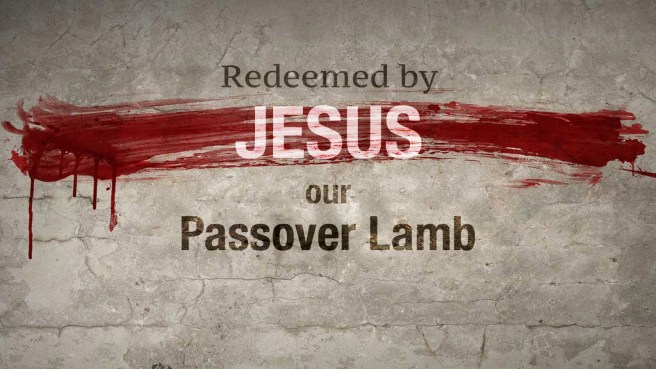
The Passover is a beautiful illustration of the gospel. It’s a story of redemption. It’s a story of deliverance from bondage. It’s a story of faith in the grace of God. It’s a story of victory. Israel was in slavery in Egypt when God responded to their dyer need out of His own love for His children. After Aaron and Moses delivered God’s message to Pharaoh, nine nasty plagues reeked havoc on Egypt. The tenth, however, would be the worst of them all. The tenth plague would be God’s wrath on sin, idolatry, pride, false religion, cruelty, and so much more. The Destroying Angel would sweep through the land of the most powerful empire on earth and lay waste in one of the most heart-wrenching ways. The people would bear the weight of their rebellion against the God that loved them. But, as always, God made a way.

When the LORD goes through the land to strike down the Egyptians, he will see the blood on the top and sides of the door frame and will pass over that doorway, and he will not permit the destroyer to enter your houses and strike you down.

Exodus 12:23 (NIV)

The blood on the doorposts, was the blood of a lamb. That’s it. In faith, Israel would kill a spotless lamb and cover the doorposts of their homes with the blood. That blood would save them from the wrath of God that was about to be poured out. It wasn’t only the good Israelites that got to be covered with the blood. It wasn’t even just the Israelites who were covered. Anyone who could humble themselves enough and trust in the blood, could be covered. I’m convinced that even Pharaoh himself could have done this. But, as we can read from the Exodus story, Pharaoh was anything but humble. His faith was in himself.

The gospel is that straight forward. Love in all it’s simplicity. Jesus hung on crossbeams to bleed for all of us. His blood covers anyone who wants to put their faith in Him. You don’t have to be a good person to surrender to Jesus…you just have to surrender and let the blood do it’s work. We don’t have to be the spotless ones because Jesus was that on our behalf. Those rescued from Egypt were imperfect people, and so is the Church. But, we are rescued all the same. We are rescued from the wrath of God to come on this rebellious and self-worshiping world, only because of the blood of Jesus. When God looks at you, He sees His child. He sees someone covered by the most precious blood. But, just like those who God rescued from Egypt, we have to follow Him out of slavery. God didn’t deliver Israel so they could stay put in bondage. God covered them and bid them to come and follow. When He stepped out of heaven in the person of Jesus, He did the very same thing. The sacrifice of Jesus means we’re covered and invited. That invitation has always been to whoever will come. To whoever, will put their faith in God’s love. To whoever is covered by the blood.

For God so loved the world that He gave His one and only Son, that whoever believes in Him shall not perish but have eternal life.

John 3:16 (TLV)

Happy Passover brothers and sisters!

Fun Ways to Teach Kids about God

tERJElSDTXuN0YbABgOd_JT-Blog-bible stories wisdom

Hear, O Israel: The Lord our God, the Lord is one. You shall love the Lord your God with all your heart and with all your soul and with all your might. And these words that I command you today shall be on your heart. You shall teach them diligently to your children, and shall talk of them when you sit in your house, and when you walk by the way, and when you lie down, and when you rise. You shall bind them as a sign on your hand, and they shall be as frontlets between your eyes. You shall write them on the doorposts of your house and on your gates.

Deuteronomy 6:4-9 (ESV)

Knowing the word of God is important. Teaching the next generation is equally important. But as any parent can testify, that can be challenging. When they are really young, their attention span is nonexistent. As they grow, rebellion can seek in a bit. But teaching our kids can be exciting and impactful. Nothing can replace the value of doing devotions and bible stories with our kids at bedtimes or after a breakfast meal. But sometimes we need to spice things up a bit. And that’s ok!

I’ve come up with a list of 12 activities that can help parents with children who are toddlers or teenagers. I’ve done them with kids of all ages and they are fun and they leave an imprint. You can make them as in depth and challenging as you’d like. Or you can keep them simple. Give them a try and have a blast! If you have other ideas, please comment on this post.

  1. Make a Fort
    • Build a fort out of anything safe around your house, whether inside or out.
    • Take time to share about how God protects them like forts were used to protect people
    • Bible verse: Psalm 18:2
  1. Balancing Act
    • Have your kids try to balance on several objects that are really difficult.
    • Then place your kids on something that is really easy to balance on.
    • Share about God’s word being a firm and steady foundation that we can stand on.
    • Bible verses: Matthew 7:24-27
  1. Trust Fall
    • Standing on an elevated platform or on the floor, have your child fall back into your arms. Repeat as long as they have fun.
    • Talk about how we can trust the Lord to catch us in uncertain times and especially when we’re afraid.
    • Bible verses: Psalm 84:12, 56:3, 31:14
  1. Being Blinded
    • Blindfold your kids and give them directions so they don’t run into things. Guide them around the house or outside.
    • Share about how the Lord leads us, especially when we don’t know what lies ahead of us in life.
    • Bible verses: Proverbs 3:5-6
  1. Water Act
    • You need to do this outside or in the bathtub. Fill a clear container with water. Then using food color, or a dark beverage like soda, pollute the water so that it’s no longer clear. Talk about how sin does that to our lives.
    • Then continue to fill the container with water again until the container is full of clear liquid. Talk about how Jesus, the living water, cleanses us from our sin and makes our lives clean again.
    • Bible verses: 1 John 1:7-9
  1. Tabernacle
    • Build a tabernacle in your yard similar to those that were constructed during the Feast of Tabernacles from Leviticus 23. You can make it out of anything really. A canopy works great. Dress it how with lights and more!
    • While sitting under the tabernacle, share about how Jesus walked among us and other ways that God wants to be with us (Holy Spirit, Temple, in the future, etc…).
    • Bible verses: John 1:1-14
  1. Treasure Hunt
    • Hide things all over the house or yard and have them look for them. They should be things that are valuable to them so they are even more motivated to find them.
    • After they’ve found everything, talk about how Jesus pursues us when we are lost and will never give up on us.
    • Bible verses: any of the stories from Luke 15
  1. Orchard
    • Go to a local orchard in season where you can find grape vines or fruit trees.
    • Use them as illustrations to talk about living a life that bears good fruit and how we depend on the vine (Jesus) to make that happen. If a branch gets cut off, it dies and doesn’t bear fruit.
    • Bible verses: John 15:4 and Galatians 5:22-23
  1. Dodge Ball
    • Have your kids try to get from one side of the house or yard, to the other, while you throw soft objects at them (parent therapyJ) and try not to get hit.
    • Then give them a shield of some kind and repeat the attempts. Talk about how much easier it is to defend yourself when you have a shield and how faith is that shield in life. Because to get from one end of life to the other, life will bombard us with a lot.
    • Bible verses: Ephesians 6:16 and 1 John 5:4
  1. Heavy Relay
    • Using a bucket or bag, have them race or just try to run. Each time, add another heavy object (books or rocks work well) until it becomes too heavy for them to run. Then empty the bag and have them run again.
    • Talk about how sin weighs us down in life but how Jesus wants to remove the weight from us.
    • Bible verses: Hebrews 12-1-2
  1. Dress Up
    • If you have girls, princess dress up works great. If boys, then it’d be a prince obviously. Same principle. After dress up, do a photoshoot.
    • The focus of this activity is to tell them about how they are princes or princesses of the King of Kings
    • Bible verses: 2 Corinthians 6:8 and 1 John 3:1
  1. Explore Nature
    • This can work anywhere from a back yard to hitting the trails. A camp trip works great too!
    • While in nature, point out all the amazing things that God has created for us to enjoy.
    • Bible verses: Creation story in Genesis 1, Psalm 95:4-5, Psalm 19:1, Romans 1:20

How do you swing the Sword?

For the word of God is living and active, sharper than any two-edged sword, piercing to the division of soul and of spirit, of joints and of marrow, and discerning the thoughts and intentions of the heart.

Hebrews 4:12 (ESV)

The Bible is sometimes referred to as a sword. That’s because it’s the best weapon a person has against the lies of cultures that are pervasive in every society. The Bible cuts through our selfish motives, pride, deceit, carelessness, and so much more. It shows everyone of us just how much we need a Savior, then introduces us to Him. It shows us the remedy for the ills of life and the purpose for which we were all created. It’s the ultimate source of strength, encouragement, and hope. It is a lifeline for sinking men and women across the globe.

In Ephesians chapter six, the Bible is called the Sword of the Spirit. It is meant to be wielded to crush the enemy lines that seek to spread darkness and chaos throughout humanity. But that enemy is not in the flesh. It’s spiritual power that seeps into every facet of this world. But all too often, this sword is swung at those who need to experience its life changing qualities, not the sting of another’s insult. The Bible is a tool to fight evil, not to fight people. This sword is meant to build bridges not cut down people in its wake. This sword is meant to bring healing, not further injury to those who are already wounded. As followers of Christ, we use His sword to fight for those in our life, not against them.

With one fell swoop of His Sword, God could wipe out fallen humanity. In a moment of real honesty, we’d have to admit that we’d all deserve it. But He doesn’t. God uses His Sword to mold us into what we are actually supposed to be. God doesn’t destroy with this weapon, He creates new life in us. I wish more believers would want to do the same. I know many who do. But I also know of a lot who would just as soon run someone through with the sword than love them. I think it’s pretty obvious who’s been touched by God’s redeeming grace by how they use His Word. His Sword is an instrument of love. Handle with care.

Love IS: Forever

flat,1000x1000,075,f

Love is a complex idea. It isn’t something that can be tied down to a single expression, feeling, or relationship. Love goes beyond all our boundaries. It takes us to all new heights. And love makes life worth living. In this final post of the series, I want to talk about how love is meant to outlast everything. First, one more time through our verses:

Love is patient and kind; love does not envy or boast; it is not arrogant or rude. It does not insist on its own way; it is not irritable or resentful; it does not rejoice at wrongdoing, but rejoices with the truth. Love bears all things, believes all things, hopes all things, endures all things.

1 Corinthians 13:4-7 (ESV)

So many relationships come to an end because people “fell out of love” with one another. But we can’t fall out of true love. That’s because true love outlast every hardship. True love does not despair. True love can carry any load.  According to verse seven, love bears, believes, hopes, and endures ALL things. The ultimate evidence of this is not how we’ve been loved by others, but how we’ve been loved by our Maker. Think about it…God’s love has endured a sinful and broken humanity for thousands of years. And you know what? His love has never diminished.

Praise the Lord! He is good. God’s love never fails

Psalm 136:1 (CEV)

Instead of looking at each of us to define love, we should really look at the one who invented the concept. I’ve loved imperfectly. You’ve loved imperfectly. But God is perfect love. Not only is God’s love never ending, but He continued to rescue humanity from their weaknesses and mistakes, purely out of His love. Eventually, He would show His love to the point where He would come to earth to die for those who had even despised His love. At our worst, God’s arms were stretched wide open.

…but God shows his love for us in that while we were still sinners, Christ died for us.

Romans 8:5 (ESV)

Look around. We aren’t worthy of His love. Not a single one of us. We all sin, whether in thought, words, or actions, every single day. We’ve all turned our backs on Him at some point. We’ve all tried to live life independent from Him at some point too. But He is the picture of what true love really looks like. God’s love isn’t extended to just those who deserve it, but to every single human ever created. God’s love has just been given to you and me when we were at our best (whatever that looks like). God’s love has endured all of our shortcomings. Out of His love He has bore our sins. Out of His love he patiently desires the salvation for every human being. Out of His great love, He carries the grief of our sinful deeds.

Because we are people of God, we should be people of love. Not a love of our own imagination, but a love as demonstrated by God himself. Those in your life, even your spouse, may not seem worthy of you love. But that isn’t what matters. A godly love is one that transcends worthiness. Don’t let people’s faults get in the way of your love for them, especially when it comes to your spouse. I’ll end with a quote from American author and theologian, Frederick Buechner, because I absolutely love it!

The love for equals is a human thing–of friend for friend, brother for brother. It is to love what is loving and lovely. The world smiles. The love for the less fortunate is a beautiful thing–the love for those who suffer, for those who are poor, the sick, the failures, the unlovely. This is compassion, and it touches the heart of the world. The love for the more fortunate is a rare thing–to love those who succeed where we fail, to rejoice without envy with those who rejoice, the love of the poor for the rich, of the black man for the white man. The world is always bewildered by its saints. And then there is the love for the enemy–love for the one who does not love you but mocks, threatens, and inflicts pain. The tortured’s love for the torturer. This is God’s love. It conquers the world.

Love others. Love your spouse. Love them deeply. Be patient to the very end, no matter how long, and always reach for kindness as your expression of love. Never seek to do what is wrong, or to see revenge or hurt in others, but shower your marriage and all other relationships with truth. Set God as your example and love those around you with an unending kind of love. May your marriages, and all your relationship blossom into beautiful expressions of heaven.

Love IS: True

Welcome to part three of a four part series on ways to define love according to the bible. In part one, we explored some of the emotional do’s and don’ts of love. In part two, it was all about acting out our love for others through kindness. This post is more focused on the foundation of love. Before we jump in let’s look at our series verses.

Love is patient and kind; love does not envy or boast; it is not arrogant or rude. It does not insist on its own way; it is not irritable or resentful; it does not rejoice at wrongdoing, but rejoices with the truth. Love bears all things, believes all things, hopes all things, endures all things.

1 Corinthians 13:4-7 (ESV)

Right in the middle of this passage is this statement about love: “it does not rejoice at wrongdoing, but rejoices with the truth.” According to the dictionary, truth is something that is proven based on fact and reality. But in this context, truth corresponds with what we do because the opposite to truth is wrongdoing. So truth is a correct way of living based on a correct way of thinking. Wrongdoing is a false way of living based on a false way of thinking. We all know that how we think is how we will live. To rephrase the previous statement: love wants nothing to do with falsehood and bad living but celebrates the truth and the right way to live.

The person who deceives us the most, is us. In the church atmosphere there is a lot of talk about how Satan deceives us. He is the father of lies and the first of anyone to lie. It is his main weapon against humanity. However, his work is easy because of humanity’s propensity to sin and gravity towards rebellion against God. Rebellion against God is rebellion against truth. In essence, it is to rejoice in wrongdoing. In the book of James we’re told that this wrongdoing occurs when we are led astray by our own desires. We are the masters of lying to ourselves. We can justify about any action. Humans, because of our sin nature, have an ability to make wrong, look right. This can easily happen in any relationship, especially a marriage. Anything we do in marriage that is contrary to biblical principles is the equivalent to rejoicing in wrongdoing. That might sound harsh but it’s true.

When we care about someone, sometimes we can give them the power to convince us to do something we know is not right. When we love someone, we can fall victim to the idea that we just want them to be happy and we’ll let them pick their path. We don’t intercede because we don’t want to make waves. I’ve known a lot of people who have had convictions in their own hearts about something, but they’ve allowed their spouse to derail their pursuit of those convictions. That’s why it’s important to have open dialogue with one another, no matter the issue. And we have to know that condoning others in doing wrong, or participating in something we know to be wrong, is not showing love, it’s showing the exact opposite.

True love has to be founded on truth thinking and true living. A relationship that includes secrecy of any kind is on shaky ground. It’s the equivalent of telling your spouse that you don’t trust them. How can that be love?

A relationship where either person seeks to get revenge, make the other pay, or intentionally harm them emotionally through words or actions, has disaster written all over it. A heart of love for another never seeks their harm but always their wellbeing.

True love is love built on truth. Right way of thinking, leading to the right way of living. What is a true way to think about our spouse? They are a gift, unique, with gifts and talents too. They have dreams and a purpose. They are your spouse, but first and foremost they are God’s child. We should treat them like the prince or princess they are, even when they don’t act like it. We control how we see them, and we control how we love them.

Peace in Christ brothers and sisters

Love IS: Other

AAEAAQAAAAAAAAVLAAAAJGZiMmY2OWU2LThmNjYtNDQyMi04NDQxLTExM2VjOGRiNzM2YQThis is part two of a four part series titled “Love IS”. Throughout the four posts we will be breaking down the extremely well known passage out of Paul’s first letter to the Corinthians.

Love is patient and kind; love does not envy or boast; it is not arrogant or rude. It does not insist on its own way; it is not irritable or resentful; it does not rejoice at wrongdoing, but rejoices with the truth. Love bears all things, believes all things, hopes all things, endures all things.

1 Corinthians 13:4-7 (ESV)

In the first post I talked about the emotions that can be used to test our love. Four of them were emotions not to feel and only one was one that true love feels towards others. This post will be more about how we affect others by how our emotions play out. Just like last time, Paul tells us more ways that love should not manifest itself and gives us one more loving attribute to demonstrate in our lives. Once again, lets start with the naughty list.

Love should not be boastful, insist on its own way, or rude. What do each of those things have in common? They are all self-centered actions. No thriving relationship can ever revolve around one person. The root of, probably most conflicts, is when one person demands their way and won’t budge. The act of insisting on our own way is a form of boasting. It’s the equivalent of saying, “I know what’s best and you don’t know what you’re talking about.” But boasting certainly goes way beyond that. Last time we talked about people being arrogant. Arrogance is the emotion that leads to boasting. Another word for arrogance is pride, which is not a positive attribute, no matter how society tries to promote it.

Pride comes before destruction, and an arrogant spirit before a fall.

Proverbs 16:18 (HCSB)

Boasting is anything a person does to draw attention to themselves. It’s putting yourself at the center of whatever relationship you’re in and setting your wants and needs as priority. People who are boastful are generally rude, especially when their demands or expectations aren’t met. They can’t seem to understand why others don’t view them how they view themselves. When the bible says that pride leads to destruction and a fall, it’s not a warning to take lightly. Relationships shatter, churches split, teams fail, and lives are ruined all because of pride. Pride in oneself and true love cannot coexist. They are enemies of one another. Instead of being self focused, love is a reflection of a person’s heart that seeks the good of another.

The act of being kind, requires a person to regard the feelings of others, to look beyond themselves, and to intentionally influence another for their good, even at their own expense at times. Showing kindness to someone can save a relationship, end strife, and even save lives. Other words for showing kindness include: affection, warmth, gentleness, concern, and care. When we’re rude, it shows that we value ourselves above all. When we’re kind, it shows that we value others above ourselves.

Do nothing from selfish ambition or conceit, but in humility count others more significant than yourselves. Let each of you look not only to his own interests, but also to the interests of others.

Philippians 2:3-4 (ESV)

If we want our marriages to thrive then we need to be more concerned with what our spouse’s needs are than our own. We need to making a real attempt to show them kindness every day. That can take several forms. For some, the simple act of asking about their spouse’s day or how they’re doing and genuinely listening is a big step. Or how about asking them what you can do to help them or make life easier for them. Kindness can be seen in a warm embrace or a gentle response. Kindness is setting our own emotions aside out of concern for what the other is going through. In the last post we talked about how patience requires humility. Well, so does kindness. In fact, the patient person is far more likely to be a kind and caring person. The kind person is one who goes through a day thinking of others. The kind person is a concerned person. The kind person is sad for those who are grieving, and celebrates with the victories of others. The world of a kind person is so much bigger than themselves. The act of being kind is a tangible reflection of love. Make it a priority, every day, to show kindness to your spouse. Not just when it’s convenient, when you feel like it, or if you feel they deserve it, but always. Because love is kind.

Rejoice with those who rejoice, weep with those who weep. Live in harmony with one another. Do not be haughty, but associate with the lowly. Never be wise in your own sight. Repay no one evil for evil, but give thought to do what is honorable in the sight of all. If possible, so far as it depends on you, live peaceably with all.

Romans 12:15-18 (ESV)