This isn’t your typical new year’s resolution kind of post. In fact, it is probably the exact opposite. While there’s more than enough messages this time of year promoting self improvement, not many are proclaiming that the new version of ourselves should be a whole lot less of ourselves. Christians are familiar with the often quoted 2 Corinthians 5:17. We are new creations in Christ. I see that verse used more this time of year than any other time of the year. Sermons and devotions that promote self improvement. I believe that exercise, eating better, and healthy habits are great things. But the call of the gospel on our lives is much deeper than that. The gospel life is one lived for others. It’s a life of sacrifice, giving, loving, and serving. The “new creation” is a Spirit-filled individual who cares far more for the salvation and betterment of those around them than for how they are viewed by others or even for their own needs. One of the greatest of the apostles, Paul, states it this way:
But I do not account my life of any value nor as precious to myself, if only I may finish my course and the ministry that I received from the Lord Jesus, to testify to the gospel of the grace of God.
Acts 20:24 ESV
In a different letter to the church at Galatia he wrote this:
I have been crucified with Christ. It is no longer I who live, but Christ who lives in me. And the life I now live in the flesh I live by faith in the Son of God, who loved me and gave himself for me.
Galatians 2:20 ESV
To the Philippians Paul emphasized something very similar.
Do nothing from selfish ambition or conceit, but in humility count others more significant than yourselves. Let each of you look not only to his own interests, but also to the interests of others. Have this mind among yourselves, which is yours in Christ Jesus…
Philippians 2:3-5 ESV
And just so no one thinks this is just Paul’s message, look at how Jesus Himself phrased it.
And he said to all, “If anyone would come after me, let him deny himself and take up his cross daily and follow me.
Luke 9:23 ESV
It is easy to get wrapped up in goal setting when a new year rolls around. What I would propose is that we all focus less on the “usual” goals for the new and improved us, and make our goals more about others and how we are going to put Jesus on display this year. Instead of the new year bringing about a new you, it can bring about less of you, and more of Jesus. I invite everyone to pray that this would be the case for me. Those who know me, I ask for them to hold me accountable. We need to encourage our brothers and sisters in this life of surrender. Eat healthier. Exercise more. Set goals. But may we never forget what our ultimate goal should always be: To know God and to make Him known.
This year may it no longer be us who live but Christ who lives in us. This year may we do nothing out of selfish ambition but look out for the needs of those around us. This year may we testify to the gospel of grace. This year may we take up our cross and follow our King.
“And for their sake I consecrate myself, that they also may be sanctified in truth. “I do not ask for these only, but also for those who will believe in me through their word, that they may all be one, just as you, Father, are in me, and I in you, that they also may be in us, so that the world may believe that you have sent me. The glory that you have given me I have given to them, that they may be one even as we are one,”
John 17:19-22 ESV
In the hours before Jesus went to the cross, He prayed. He prayed for those who had followed Him. And He prayed for those yet to follow Him. This prayer speaks volumes about His heart for the world…for us…for you. Jesus, wants His followers to enter in to communion with each other, and most importantly, with Him. And He had to go to the cross to make that happen. His sacrifice makes the way for us to be one with Him. His glory is imparted to sinful, yet humble and repentant, faith-filled humans. Our brokenness is replaced with His beauty. Our emptiness is filled with His Spirit.
No matter what your 2023 looked like. All your pain, your hurt, your loneliness, your mistakes, your sin, and your failures…they can all be brought to the cross. There. they meet with redemption, love, and grace. If distance is what you’ve felt, it’s time to come close. If your year was full of joy, success, new relationships, and promise…they can all be brought to the cross. There they are met with a gratitude for the One who made it all possible. If you’ve been close this year, it’s time to get closer. Wherever you find yourself at the close of this year, take your next step towards Jesus.
As a public school teacher, I am finding the values of my faith and the values of society coming more and more into contrast. I wear my faith on the outside and that has at times caused problems. I sponsor a Christian club in the school. We pray, we worship, we spread the word, and we study scripture. I get to be with some brave teens who are willing to step out amongst their peers and share God’s word, even when it causes ridicule. But there are many around the world who are doing far more and putting far more at risk. Those people make me want to do more, to risk more, to share more. And the reality is, it’s always been that way, since Christ Himself walked the Earth. I wanted to highlight one such story. This one is about Paul and Silas on one of their missionary journeys.
“As we were going to the place of prayer, we were met by a slave girl who had a spirit of divination and brought her owners much gain by fortune-telling. She followed Paul and us, crying out, “These men are servants of the Most High God, who proclaim to you the way of salvation.” And this she kept doing for many days. Paul, having become greatly annoyed, turned and said to the spirit, “I command you in the name of Jesus Christ to come out of her.” And it came out that very hour. But when her owners saw that their hope of gain was gone, they seized Paul and Silas and dragged them into the marketplace before the rulers. And when they had brought them to the magistrates, they said, “These men are Jews, and they are disturbing our city. They advocate customs that are not lawful for us as Romans to accept or practice.” The crowd joined in attacking them, and the magistrates tore the garments off them and gave orders to beat them with rods. And when they had inflicted many blows upon them, they threw them into prison, ordering the jailer to keep them safely. Having received this order, he put them into the inner prison and fastened their feet in the stocks.”
Acts 16:16-24 ESV
The culture, and even the law will be against biblical principles. People will getting angry. It will cost. We may even have to pay with our health and freedom. But salvation spreads like wildfire in the midst of a dry and thirsty land. The jailer and his family were saved by Silas and Paul’s time in prison.
“About midnight Paul and Silas were praying and singing hymns to God, and the prisoners were listening to them, and suddenly there was a great earthquake, so that the foundations of the prison were shaken. And immediately all the doors were opened, and everyone’s bonds were unfastened. When the jailer woke and saw that the prison doors were open, he drew his sword and was about to kill himself, supposing that the prisoners had escaped. But Paul cried with a loud voice, “Do not harm yourself, for we are all here.” And the jailer called for lights and rushed in, and trembling with fear he fell down before Paul and Silas. Then he brought them out and said, “Sirs, what must I do to be saved?” And they said, “Believe in the Lord Jesus, and you will be saved, you and your household.” And they spoke the word of the Lord to him and to all who were in his house. And he took them the same hour of the night and washed their wounds; and he was baptized at once, he and all his family. Then he brought them up into his house and set food before them. And he rejoiced along with his entire household that he had believed in God.”
Acts 16:25-34 ESV
The courage and faith of Paul and Silas is inspiring. And we know that many others faced similar challenges as the gospel message spread throughout the world. Many believers still face those kinds of road blocks to their mission as ambassadors of Christ. Check out this story. Vani, a 30-year-old widow, spent 15 days in jail after being charged with kidnapping and “forcing” a child to convert to Christianity. During her two-week stay, she witnessed to more than 70 women, 14 of whom became Christians. Vani was charged in connection with an incident in early February, when she helped a teenager and introduced her to some other believers. Vani was arrested after the girl’s parents reported her to police. While Vani was in jail, the jailer encouraged her to share the gospel and pray for the other women because he had seen dramatic change in those who accepted Christ. Vani has been pursuing prison ministry ever since being released from jail.
The world systems have always been hostile to God,. Even in predominantly Christian societies, like the United States, the pure message of Christ is not welcomed in much off society. However, our mission to follow Christ and tell the world about Him remains the cornerstone for every Christian.
Take heart fellow brothers and sisters. Remember the words of Jesus Himself on the eve of His crucifixion.
“I have said these things to you, that in me you may have peace. In the world you will have tribulation. But take heart; I have overcome the world.””
Forgiveness is a fundamental concept that resonates throughout the Scriptures, teaching us valuable lessons about compassion, healing, and the grace of God. It has played a key role in my life, especially pointing me to the goodness of God and seeing that goodness in His children. Below are several lessons about forgiveness that have been shown to me through the years and I hope they will mean something to you as well.
Forgiveness is a Divine Act. One of the most powerful examples of forgiveness in the Bible can be found in the parable of the Prodigal Son (Luke 15:11-32). This story beautifully illustrates the Father’s unconditional love and forgiveness, welcoming back his wayward son with open arms. We learn that God’s forgiveness is boundless and available to all who repent. Therefore my forgiveness should be boundless.
The Lord’s Prayer is a model of forgiveness. In the Lord’s Prayer (Matthew 6:9-13), Jesus teaches us to pray for forgiveness as we forgive others. This passage reminds us of the reciprocity of forgiveness – the extent to which we forgive others directly influences the forgiveness we receive from our Heavenly Father. It underscores the importance of extending grace to one another. Jesus says, “Forgive us our trespasses as we forgive those who trespass against us” (Matthew 6:14-15). This verse reinforces the concept that we must be willing to forgive others just as we expect God to forgive our sins. Forgiveness is not just a one-way street but a continuous cycle of grace and mercy.
Joseph’s Forgiveness is a Testament of Strength. The story of Joseph and his brothers (Genesis 37, 39-45) offers an inspiring example of forgiveness. Despite being betrayed and sold into slavery by his own siblings, Joseph forgives them when they come to him in need. His journey from betrayal to forgiveness reminds us that forgiveness can bring about healing and restoration. I find myself needing to forgive others for much less. Shame on me if I find it hard to offer the grace that has been offered me.
Forgiveness leads to peace. In Colossians 3:13, we are instructed to “bear with each other and forgive one another if any of you has a grievance against someone. Forgive as the Lord forgave you.” Forgiveness not only mends relationships but also leads to inner peace and harmony within the community of believers.
The Sacrifice of Jesus: The Ultimate Act of Forgiveness. The pinnacle of forgiveness in the Bible is seen in the crucifixion of Jesus Christ. His sacrifice on the cross for the forgiveness of our sins demonstrates the magnitude of God’s love and forgiveness. Jesus, even in his agony, cried out, “Father, forgive them, for they do not know what they are doing” (Luke 23:34). This profound act of forgiveness serves as the foundation of our faith and redemption, underscoring the importance of forgiving others as we have been forgiven.
Forgiveness brings healing. In James 5:16, we are told to confess our sins to one another and pray for each other so that we may be healed. Forgiveness is not only a spiritual act but also a source of emotional and physical healing. Holding onto bitterness and resentment can be detrimental to our health, and forgiveness brings about freedom and restoration.
Forgiving Seventy Times Seven. In Matthew 18:21-22, Peter asks Jesus, “Lord, how many times shall I forgive my brother or sister who sins against me? Up to seven times?” Jesus responds, “I tell you, not seven times, but seventy times seven.” This statement is a call to limitless forgiveness. It highlights that forgiveness should be a continual practice in our lives, not a limited resource.
The Blessings of Forgiveness. In Psalm 32:1-2, King David beautifully expresses the blessings of forgiveness: “Blessed is the one whose transgressions are forgiven, whose sins are covered. Blessed is the one whose sin the Lord does not count against them.” Forgiveness brings relief from guilt and the assurance of God’s love.
In our journey of faith, let us remember that forgiveness is a divine act that brings healing, reconciliation, and blessings. Through Christ’s sacrifice and the biblical teachings on forgiveness, we are called to extend grace to others as we have received it from our Heavenly Father. By doing so, we live out the gospel, becoming instruments of God’s love and reconciliation in the world. Forgiveness is a central theme in the story God has been telling. that reflects His boundless love and grace. Because of that, we are called to live from a place of compassion and mercy to one another.
May you experience the peace that comes with living in His forgiveness.
Jonathan, in my opinion, is one of the most underrated people of the Biblical story. I want to focus on how he exemplifies incredible qualities
“Have I not commanded you? Be strong and courageous. Do not be frightened, and do not be dismayed, for the Lord your God is with you wherever you go.””
Joshua 1:9 ESV
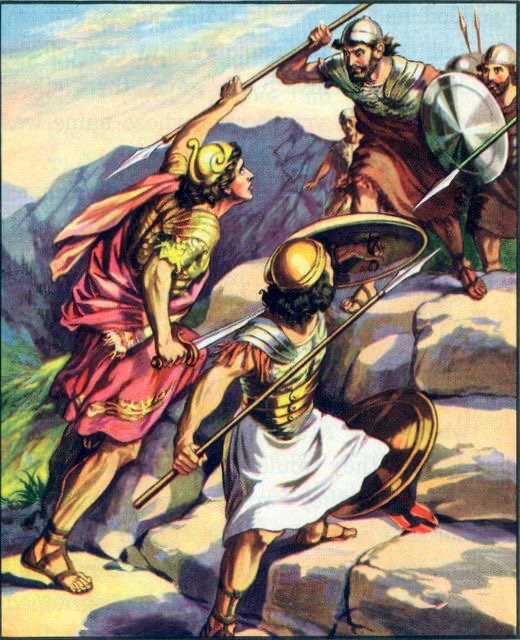
Courage– Jonathan was famed for his courage. He didn’t let numbers deter him. Because of his deep trust in God he wasn’t afraid to go up against enormous opposition. We hear a lot about David’s bravery, and certainly he was, but it’s interesting how Jonathan’s stories don’t get more attention. In chapter 13, he had already defeated the Philistines at Geba by leading a garrison of a thousand. Afterwards, a huge force of Philistines came against Saul and had them pinned down. Let’s pick up there. (1 Sam 14:6-15).
“for God gave us a spirit not of fear but of power and love and self-control.”
2 Timothy 1:7 ESV
The phrase to fear not appears more commonly than any other command of God. Some variation of verses on fear appear over 300 times. God Himself speaks on it a little over 100 times. This drives home the point that we need to take this seriously. God wants us all, men and women, to live a courageous life. And when God says it, He doesn’t make and empty command. It’s not one of those “because I said so” type of statements. He always bases the command off of the fact that He is with us or that He is the one acting. To live a life of fear is to live a life absent of faith. Remember how Jesus rebuked His disciples in the boat when they were freaking out?
“And he said to them, “Why are you afraid, O you of little faith?” Then he rose and rebuked the winds and the sea, and there was a great calm.”
Matthew 8:26 ESV
Unselfish love- The next time we learn from Jonathan‘s life is after he meets David four chapters later. In the chapters between Jonathan‘s great heroism and him meeting David so much had happened. His father had been rejected by the Lord as king, Samuel had anointed David as the next king, and David had defeated Goliath and his victory was now overshadowing Jonathan‘s accomplishments. (1 Sam 18:1-4) Jonathan truly kept the command to “love thy neighbor” as yourself. Most people would have considered David to be Jonathan’s enemy. Jonathan was heir to the throne, but God appointed David instead. Saul fought against this with all his might, but Jonathan was willing to forget his own self-interest out of his love for David. Jonathan and David represent a picture of true friendship. Not only did Jonathan not bear animosity towards David, but he made a lasting covenant with him! He went so far as to protect his future rival for the throne.
“Do nothing from selfish ambition or conceit, but in humility count others more significant than yourselves. Let each of you look not only to his own interests, but also to the interests of others. Have this mind among yourselves, which is yours in Christ Jesus, who, though he was in the form of God, did not count equality with God a thing to be grasped, but emptied himself, by taking the form of a servant, being born in the likeness of men. And being found in human form, he humbled himself by becoming obedient to the point of death, even death on a cross.”
Philippians 2:3-8 ESV
We all need to have a higher regard for others and seek ways to serve in the small as well as the big things. Just like Jonathan, we should be willing to set aside our expectations and embrace what God is doing. Jesus is the ultimate reflection of that. He set aside heaven to walk among us. He put on humanity so He could give up His very life. He showed what it was like to live a life of service and to make time for those around us.
Submission to the will of God (1 Samuel 20:31) Jonathan, being confronted with the reality that he would never be king, was given a choice, to stand against David or to submit to God’s plan for his life. (Verse 42) Amazingly he humbly submitted himself to the will of God, even when it meant giving up his future kingdom. He didn’t pursue his own interests or push for his own way. When he realized that God wanted to establish David and not himself, he humbly bowed out of the picture and submitted to God’s hand. How many of us would do that? Again in 1 Sam 23:17 Jonathan chooses to be steadfast when the opportunity to step outside of God’s will is presented. At the very least he could have done nothing. Many of us won’t choose to stand in the way of God but our inaction can be much the same.
Matthew 6:10 shows the heart of the Lord’s prayer is to pursue God’s will on earth as it is in heaven. In Matthew 12:50 Jesus himself says doing God’s will is what defines a Christian. James 4:13-15 calla us to put more focus on His will when setting our schedule. Just how much are we willing to lay aside our own plans when the godly interruption occur?
Loyal love – Jonathan was extremely loyal. He saved David’s life on more than one occasion and was a loyal friend. However, he was also a loyal son and didn’t reject his own father. They remained “undivided even in death” (2 Sam 1:23). Jonathan even said that Saul did nothing without discussing it with him (1 Sam 20:2). It reminds me of Ruth and her devotion to Naomi. Proverbs 17:17 says we need to love at all time. The “love chapter” 1 Corinthians 13, says loyal love endures all things and hopes all things. It’s powerful and it’s not circumstantial. Jesus says in John 15:13 laying down our lives for another is the greatest act of love. And as amazing as all these stories are, it’s the story of Christ that demonstrates amazing love.
“For while we were still weak, at the right time Christ died for the ungodly. For one will scarcely die for a righteous person—though perhaps for a good person one would dare even to die— but God shows his love for us in that while we were still sinners, Christ died for us.”
What are you looking for in life? How about today? When you woke and started your journey, where did your thoughts drift?
For me, a lot of the time, I immediately go to my to-do list for the day. Whether it be my teaching subjects, preparedness, window cleaning lineup, or any of the many other obligations and responsibilities that life has for me. But God has been speaking. Even today, as I sat down to write this, God is reminding me of where my thoughts need to be. I feel Him asking me the question, “what exactly are you searching for?” The majority of my thoughts tell the story of a man who wants to be useful, productive, and provide for his family’s needs. And that is where my heart is. But am I searching for it in the right ways and the right places?
“But seek first the kingdom of God and his righteousness, and all these things will be added to you.”
Matthew 6:33 ESV
Literally everything we could ever need in a day, in our life, is experienced in the presence and pursuit of God. I couldn’t be more useful than by sharing Jesus’s goodness and love with others. I couldn’t be more productive than by making disciples. I couldn’t provide anything greater for my family than a godly example or sacrificial love and a life of serving others. All of that comes in seeking God’s kingdom. That will make me the best teacher, the best parent, the best spouse, and the best version of everything I could possibly be. But is that what I am searching for in my day? Is it what you’re seeking out?
“You will seek me and find me, when you seek me with all your heart.”
Jeremiah 29:13 ESV
God promises us that if we really search for Him, that He will be found. That begs the question, are we truly seeking Him out? What does that even look like? How would we begin our days and end our days and live out everything in between if that’s what our mission was? Jesus said to seek His kingdom and His righteousness. So, in simple terms, to seek God is to live in a right way before Him and before others. That’s what righteousness is. And also to want to see God’s kingdom here in this world. To do that, we live as He did. It’s to act as that city on a hill and a light to the world. We seek God when we seek to reflect God. Because we need to abide in Him, as John 15 says, in order to bear the kinds of fruit that Jesus did. To abide in Him means we live in such a symbiotic relationship that His spirit dictates our thoughts, actions, and words.
“I will walk about in freedom, for I have sought out your precepts.”
Psalms 119:45 NIV
One way we can know if we’re searching for God is if we’re experiencing freedom. Things like anxiety, depression, anger, bitterness, and the like, are all clear indication that we aren’t seeking God or the things of God. Precepts are by definition a general rule intended to regulate behavior or thought. God has given us ways of living that will enable us to live the fullest life possible. In Micah chapter six, we are told that God calls us to seek justice, love mercy, and to walk in humility. Those should be markers of our lives if we’re search for God.
It certainly takes intentional living. It takes a lot of prayer, time alone with God, looking for Him in the mundane and the miracles. It takes persistence to serve and give, especially when it’s hard to do so. It takes surrender of our selfishness. To seek God is to be consumed with Him. And we can’t be consumed with Him and ourselves at the same time. If you’re like me, then you probably need to let go of the incessant planning and live more in God’s embrace because that’s where peace and purpose are really found.
When you hear the word sanctuary, what comes to mind? Some may have thought of a part of the church..but why do we call it that? Many may think of a safe place or place of peace. The dictionary definition of a sanctuary is a place of refuge or safety, and also use in terms of a nature preserve. I’m sure it’s not surprising to hear but the concept of a sanctuary is intertwined throughout the Biblical story. In fact, I would offer up that it is one of the key themes being told by God. What I want to do in today is trace that theme throughout the Biblical narrative. So where better to begin than at the beginning?
Sanctuary in Genesis
“then the Lord God formed the man of dust from the ground and breathed into his nostrils the breath of life, and the man became a living creature. And the Lord God planted a garden in Eden, in the east, and there he put the man whom he had formed.”
Genesis 2:7-8 ESV
God creates this separate place called Eden and places man there. It’s safe to say that man was not created in Eden, but was brought by God to join with Him there in mission. If a Sanctuary is a meeting place with God, the Garden of Eden would have to qualify. This event sets the tone and stage for what God intended for humanity. That is, to be with Him.
But humanity screws it up as we know. They are exiled and not allowed to enter. But God doesn’t close the book on His plan. Instead, He goes out of the Garden to meet with them. We see that with Cain and Abel. Again with Noah. Proving that God’s desire to meeting with humanity is still very much His plan.
Sanctuary in Exodus
“Now Moses was keeping the flock of his father-in-law, Jethro, the priest of Midian, and he led his flock to the west side of the wilderness and came to Horeb, the mountain of God. And the angel of the Lord appeared to him in a flame of fire out of the midst of a bush. He looked, and behold, the bush was burning, yet it was not consumed. And Moses said, “I will turn aside to see this great sight, why the bush is not burned.” When the Lord saw that he turned aside to see, God called to him out of the bush, “Moses, Moses!” And he said, “Here I am.” Then he said, “Do not come near; take your sandals off your feet, for the place on which you are standing is holy ground.” And he said, “I am the God of your father, the God of Abraham, the God of Isaac, and the God of Jacob.” And Moses hid his face, for he was afraid to look at God.”
Exodus 3:1-6 ESV
This may seem like much smaller scale than the Garden, but look at how God describes the meeting place…holy ground, denoting that it was in fact His presence there before Moses. This moment sets up God establishing a more physical representation of His presence. Lets fast forward to the post plague and Red Sea.
“And let them make me a sanctuary, that I may dwell in their midst. Exactly as I show you concerning the pattern of the tabernacle, and of all its furniture, so you shall make it.”
Exodus 25:8-9 ESV
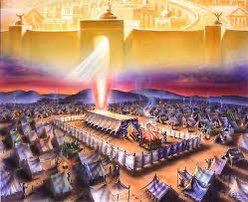
This is pretty clear evidence that God is wanting to be in our midst. We actually see the word sanctuary used here. It is the Hebrew word: mik-dawsh’ meaning sacred, holy place where God’s presence is. And this holy place would go wherever Israel went. It would serve as a constant reminder of God be among His people. And from then on to the time of David, the children of God would seek Him there.
“O God, you are my God; earnestly I seek you; my soul thirsts for you; my flesh faints for you, as in a dry and weary land where there is no water. So I have looked upon you in the sanctuary, beholding your power and glory. Because your steadfast love is better than life, my lips will praise you. So I will bless you as long as I live; in your name I will lift up my hands. My soul will be satisfied as with fat and rich food, and my mouth will praise you with joyful lips,”
Psalm 63:1-5 ESV
This tabernacle would later become the temple. And for Generations, that is where people would seek to meet with God and His presence would reside. Take a look at Solomon’s dedication of the new temple.
“As soon as Solomon finished his prayer, fire came down from heaven and consumed the burnt offering and the sacrifices, and the glory of the Lord filled the temple. And the priests could not enter the house of the Lord, because the glory of the Lord filled the Lord’s house. When all the people of Israel saw the fire come down and the glory of the Lord on the temple, they bowed down with their faces to the ground on the pavement and worshiped and gave thanks to the Lord, saying, “For he is good, for his steadfast love endures forever.””
2 Chronicles 7:1-3 ESV
This would all point to a new and greater sanctuary to come. Isaiah prophesied of it. Isaiah 7:14 calls Him Immanuel, meaning God with us. And again in Isaiah 9:6-7 where He is labeled as Mighty God. Luke 1:35, again showing Jesus to be Holy (hagios in greek meaning most holy thing). Who is the most holy thing but God? It is with Jesus that God has demonstrated the concept of Sanctuary the most.
Sanctuary and Jesus
We’ve established how a sanctuary is a holy place, where God’s glory is and where we meet with Him. What better way to demonstrate that than in the person of Jesus? Several passages in the New Testament build on this idea of Jesus being the sanctuary of God.
Fullness of God (Col 1:19)
the Word made Flesh (Jn 1:1-14)
He and God are one (Jn 10:30)
Fullness of deity dwells and all authority (Col 2:9-10)
Jesus is the way to God (Jn 14:6)
It is safe to say that where is Jesus, God is. He is the ultimate Sanctuary. And much of Jesus ministry demonstrates that. Matthew 11:28-30, He says in Him we find rest and we learn what it means to live in God’s light. If we are burdened and bogged down, if we aren’t growing more in our understanding of God’s call on our lives, then maybe we aren’t listening to the call from the Sanctuary.
In John 15:4-6 it explains how taking Sanctuary in Jesus establishes a relationship that produces changes and goodness in us. If our life isn’t growing and maturing spiritually, if we aren’t producing a harvest of godliness and love, then perhaps we have neglected the holy place.
Jesus also set a pattern of what it looks like to enter the sanctuary. Often, Jesus entered into long periods of prayer and solitude. In Mark 6:31, Jesus invited His disciples to come away to a desolate place and rest and pray and rejuvenate. If we are not taking time to be alone with Him, then we need to reshuffle some priorities.
“Therefore, brothers, since we have confidence to enter the holy places by the blood of Jesus, by the new and living way that he opened for us through the curtain, that is, through his flesh, and since we have a great priest over the house of God, let us draw near with a true heart in full assurance of faith, with our hearts sprinkled clean from an evil conscience and our bodies washed with pure water. Let us hold fast the confession of our hope without wavering, for he who promised is faithful. And let us consider how to stir up one another to love and good works, not neglecting to meet together, as is the habit of some, but encouraging one another, and all the more as you see the Day drawing near.”
Hebrews 10:19-25 ESV
Not only is Jesus the Sanctuary of God, His life, death, and resurrection has granted us permanent access into God’s presence. Which means, wherever we are, we can meet with Him. We are without excuse. No job, no hobby, no relationship, nothing should ever prevent us from entering in with God. And by no means should we ever forget the price it cost to grant us such access
“Then Jesus told his disciples, “If anyone would come after me, let him deny himself and take up his cross and follow me.”
Matthew 16:24 ESV
To enter the sanctuary of Jesus is to lay aside any and all selfishness. It is to trade in our life for His. It is to live sacrificially and outwardly. Throughout scripture, to enter the sanctuary first required sacrifice. That has not changed. The atonement has been taken care of. But our pride and sinful wills must be laid on the alter.
As Christ begins to live in us, everything about us begins to change. Our minds change. Our desires change. Our wills change. Our relationships change. Ultimately, our reason for living changes. Possessions and position are no longer our priorities. Comfort and security are no longer our concerns. Safety is no longer our goal, because self is no longer our god. We now want God’s glory more than we want our own lives.
David Platt
Doesn’t that seem to be in line with God’s whole purpose from all the way back in Genesis? God wants us. He wants you. He has made a way for me and you to enjoy His presence. To receive His healing from the brokenness. To be transformed and made new. To win the war against sin. To live out our purpose here on Earth as stewards, sharing His love, truth, and goodness. To know our place and identity and His children. Now we must want that more than our own lives. Because in laying down our lives and the feet of Jesus, the entrance of the Sanctuary, there we find true life.
Other than humanity’s standing with God, what relationship was first rocked by their sin? The union between Adam and Eve. And what has resulted for millennia, is a faulty approach to the marriage relationship ever since. Not to say that some haven’t gotten it right. But I believe that the world, and even many in the church, have been getting it wrong for centuries. That stems from a wrong reading of the text. If you trace our history back you will see sermons telling the women to stay in their place and to follow their men. Even in America, women faced oppression for nearly all of our existence, much of which was justified using faulty interpretations of God’s design. The Bible itself is full of examples of how men and women screw things up. Let’s read over the wives and husbands commissions found in Ephesians five in light of the garden events from Genesis 2 and 3.
“Wives, submit to your own husbands, as to the Lord. For the husband is the head of the wife even as Christ is the head of the church, his body, and is himself its Savior. Now as the church submits to Christ, so also wives should submit in everything to their husbands.”
Ephesians 5:22-24 ESV
Some misconceptions can be traced back to Genesis 3 where God is pronouncing the consequences of sin. We can view Ephesians 5 as a call back to a pre-fall relationship. The first big misconception is in the terms of the “wives submit” terminology. The word submit used here is idios in greek. This means to treat as one’s self. Literally unite with. This is never once used to denote an inferior position. In fact let’s look at the origins of Eve. She is described as a “help meet” ( Gen 2:18&20). The word ezer, (Strong’s concordance #5828) means a shield, a form a saving. God is described often as an ezer. So that’s the pre-fall purpose for wives. That’s the intent of God. For wives to be united with husbands, to be one with them, to walk along side them (not under or behind them) to help shield them and be an essential role in the mission of God.
The post fall narrative, on the other hand, is much different (Genesis 3:16-17). We see the words ruling and desire used in this portion of Genesis. Both are prescribed in the midst of negative consequences from Adam and Eves actions. Nowhere does it alude to this being God’s plan or ideal. To say that, would be like saying God wanted brokenness and screwed ip relationships. If anything, the context of these verses makes it apparent that it is opposite of how God designed things. The next time this word for desire is used its to describe sin’s desire for Cain.
Can you think of examples when women and men from the Bible showed this fallen narrative? Times women subverted and disrespected or preyed on men. How about Rebecca and Sarah? Times men ruled as jerks and treated woman like animals? Maybe Isaac and Abraham? These relationships, while containing some good elements, were not models to follow, but illustrations of the brokenness of the fall. If anything, God was heartbroken over this.
Ephesians 5 is a picture of the reality of God’s design, opposite of that of the Genesis 3 fall motif. Wives are designed as an ezer, or defense, shield, life-giver, unified with her husband. Not a submissive, second-rate counterpart to do her husband’s bidding.
Now let’s address husbands.
“Husbands, love your wives, as Christ loved the church and gave himself up for her, that he might sanctify her, having cleansed her by the washing of water with the word, so that he might present the church to himself in splendor, without spot or wrinkle or any such thing, that she might be holy and without blemish. In the same way husbands should love their wives as their own bodies. He who loves his wife loves himself. For no one ever hated his own flesh, but nourishes and cherishes it, just as Christ does the church,”
Ephesians 5:25-29 ESV
Husbands, also, are meant to lead, not as Genesis 3 states, but as Christ does. As a servant, in humility. Ephesians 5 uses the comparison of washing the bride with the word. Looking back at Genesis, Adam should have intervened when the serpent was twisting God’s words. Adam, by all accounts, was there, being passive, and not leading. He was also flattered and deceived by the serpent. He was meant to be a guardian, a shepherd, in pursuit of God’s mission. And so are men today.
Ephesians five uses some powerful words to define husband’s role. It says for husbands to love, give themselves up for, to cherish, and to nourish. If Adam had done that, the serpent would have lost his head that day. The leadership of men is a selfless leadership. It is wholehearted leadership. The leadership of a husband seeks Christ first and the heart of his wife second. The husband must lead from his knees not from a pedestal. My how world history would be different if men actually did that. -Men, we must be committed to seeing our wives thrive just as Christ seeks that for His bride. If Christ’s love and commitment to His bride is our example for loving our brides, then we have to step it up. And we do that by surrendering more of ourselves to Christ and His leadership in our personal lives.
God obviously doesn’t want us living in the Genesis three story. And we will be opposed. The serpent isn’t gone. The next chapter of Ephesians addresses the spiritual war that still rages on and how we are to fight. Enter Jesus. He is our shield of faith, our breastplate of righteousness, our belt of truth, our helmet of salvation. He came to be our example. He came to crush the serpent. He came to restore right relationships. He came to heal our broken approach to life and to love. He came to impart God’s wisdom. For Jesus is, ““He is the radiance of the glory of God and the exact imprint of his nature, and he upholds the universe by the word of his power…” Hebrews 1:3 ESV and, ““And we all, with unveiled face, beholding the glory of the Lord, are being transformed into the same image…” 2 Corinthians 3:18 ESV and, ““whoever says he abides in him ought to walk in the same way in which he walked.” 1 John 2:6 ESV
Whether we are single, married, wives, or husbands, our call is to be like Jesus…abiding in Him…unified with Him…and then we will see God’s kingdom come in our homes and in our relationships.
When sin entered the world, everything changed, and not for the better. But that has not prevented God from reaching out in the brokenness to provide healing and restoration. In Genesis, chapters two and three, we see what is often referred to as “the fall”. In those moments, God’s creation is submitted to death and an unraveling of sorts. The serpent deceives Adam (meaning humanity) and Eve (meaning life), and rifts and negative alterations begin immediately. God then meets with them and lays out the most unfortunate consequences of their choices. Consequences that have been rippling through the world ever since. If you haven’t read about these events before, or in a while, then it would be helpful for what I’m going to be writing about. I’m going to break down Ephesians chapter five over the next two posts and draw them back to the events of Genesis. Let’s get started.
“Therefore be imitators of God, as beloved children. And walk in love, as Christ loved us and gave himself up for us, a fragrant offering and sacrifice to God. But sexual immorality and all impurity or covetousness must not even be named among you, as is proper among saints. Let there be no filthiness nor foolish talk nor crude joking, which are out of place, but instead let there be thanksgiving. For you may be sure of this, that everyone who is sexually immoral or impure, or who is covetous (that is, an idolater), has no inheritance in the kingdom of Christ and God.”
Ephesians 5:1-5 ESV
Right off the bat we see one major contrast. The words, be imitators of God from Ephesians 5 verses you will be like God from Genesis. What was eating from the tree but an attempt to be like God? He wants us to be like Him. But not in the way the serpent did. Not in the way of worldly wisdom. Not in the way of self promotion or self help programs. He wants us to be like Him through His Holy Spirit, through surrendering ourselves, through promoting Him to the world.
The words Covetous and idolater both appear in Ephesians five and are contrasted with having gratitude. This can be compared to the root of why Adam and Eve took from the wrong tree. To covet means to wrongly desire something. Idolatry means to wrongly worship something or someone other than God. They had the entire garden, and yet they wanted more. They had God, but they wanted to become as gods. They elevated themselves and their desires above God. Genesis 3:6 says they desired the tree and what came from it. They could have been thankful, but instead they felt they were missing out and they wanted to be as god themselves. How often could we be more thankful rather than seeking more, which often leads us into doing the wrong things, with the wrong motives, and/or with the wrong attitude? The antidote is to surrender our will to God’s will. To pursue God’s kingdom and His righteousness above all things.
“Let no one deceive you with empty words, for because of these things the wrath of God comes upon the sons of disobedience. Therefore do not become partners with them;”
Ephesians 5:6-7 ESV
Don’t be deceived with empty words, but understand what is pleasing to the lord. That’s the snake. Deceiving them (and us) with empty words, slanting God’s words, and Adam and Eve participated in it. The world is still participating in it. The serpent spoke the line, did God not say and you won’t surely die. We can’t possibly imitate God when our faith is derived from false pretenses. When truth is mixed with any amount of lies, we live from lies. And a dishonest faith will never embody God or His mission for you and me.
“Look carefully then how you walk, not as unwise but as wise, making the best use of the time, because the days are evil. Therefore do not be foolish, but understand what the will of the Lord is.”
Ephesians 5:15-17 ESV
Be wise therefore for the days are evil…they took the wrong wisdom and did what was evil. God. Clearly spoke His will to both Adam and Eve, yet they did what was right in their own eyes. When we elevate our desires above God’s will, bad things happen. What was God’s will for them? Eat and enjoy ALL of the garden but one tree.
In the book of James, wisdom from below and wisdom from above are contrasted (James 3:13-18). Where did Adam and Eve made that fateful decision they got their wisdom from the serpent and from the tree not the spiritual wisdom from God. In James chapter three it highlights how the wrong source of wisdom equals jealousy, selfish ambition, and is false. However, the right source is pure, peaceable, open to reason, merciful. That is brings about a harvest of righteousness. Hence the garden imagery.
God’s mission in the world has be to rewrite the fall. To bring His kingdom to Earth, in our hearts and lives. We are invited to be participants in that mission, by imitating Him. But that can only be done by knowing Him. He has been revealing Himself to the world since the beginning. And the serpent has been deceiving the world through the ages. Which voice will you choose?
“What do you think? A man had two sons. And he went to the first and said, ‘Son, go and work in the vineyard today.’ And he answered, ‘I will not,’ but afterward he changed his mind and went. And he went to the other son and said the same. And he answered, ‘I go, sir,’ but did not go. Which of the two did the will of his father?” They said, “The first.” Jesus said to them, “Truly, I say to you, the tax collectors and the prostitutes go into the kingdom of God before you. For John came to you in the way of righteousness, and you did not believe him, but the tax collectors and the prostitutes believed him. And even when you saw it, you did not afterward change your minds and believe him.
Matthew 21:28-32 ESV
It matters far less where we’ve come from, or even where we find ourselves than where we are headed. God is in the business of reconciling lives. He rescues and redeems. He takes broken and imperfect people and restores them and uses them in the story He’s writing. I believe that this parable of Jesus illustrates that. The two sons described are then related to sinful people and religious people, but not in the way they would have expected. Jesus confronts the religious leaders of the day who refused to see the Kingdom of Heaven standing before them in the person of Jesus and continued in their spiritual blindness to operate contrary to the call of God. Then there were the tax collectors (one of the most hated in society) and prostitutes (one of the most dejected in society). They were the broken and lost who saw the Kingdom of Heaven in the person of Jesus and believed and surrendered their lives to Him.
Obviously, we have a stark contrast between these two groups of people. But I believe the point Jesus is making, is that He is the source of life and salvation, and even those of us who started off life with the worst possible choices, can still find redemption through Him. Even today, if you find yourself in a lifestyle contrary to the God’s calling on your life, you can choose Jesus and find life and restoration. No one is beyond His love. No one is beyond His grace. No one is beyond His reach.
“For God so loved the world, that he gave his only Son, that whoever believes in him should not perish but have eternal life. For God did not send his Son into the world to condemn the world, but in order that the world might be saved through him.
John 3:16-17 ESV
The whoever means whoever. I was once living a life apart from God. Self-seeking. Pleasure-seeking. Honor-seeking. But not God-seeking. But just as the first son did, I changed my mind. I have gone to work in the vineyard where the True Vine is and where I hope to be for the rest of my days. And the grace I have been shown I hope to never take for granted. Do you know someone who is living the way I once did? Walk with them. Listen to them. Speak life to them. Pray for them. Live a life that reflects Jesus to them. They aren’t ever beyond hope. None of us are. Let’s choose life and finish strong!











 For Common Ground