I know that there are plenty of doubters and skeptics out there. You, dear reader, may be one of them. But I am here to tell you, God is still in the business of speaking to His children.
Last night, I had a nightmare. Not just one of those weird bad dreams where you’re being chased by something and none of it makes any sense. No, this dream contained among two of the worst things that could happened. They must have been born out of deep unconscious fears that decided to rear their ugly heads. This was one of those dreams you wake from in a panic. With heart rate accelerated, you scramble to get your bearings and snap back to reality. And there I was, a little after 6am on a Sunday when I’m supposed to be sleeping in. Wide awake and reeling. So, after a minute or two, I I take a deep breath and begin to pray.
Lord God, help me to know truth and to relinquish my fears to you. Calm my unnerved heart. Forgive me for all my sins or thought, words, or deeds. Cleanse me inside and out. Help me to find rest in you and to be renewed.
As I pray, my heart is calming a bit. But oddly, I have this overwhelming urge to grab my phone. I resist because I think it’s just a distraction from my prayer time. But the urge grows. So I pause and pick up the phone on my bedside. Recently, I have paused notifications from 10 pm to 7 am. Somehow, I have a notification on my screen from an app called “Abide”. Not only do I have notifications silenced for another hour almost, but I don’t have notifications turned on for this app at all. But there it was. And it read, “Balm for the restless heart. Come and find rest in Me.” And as I read it, shocked and amazed, another notification popped in. This time from the Bible app. And I read these words, “Fear not for I have redeemed you; I have called you by name, you are mine.” And there I was, at peace and overwhelmed all at the same time. Not by the awful feelings I had upon waking, but by His incredible goodness.
Did the skies open and a voice from heaven come to me? No. But there I was, forced awake by a dream that left me sick to my stomach. And in the midst of prayer, I received timely and powerful words through a means that never should have been possible. I will leave you to wrestle with how that is possible. But for me, God is still in the business of speaking to His children. Even in the mundane and what could seem like trivial issues of one’s life, God is there. And He cares. And He speaks.
“Then you will call upon me and come and pray to me, and I will hear you. You will seek me and find me, when you seek me with all your heart.”
When life gets hard, our natural response is usually to ask why. Why is this happening? Why now? Why me? But in John 12:27–28, we see a moment where Jesus, fully aware of the suffering He’s about to endure, says something radically different:
“Now my soul is troubled. And what shall I say? ‘Father, save me from this hour’? No, it was for this very reason I came to this hour. Father, glorify your name!”
John 12:27-28a
His soul is troubled, and yet He doesn’t pray for escape — He prays for God to be glorified. This Is What Trust Looks Like. Jesus wasn’t pretending to be fine. He didn’t mask the heaviness of His soul. He admitted the weight of what He was carrying — and still, His desire wasn’t for comfort, but for God’s purpose to be fulfilled through Him.
That’s not weakness. That’s strength. That’s surrender. What If We Prayed Like That? What if, in the middle of pain, disappointment, confusion, or heartbreak, our first prayer wasn’t “Get me out of this” but “Be glorified in this”? Not because the pain is good. Not because the suffering is easy. But because we trust that God wastes nothing — and that even in the hardest moments, His glory can shine through us.
“I consider that our present sufferings are not worth comparing with the glory that will be revealed in us.”
Romans 8:18
Your Struggle Might Be Sacred
Jesus knew His suffering had purpose. We may not always see the full picture in our own lives, but this much is clear: God is able to bring beauty out of brokenness, and when we offer our trials to Him with open hands, He does something eternal with them. It’s not about denying our pain — it’s about devoting it. Saying, “Use even this, Lord. If you can be seen in this, then don’t take it away too quickly.”
“For our light and momentary troubles are achieving for us an eternal glory that far outweighs them all.”
2 Corinthians 4:17
“Father, Glorify Your Name” — A Dangerous, Beautiful Prayer
This is a bold prayer. It surrenders control. It places trust in God’s bigger plan. And it shifts the story from being all about us… to being all about Him. Jesus prayed it — not just in John 12, but again in Gethsemane: “Not my will, but Yours be done.” And if Jesus could pray it in His darkest hour, maybe we can, too.
“I eagerly expect and hope that I will in no way be ashamed, but will have sufficient courage so that now as always Christ will be exalted in my body, whether by life or by death.”
Philippians 1:20
So next time you feel the weight pressing in, try this: Take a breath. Acknowledge the pain. Then say — even through tears —“Father, glorify Your name.” There’s power in that. And God will meet you in it.
“Dear friends, do not be surprised at the fiery ordeal that has come on you to test you… But rejoice inasmuch as you participate in the sufferings of Christ, so that you may be overjoyed when his glory is revealed.”
There’s a quote that flips a lot of religious assumptions on their head:
Holiness is not the way to Jesus; Jesus is the way to holiness.
It’s short, but it packs a punch. For many of us, whether we’ve grown up in faith or come to it later in life, there’s often a quiet belief that we have to “clean ourselves up” before we can approach Jesus. Like we have to reach a certain level of moral performance before we’re worthy of His presence. But this quote reminds us of the gospel’s core truth: it’s not about what we do to get to Him — it’s about what He does to bring us to God.
“For it is by grace you have been saved, through faith—and this is not from yourselves, it is the gift of God—not by works, so that no one can boast.”
Ephesians 2:8-9
Jesus doesn’t wait for perfection. He invites us as we are.
Think of the people Jesus surrounded Himself with during His ministry — fishermen, tax collectors, sinners, outcasts. They weren’t holy when He called them. But through being with Him, learning from Him, and following Him, they were transformed. Holiness wasn’t the entry ticket; it was the result of walking with Him.
“He saved us, not because of righteous things we had done, but because of his mercy. He saved us through the washing of rebirth and renewal by the Holy Spirit.”
Titus 3:5
We don’t earn Jesus by being good — we grow in goodness by knowing Him.
Trying to earn our way to Jesus through good deeds alone can lead to pride or despair. Pride if we think we’re doing well, despair if we keep falling short. But the gospel frees us from that pressure. It tells us: Jesus came for the broken, not the perfect. He came to save, not to reward the already righteous.
“And by that will, we have been made holy through the sacrifice of the body of Jesus Christ once for all.”
Hebrews 10:10
So what does this mean practically?
It means we don’t have to hide our mess. We come to Jesus with our struggles, our doubts, our inconsistencies — and He begins the slow, beautiful work of making us holy. It’s not instant. It’s a process. But it’s real, and it’s rooted not in our effort, but in His grace.
“But God demonstrates his own love for us in this: While we were still sinners, Christ died for us.”
Romans 5:8
Holiness is the fruit, not the root.
Let Jesus be the root of your life, and holiness will grow. Not as a burden, but as a natural outcome of knowing Him more deeply.
So the next time you feel like you have to “get it together” before you pray, go to church, or even just approach God — remember this: You don’t get holy to find Jesus. You find Jesus, and He makes you holy.
“Jesus answered, ‘I am the way and the truth and the life. No one comes to the Father except through me.’”
John 14:6
Peace and holiness in Christ brothers and sisters.
In Ezekiel’s vision from Ezekiel 37, the valley of dry bones was lifeless, barren, and without hope. It represented a people who felt abandoned, broken, and beyond redemption. Yet, in that desolation, God asked Ezekiel, “Can these bones live?” Ezekiel’s response was one of faith: “Sovereign Lord, you alone know.”
God commanded Ezekiel to prophesy over the bones, and as he did, a miraculous transformation began. Bones came together, flesh formed, and breath entered them—they rose as a vast army.
This story reminds us that no situation is too hopeless for God. What feels like a graveyard in your life—whether it’s a broken relationship, a lost dream, or a spiritual drought—can be revived by the power of His Spirit.
God specializes in breathing life into dead things. His Spirit can restore, renew, and rebuild what has been lost. The same God who brought life to the dry bones in Ezekiel’s vision is still working today, calling out to you: “Prophesy to the dry bones. Trust Me to breathe life into what seems dead.”
No matter how lifeless things may seem, place your hope in the God who brings life. He is faithful to revive and restore, turning valleys of despair into fields of victory.
Just as important, this passage points ahead to the New Life and Transformation done on behalf of the believer.
Therefore, if anyone is in Christ, he is a new creation. The old has passed away; behold, the new has come.
2 Corinthians 5:17
The resurrection power transforms believers into new creations, enabling them to live a renewed and righteous life.
When God made man, He breathed life into Adam. When we give our hearts to Jesus, new life is breathed into us. It’s the same idea as what is happening in Ezekiel 37. After all, we were described as “…dead our trespasses and sins” (Eph2:1) but then he says ““But God, being rich in mercy, because of the great love with which he loved us, even when we were dead in our trespasses, made us alive together with Christ—by grace you have been saved—” (Eph2:4-5 ESV) And He does that by breathing life into us.
The Hebrew word for breath used in Ezekiel 37 is: (roo’-akh) rûaḥ also denotes His Spirit. It’s also used in Genesis 1:2: The earth was without form and void, and darkness was on the face of the deep. And the Spirit of God was hovering over the face of the waters. Again, in Genesis 41, when Pharaoh speaks about Joseph, Pharaoh says to his servants, “Can we find such a one as this, a man in whom is the Spirit of God?” It’s Spoken over the judges when the spirit of the Lord came over them to judge Israel.
My question for all of us is, are we living the new and resurrected life? And how do we really know? And that’s what my next post is all about.
The world often judges us by our past. We most often view ourselves on our present. I believe God looks at us through our future.
“For I know the plans I have for you, declares the Lord, plans for welfare and not for evil, to give you a future and a hope. Then you will call upon me and come and pray to me, and I will hear you. You will seek me and find me, when you seek me with all your heart.”
Jeremiah 29:11-13 ESV
The story of the apostle Peter has always been one that resonates with me in someways. Peter was impulsive and battled with pride. I find the same qualities in myself. Peter had highs and lows. He also praised God through his actions at some moments and denied him in others. but when Jesus interacted with Peter, he didn’t look at the mistakes that he had made, or his up and down faith. Jesus had his eyes set on Peter‘s future. By calling him, Peter and the first place, Jesus was making a statement about who he would become. As we read about in the New Testament, Peter was not his original name. Not only did Jesus give him a new name, but he proclaimed that the same faith that Peter had in order to declare Jesus, the Messiah, would be the same faith on which Jesus would build his church. Even after Peter denied Jesus three times on the eve of his crucifixion, Jesus knew that his destiny would not be marked by denial, but by the faithful pursuit of the kingdom of God. Not long after the resurrection of Jesus, he met with Peter and reminded him of his love for him. When Jesus ascended, Peter would be instrumental in preaching one of the greatest sermons and history after which 3000 people gave their hearts to Christ. Peter would go onto live the rest of his days devoted to sharing the gospel. Ultimately he would give his own life For the sake of the gospel.
“When they had finished breakfast, Jesus said to Simon Peter, “Simon, son of John, do you love me more than these?” He said to him, “Yes, Lord; you know that I love you.” He said to him, “Feed my lambs.” He said to him a second time, “Simon, son of John, do you love me?” He said to him, “Yes, Lord; you know that I love you.” He said to him, “Tend my sheep.” He said to him the third time, “Simon, son of John, do you love me?” Peter was grieved because he said to him the third time, “Do you love me?” and he said to him, “Lord, you know everything; you know that I love you.” Jesus said to him, “Feed my sheep. Truly, truly, I say to you, when you were young, you used to dress yourself and walk wherever you wanted, but when you are old, you will stretch out your hands, and another will dress you and carry you where you do not want to go.” (This he said to show by what kind of death he was to glorify God.) And after saying this he said to him, “Follow me.””
John 21:15-19 ESV
Jesus has rescued me from a troubled past. He rescues me still from my pride and my up-and-down faith. But I believe, just as in Peter, Jesus views me in light of the destiny that he has aligned and prepared for me. I believe the same is true for you. God sees you. He knows all of your hurt and your brokenness and your sin. He knows your needs and your wants. He is for you. No matter what you’ve done., or where you find yourself now. He wants a relationship with you. And if He already has that, He wants it to grow to new heights.
“Therefore, if anyone is in Christ, he is a new creation. The old has passed away; behold, the new has come.”
Throughout Scripture, God consistently demonstrates His faithfulness to His people, often in the most unlikely of circumstances. Two powerful examples of this are the story of Gideon’s victory over the Midianites (Judges 6-7) and the fall of Jericho (Joshua 6). Though separated by time and context, both narratives reveal how God uses ordinary people and unconventional methods to display His power and fulfill His promises.
Gideon: Trusting God in Weakness
Gideon’s story begins with fear and doubt. When God calls him to deliver Israel from the Midianites, Gideon protests, saying, “My clan is the weakest in Manasseh, and I am the least in my family” (Judges 6:15). His hesitancy is relatable; he questions whether God is truly with him and seeks repeated confirmation through signs, such as the fleece (Judges 6:36-40). We’ve all been there. Saying something like, “is this truly you God?” Or, “are you sure you want me to do that?”
Despite Gideon’s initial doubt, God remained faithful and patient, guiding him step by step. Just like He’s done in my life and yours. The most remarkable aspect of Gideon’s victory lies in God’s strategy. Facing an army described as “thick as locusts” (Judges 7:12), Gideon starts with 32,000 men. However, God reduces the army to just 300, ensuring that the victory will unmistakably be attributed to Him, not human strength (Judges 7:2). Armed with trumpets, torches, and jars—not conventional weapons—Gideon’s army routs the Midianites.
Gideon’s victory highlights an important truth: God’s power is perfected in our weakness (2 Corinthians 12:9). When we step out in faith, even with trembling hearts, God can accomplish extraordinary things through us.
Jericho: Obedience in the Unconventional
The fall of Jericho is another testament to God’s faithfulness and power. As the Israelites prepared to enter the Promised Land, Jericho stood as a formidable obstacle—a city fortified with impenetrable walls. Yet God’s instructions to Joshua were unconventional: march around the city once a day for six days, and on the seventh day, march around it seven times, then shout and blow trumpets (Joshua 6:2-5).
To human reasoning, this plan seemed absurd. Yet Joshua and the Israelites obeyed without hesitation. Their faith was rewarded when the walls of Jericho collapsed, granting them victory without a single weapon being raised (Joshua 6:20). This story reminds us that God’s ways are not our ways (Isaiah 55:8-9). His plans often defy logic, but they always accomplish His purposes.
Faith, Obedience, and God’s Glory
Both stories share common themes that resonate with believers today:
1. Faith in God’s Promises: Gideon and Joshua both trusted God’s promises, even when the odds seemed impossible. Their faith allowed them to experience God’s miraculous deliverance.
2. Obedience in Uncertainty: Both leaders followed God’s instructions, even when those instructions seemed unconventional. Obedience, even in the face of uncertainty, invites God’s blessing.
3. God’s Glory Displayed: In both victories, it was clear that the outcomes were due to God’s power, not human effort. This ensured that He received the glory.
Life often presents us with challenges that seem insurmountable—health crises, financial struggles, broken relationships, or personal weaknesses. Like Gideon and Joshua, we may feel inadequate or question how victory is possible. Yet their stories remind us that God’s faithfulness is not dependent on our strength or understanding.
When we trust Him, obey His leading, and step out in faith, God works in ways that exceed our expectations. Our “walls of Jericho” can crumble, and our “Midianite armies” can be defeated—not because of our might, but because of His.
As Paul writes in Romans 8:31, “If God is for us, who can be against us?” Gideon and Jericho stand as enduring testimonies to this truth: no matter how overwhelming the odds, God is faithful, and His power is more than enough.
I put in some long days working in the heat during the summer. On those days I experience thirst to the point of desperation. It becomes consuming, hard to focus on much else. In my mind it’s really hard to be satisfied or content until that thirst is quenched. I’m just thinking about that next sip of cold water.
Henry David Thoreau, a 19th century abolitionist and theologian, said, “How prompt we are to satisfy the hunger and thirst of our bodies; how slow to satisfy the hunger and thirst of our souls!” How convicting and how true those words hard. I ask myself, have I ever thirsted for God the way that I did for the drink of water on those hot summer days?
“”Blessed are those who hunger and thirst for righteousness, for they shall be satisfied.”
Matthew 5:6 ESV
Jesus says that if we hunger and thirst for righteousness we will be satisfied! So I guess the first question is, are you satisfied? To be satisfied is to be no longer needing anything. It’s like a perfect contentment. That’s where the believer is meant to be. We have everything in Him. And I truly believe that as our thirst for Him and His righteousness grows, it lessons for everything else. Thinking back to my experience in the heat, totally consumed with getting the next drink. Am I that way with God? Are you? The greek word used here is dipsao, which means to painfully feel want or eagerly long for. It’s being totally consumed to the point where everything we do is affected by it? Our work, our relationships, our conversations, our thoughts? For those of us not quite there yet, there’s good good news.
“They did not thirst when he led them through the deserts; he made water flow for them from the rock; he split the rock and the water gushed out.”
Isaiah 48:21 ESV
This passage is recalling God’s faithfulness in leading Israel through the desert. A people who rebelled, complained, wanted to turn back, who questioned, who built false gods, who doubted in the face of giants. Yet God was faithful.
I love songs like, Chasing rebels down by Ben Fuller. Or rescue story by Zach Williams. Or the song we sang, Goodness of God. They are some of the most moving songs because they apply to every one of us. We can look back over our lives and see God’s faithfulness as we wandered, sometimes willingly, or sometimes because of tragedy or hardships. We see that in a story out of John 4:10-14 in the conversation between Jesus and the woman at the well. She was a wandering soul, who God never lost sight of. And one thing I love most about that story is that she found what she was looking for and she would not stop talking about Jesus.
“O God, you are my God; earnestly I seek you; my soul thirsts for you; my flesh faints for you, as in a dry and weary land where there is no water.”
Psalm 63:1 ESV
The Hebrew word used in both of these passages is same (tsamay) which carries the same weight as the greek counterpart. Denoting that intense longing. When is the last time you truly thirsted for God? Or to be righteous? What does that look like? Listen to this quote from Saint Augustine:
You called and shouted and burst my deafness. You flashed, shone, and scattered my blindness. You breathed odors, and I drew in breath and panted for You. I tasted, and I hunger and thirst. You touched me, and I burned for Your peace.
Saint Augustine (4th Century)
This is someone who has been touched by God, who has experienced Him in a very real way. I really believe that there is supposed to be this insatiable desire and need within the beloved of Christ. To the point where we can’t wait to see Him. We can’t wait to hear from Him. We can’t wait to read His word, we meditate, we worship, we pray, we serve…we pursue…always…because we need that connection…that closeness. It is the deepest of inner longings for a connection with our Creator. It’s the awareness of our need for His presence, guidance, grace, truth, and love.
There is such a sad passage in Jeremiah. In fact, much of that book is sad. To see what has become of God’s people. And right at the beginning, God speaks to Israel and says, “My people have done two evils: They have turned away from me, the spring of living water. And they have dug their own wells, which are broken wells that cannot hold water.” (Jer 2:13) We are all guilty of digging broken wells. For trying to satisfy that longing, that thirst, in the wrong ways. And what follows is a sense of emptiness, a lack of purpose, an unattainable peace, loneliness, and often pain. But that isn’t the story God is wanting for us. Instead He says abide in me, look for me, ask, knock, come to me, seek me with your whole heart and you will find me. And the end of our story is glorious.
“”Therefore they are before the throne of God, and serve him day and night in his temple; and he who sits on the throne will shelter them with his presence. They shall hunger no more, neither thirst anymore; the sun shall not strike them, nor any scorching heat. For the Lamb in the midst of the throne will be their shepherd, and he will guide them to springs of living water, and God will wipe away every tear from their eyes.””
Today’s subject is someone lesser known, and perhaps someone not many could identify in Bible trivia. Yet his story is powerful and we can all learn from his example.
Not long ago, I was reading in the book of Jeremiah and came to a story that I have read dozens of times. But I felt God grabbing my attention with it in a new way this particular evening.
Part of it may have been that I had been spending a few weeks teaching my US History classes about equal rights warriors and my Medieval classes about reformers of the church. The idea of standing up for what is right, had been in the forefront of my conversions for nearing a month at this point, and then I come to this passage in Jeremiah 38.
I would like to introduce you to our main character. No, I am not speaking of Jeremiah. Even though he deserves much attention and credit for his faithfulness, today we are looking at a man in the shadows. His name: Ebed-Melek.
Ebed-Melek’s resume: from a Cushite background; served in the palace of King Zedekiah in the time of Jeremiah the prophet; An Ethiopian eunuch; A foreigner and a servant.
This isn’t the resume of someone who stands out. Not exactly a person many of us would expect to make a huge impact. But we need to remember what God’s word says about the people God often uses.
“For consider your calling, brothers: not many of you were wise according to worldly standards, not many were powerful, not many were of noble birth. But God chose what is foolish in the world to shame the wise; God chose what is weak in the world to shame the strong; God chose what is low and despised in the world, even things that are not, to bring to nothing things that are, so that no human being might boast in the presence of God. And because of him you are in Christ Jesus, who became to us wisdom from God, righteousness and sanctification and redemption, so that, as it is written, “Let the one who boasts, boast in the Lord.””
1 Corinthians 1:26-31 ESV
You and I are a testament to that truth. Not many believers are famous. Not many believers are hyper wealthy. Not many believers are breaking world records. But God has chosen each and every one of us for His persons. Today’s story is a great illustration of this concept as well.
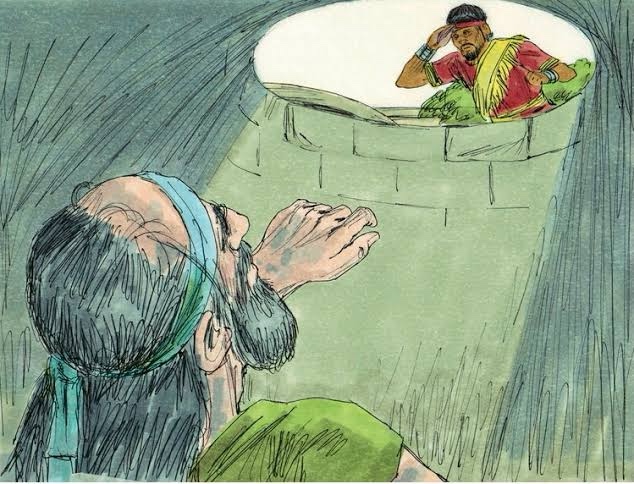
“Now Shephatiah the son of Mattan, Gedaliah the son of Pashhur, Jucal the son of Shelemiah, and Pashhur the son of Malchiah heard the words that Jeremiah was saying to all the people: “Thus says the Lord: He who stays in this city shall die by the sword, by famine, and by pestilence, but he who goes out to the Chaldeans shall live. He shall have his life as a prize of war, and live. Thus says the Lord: This city shall surely be given into the hand of the army of the king of Babylon and be taken.” Then the officials said to the king, “Let this man be put to death, for he is weakening the hands of the soldiers who are left in this city, and the hands of all the people, by speaking such words to them. For this man is not seeking the welfare of this people, but their harm.” King Zedekiah said, “Behold, he is in your hands, for the king can do nothing against you.” So they took Jeremiah and cast him into the cistern of Malchiah, the king’s son, which was in the court of the guard, letting Jeremiah down by ropes. And there was no water in the cistern, but only mud, and Jeremiah sank in the mud. When Ebed-melech the Ethiopian, a eunuch who was in the king’s house, heard that they had put Jeremiah into the cistern—the king was sitting in the Benjamin Gate— Ebed-melech went from the king’s house and said to the king, “My Lord the king, these men have done evil in all that they did to Jeremiah the prophet by casting him into the cistern, and he will die there of hunger, for there is no bread left in the city.” Then the king commanded Ebed-melech the Ethiopian, “Take thirty men with you from here, and lift Jeremiah the prophet out of the cistern before he dies.” So Ebed-melech took the men with him and went to the house of the king, to a wardrobe in the storehouse, and took from there old rags and worn-out clothes, which he let down to Jeremiah in the cistern by ropes. Then Ebed-melech the Ethiopian said to Jeremiah, “Put the rags and clothes between your armpits and the ropes.” Jeremiah did so. Then they drew Jeremiah up with ropes and lifted him out of the cistern. And Jeremiah remained in the court of the guard.”
Jeremiah 38:1-13 ESV
The story is found in Jeremiah 38:1-13. Let’s check it out. Jeremiah is imprisoned in a cistern filled with mud. The spineless King Zedekiah ordered it done. Jeremiah 38:4-9 suggests there is a real possibility of having to face death. The plot to imprison Jeremiah had been hatched through the maneuverings of some powerful but corrupt government officials who hated Jeremiah’s prophecies as pointed out in (Jeremiah 38:1-5). In steps Ebed-Melech, the righteous man from the shadows.
1. Compassion in Action
Ebed-Melek demonstrated compassion by advocating for Jeremiah’s well-being. Compassion denotes a deep desire to aide someone in need. Not only is there concern for others, true compassion necessitates a response. He had nothing to gain and could have easily have turned a blind eye to what was happening. Jeremiah’s circumstances didn’t concern Ebed-Melek.
“He has told you, O man, what is good; and what does the Lord require of you but to do justice, and to love kindness, and to walk humbly with your God?”
Micah 6:8 ESV
Ebed-Melek’s story is a prime example of someone who pursues justice and loves kindness. When the situation looked precarious for Jeremiah, Ebed-Melek stepped in; and what a difference it made. He decided that he would not sit back and watch the prophet’s demise. Instead, he courageously went on a dangerous mission to the king to intercede for Jeremiah’s life in (Jeremiah 38:7-9).
2. Courage in Adversity
What does Jesus say the greatest act of love is? To lay down our lives for our brothers. Ebed-Melek was willing to do just that.
Ebed-Melek exercised great courage in approaching King Zedekiah to plead for Jeremiah’s rescue from the cistern. Not only was his actions challenging the King’s orders, but he was also standing up against the powerful elite who had advocated for the imprisonment of Jeremiah.
Such a mission could have had serious consequences for Ebed-Melek, considering that powerful men had been behind the plot. However, the king responded favorably to his request and gave Ebed-Melek permission to release Jeremiah from the cistern. He was also given the protection of a 30-man security contingent for the mission (Jeremiah 38:10).
Stories like this are abundant in the Bible. God standing with Moses and Aaron against the Pharaoh. God’s protection of Noah and his family. God rewarding Rahab for risking her life in protecting the spies. Esther in approaching the King to ask for the salvation of her people. Ebed-Melek is in very good company. Standing up for others is often going to come with a risk, one in which God honors.
Not only did Ebed-Melek get Jeremiah released, but he also felt Jeremiah’s pain. He knew that Jeremiah’s armpits would have been wounded when he was let down by ropes into the cistern. He also realized that those same wounds would be aggravated when Jeremiah was being pulled out of the cistern with ropes. So, what did he do?
The Scripture says that Ebed-Melek first went to a room under the treasury where he could get some rags and worn-out clothes (Jeremiah 38:11). Then, he let down the ropes with the rags, advising Jeremiah to put the rags and worn-out clothes under his arms to pad the ropes, so that his body would not get injured further (Jeremiah 38:12-13).
“Duty makes us do things well, but love makes us do them beautifully.” Zig Ziglar
3. Faithfulness Rewarded
Ebed-Melek’s faithfulness to God’s servant led to his own deliverance and blessing. God has an amazing track record of honoring those who stand up for righteousness and compassion.
Not too long after, Jeremiah was hauled out of the cistern to safety and subsequently continued his powerful ministry to the nation. As a result of what he did for Jeremiah, God prophetically assured Ebed-Melek of his unfailing protection in the tumultuous days ahead (Jeremiah 39:15-18).
“The word of the Lord came to Jeremiah while he was shut up in the court of the guard: “Go, and say to Ebed-melech the Ethiopian, ‘Thus says the Lord of hosts, the God of Israel: Behold, I will fulfill my words against this city for harm and not for good, and they shall be accomplished before you on that day. But I will deliver you on that day, declares the Lord, and you shall not be given into the hand of the men of whom you are afraid. For I will surely save you, and you shall not fall by the sword, but you shall have your life as a prize of war, because you have put your trust in me, declares the Lord.'””
Jeremiah 39:15-18 ESV
God never forgets his children, nor does he forget what we do for him (Isaiah 49:15).
Ebed-Melek’s name means “servant of the king”. His story is a testament of what that looks like. You and I are servants of the King of Kings. Servants who should be motivated by compassion, willing to stand up for what is right, no matter the risk, because we are called for love, and to love extravagantly.
Not only should we look to examples like these, but first and foremost, we look to the King we serve. The Word become flesh, the Alpha and Omega, the One through Whom all things were created. That same King, who took our guilt upon Himself. That King, who bore a cross of our shame. That King, who stood in the gap for broken sinful people like you and me. Because He look upon us, full of compassion. And the compassion of Jesus empowered Him to take all the mocking and torture. To challenge the misguided establishment of not only Rome, but the religious elites. To welcome the outcasts and the hurting. To forgive the most destitute in society that everyone else had given up on. To hang on a cross, and yet speak love and forgiveness on behalf of those who put him there. He is, and always will be, our greatest example of love and compassion.
“So if there is any encouragement in Christ, any comfort from love, any participation in the Spirit, any affection and sympathy, complete my joy by being of the same mind, having the same love, being in full accord and of one mind. Do nothing from selfish ambition or conceit, but in humility count others more significant than yourselves. Let each of you look not only to his own interests, but also to the interests of others. Have this mind among yourselves, which is yours in Christ Jesus, who, though he was in the form of God, did not count equality with God a thing to be grasped, but emptied himself, by taking the form of a servant, being born in the likeness of men. And being found in human form, he humbled himself by becoming obedient to the point of death, even death on a cross. Therefore God has highly exalted him and bestowed on him the name that is above every name, so that at the name of Jesus every knee should bow, in heaven and on earth and under the earth, and every tongue confess that Jesus Christ is Lord, to the glory of God the Father.”
I have felt fleeting moments of satisfaction in my near 42 years. Periods where life seemed easier and things were going my way. But anyone who has been alive for more than a minute knows that life is like the tide. Sometimes it comes in, but it also goes back out. But there is a way to be satisfied in life that is constant. It’s not through what we have. It’s not even through who we have. It’s not about the goals achieved or the milestones reached. The bible guarantees us a path to satisfaction.
“”Blessed are those who hunger and thirst for righteousness, for they shall be satisfied.”
Matthew 5:6 ESV
In the moments I have sought God, He’s been there. In the times I’ve chosen to find my identity in what He says about me, He speaks. When I have pursued a life of service and generosity, God has shown me the power love carries. What does it mean to hunger and thirst for righteousness?
In the next chapter of Matthew, Jesus talks about striving and being anxious about life. So much of life can be defined that way. Solomon calls it all vanity, a striving after the wind. It’s wasted worry.
“But seek first the kingdom of God and his righteousness, and all these things will be added to you.”
Matthew 6:33 ESV
To hunger and thirst for righteousness is to hunger and thirst for God. He is the source of righteousness. He is the source of life. How could we possibly find it without apart from Him? Yet how often do we try? If we’re honest, we really do try to find satisfaction in so much besides Him. It’s in living for Him and for others that we actually experience lasting satisfaction. Everything else is fleeting.
“Satisfy us in the morning with your steadfast love, that we may rejoice and be glad all our days.”
Psalm 90:14 ESV
Peace and satisfaction in Christ brothers and sisters.
The words of John 3:16 have always been powerful to me. But one day they gripped my heart like they never had before. It was one morning, sitting at the kitchen table, reading a devotional with my four year old son. I read the words of this well known verse, and froze. I have read it hundreds of times before. But in this moment, the words shook me to the core. For God so loved the world, that He gave His one and only son…I read it again and looked at my one and only son sitting next to me. I was overwhelmed by the sacrifice of Jesus. I was overwhelmed by the reach and depth of God’s love. I squeezed my son and looked in his eyes and told him, “Jesus loves us so much. One day His love will capture your heart like it has mine. Today He has shown new depths to His goodness.” And then I told my son how much I love Him and spent the next several hours praising God for who He is. Don’t forget how loved you are brothers and sisters. Praying that you too will be refreshed in that love and see it anew today.












 For Common Ground