A week ago, I was in the process of setting up an outreach at the school I teach at. My Christian club was going to be sharing Bible verses with their peers at lunchtime and we were getting prepped to go out. In walked two students who interrupted things. In a brief moment, instead of getting irritated, I felt as if God was bringing people to us. I left my club members to finish the preparations while I took a chance and invited the two students to read some verses of scripture that I had laid out on one of the desks. It started a fantastic conversation.
After they left, my group went out to begin sharing verses around the school. In walked two more students. That prevented me from going out with my club members. Quickly, however, the conversation with these two new students turned into a conversation about God’s goodness and faithfulness and I was able to speak into their lives in what seemed like a critical moment.
Two days ago, that same Christian group was talking about living with a legacy in mind, and in walked a student who thought it would be funny to interrupt things. He wasn’t being mean-spirited but was trying to be funny. I wanted to be upset, but having just experienced what I had the week before, I paused and listened for what God wanted me to do to handle the situation. The kid was done in a few minutes. I felt the Lord wanted me to invite the kid and his two friends to stay for the rest of the talk. And you know what? The kid said yes. And the three of them remained and had a chance to hear about Jesus. That probably wasn’t in their plans for the day, but it was in God’s plans.
Often times God interrupts our lives with amazing opportunities. They sometimes look like inconveniences. Let’s face it, most of the time they are inconvenient. But if we try to look at them from a heavenly perspective, we may just see something beautiful.
In 2 Timothy 4:2, Paul says to be ready in season and out of season to share the word. In 1 Peter 3:15, Peter says to always be prepared to give an answer to everyone who asks you to give the reason for the hope that you have. In Ephesians 5, we are called to live wisely and make the most of the time we have. Jesus, Himself, lived with constant interruptions. But He seized those moments and people were left changed because of it. He’s calling His followers to do the same.
This isn’t your typical new year’s resolution kind of post. In fact, it is probably the exact opposite. While there’s more than enough messages this time of year promoting self improvement, not many are proclaiming that the new version of ourselves should be a whole lot less of ourselves. Christians are familiar with the often quoted 2 Corinthians 5:17. We are new creations in Christ. I see that verse used more this time of year than any other time of the year. Sermons and devotions that promote self improvement. I believe that exercise, eating better, and healthy habits are great things. But the call of the gospel on our lives is much deeper than that. The gospel life is one lived for others. It’s a life of sacrifice, giving, loving, and serving. The “new creation” is a Spirit-filled individual who cares far more for the salvation and betterment of those around them than for how they are viewed by others or even for their own needs. One of the greatest of the apostles, Paul, states it this way:
But I do not account my life of any value nor as precious to myself, if only I may finish my course and the ministry that I received from the Lord Jesus, to testify to the gospel of the grace of God.
Acts 20:24 ESV
In a different letter to the church at Galatia he wrote this:
I have been crucified with Christ. It is no longer I who live, but Christ who lives in me. And the life I now live in the flesh I live by faith in the Son of God, who loved me and gave himself for me.
Galatians 2:20 ESV
To the Philippians Paul emphasized something very similar.
Do nothing from selfish ambition or conceit, but in humility count others more significant than yourselves. Let each of you look not only to his own interests, but also to the interests of others. Have this mind among yourselves, which is yours in Christ Jesus…
Philippians 2:3-5 ESV
And just so no one thinks this is just Paul’s message, look at how Jesus Himself phrased it.
And he said to all, “If anyone would come after me, let him deny himself and take up his cross daily and follow me.
Luke 9:23 ESV
It is easy to get wrapped up in goal setting when a new year rolls around. What I would propose is that we all focus less on the “usual” goals for the new and improved us, and make our goals more about others and how we are going to put Jesus on display this year. Instead of the new year bringing about a new you, it can bring about less of you, and more of Jesus. I invite everyone to pray that this would be the case for me. Those who know me, I ask for them to hold me accountable. We need to encourage our brothers and sisters in this life of surrender. Eat healthier. Exercise more. Set goals. But may we never forget what our ultimate goal should always be: To know God and to make Him known.
This year may it no longer be us who live but Christ who lives in us. This year may we do nothing out of selfish ambition but look out for the needs of those around us. This year may we testify to the gospel of grace. This year may we take up our cross and follow our King.
When you hear the word sanctuary, what comes to mind? Some may have thought of a part of the church..but why do we call it that? Many may think of a safe place or place of peace. The dictionary definition of a sanctuary is a place of refuge or safety, and also use in terms of a nature preserve. I’m sure it’s not surprising to hear but the concept of a sanctuary is intertwined throughout the Biblical story. In fact, I would offer up that it is one of the key themes being told by God. What I want to do in today is trace that theme throughout the Biblical narrative. So where better to begin than at the beginning?
Sanctuary in Genesis
“then the Lord God formed the man of dust from the ground and breathed into his nostrils the breath of life, and the man became a living creature. And the Lord God planted a garden in Eden, in the east, and there he put the man whom he had formed.”
Genesis 2:7-8 ESV
God creates this separate place called Eden and places man there. It’s safe to say that man was not created in Eden, but was brought by God to join with Him there in mission. If a Sanctuary is a meeting place with God, the Garden of Eden would have to qualify. This event sets the tone and stage for what God intended for humanity. That is, to be with Him.
But humanity screws it up as we know. They are exiled and not allowed to enter. But God doesn’t close the book on His plan. Instead, He goes out of the Garden to meet with them. We see that with Cain and Abel. Again with Noah. Proving that God’s desire to meeting with humanity is still very much His plan.
Sanctuary in Exodus
“Now Moses was keeping the flock of his father-in-law, Jethro, the priest of Midian, and he led his flock to the west side of the wilderness and came to Horeb, the mountain of God. And the angel of the Lord appeared to him in a flame of fire out of the midst of a bush. He looked, and behold, the bush was burning, yet it was not consumed. And Moses said, “I will turn aside to see this great sight, why the bush is not burned.” When the Lord saw that he turned aside to see, God called to him out of the bush, “Moses, Moses!” And he said, “Here I am.” Then he said, “Do not come near; take your sandals off your feet, for the place on which you are standing is holy ground.” And he said, “I am the God of your father, the God of Abraham, the God of Isaac, and the God of Jacob.” And Moses hid his face, for he was afraid to look at God.”
Exodus 3:1-6 ESV
This may seem like much smaller scale than the Garden, but look at how God describes the meeting place…holy ground, denoting that it was in fact His presence there before Moses. This moment sets up God establishing a more physical representation of His presence. Lets fast forward to the post plague and Red Sea.
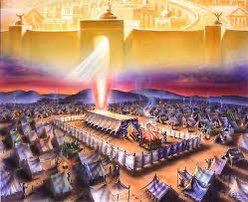
“And let them make me a sanctuary, that I may dwell in their midst. Exactly as I show you concerning the pattern of the tabernacle, and of all its furniture, so you shall make it.”
Exodus 25:8-9 ESV
This is pretty clear evidence that God is wanting to be in our midst. We actually see the word sanctuary used here. It is the Hebrew word: mik-dawsh’ meaning sacred, holy place where God’s presence is. And this holy place would go wherever Israel went. It would serve as a constant reminder of God be among His people. And from then on to the time of David, the children of God would seek Him there.
“O God, you are my God; earnestly I seek you; my soul thirsts for you; my flesh faints for you, as in a dry and weary land where there is no water. So I have looked upon you in the sanctuary, beholding your power and glory. Because your steadfast love is better than life, my lips will praise you. So I will bless you as long as I live; in your name I will lift up my hands. My soul will be satisfied as with fat and rich food, and my mouth will praise you with joyful lips,”
Psalm 63:1-5 ESV
This tabernacle would later become the temple. And for Generations, that is where people would seek to meet with God and His presence would reside. Take a look at Solomon’s dedication of the new temple.
“As soon as Solomon finished his prayer, fire came down from heaven and consumed the burnt offering and the sacrifices, and the glory of the Lord filled the temple. And the priests could not enter the house of the Lord, because the glory of the Lord filled the Lord’s house. When all the people of Israel saw the fire come down and the glory of the Lord on the temple, they bowed down with their faces to the ground on the pavement and worshiped and gave thanks to the Lord, saying, “For he is good, for his steadfast love endures forever.””
2 Chronicles 7:1-3 ESV
This would all point to a new and greater sanctuary to come. Isaiah prophesied of it. Isaiah 7:14 calls Him Immanuel, meaning God with us. And again in Isaiah 9:6-7 where He is labeled as Mighty God. Luke 1:35, again showing Jesus to be Holy (hagios in greek meaning most holy thing). Who is the most holy thing but God? It is with Jesus that God has demonstrated the concept of Sanctuary the most.
Sanctuary and Jesus
We’ve established how a sanctuary is a holy place, where God’s glory is and where we meet with Him. What better way to demonstrate that than in the person of Jesus? Several passages in the New Testament build on this idea of Jesus being the sanctuary of God.
Fullness of God (Col 1:19)
the Word made Flesh (Jn 1:1-14)
He and God are one (Jn 10:30)
Fullness of deity dwells and all authority (Col 2:9-10)
Jesus is the way to God (Jn 14:6)
It is safe to say that where is Jesus, God is. He is the ultimate Sanctuary. And much of Jesus ministry demonstrates that. Matthew 11:28-30, He says in Him we find rest and we learn what it means to live in God’s light. If we are burdened and bogged down, if we aren’t growing more in our understanding of God’s call on our lives, then maybe we aren’t listening to the call from the Sanctuary.
In John 15:4-6 it explains how taking Sanctuary in Jesus establishes a relationship that produces changes and goodness in us. If our life isn’t growing and maturing spiritually, if we aren’t producing a harvest of godliness and love, then perhaps we have neglected the holy place.
Jesus also set a pattern of what it looks like to enter the sanctuary. Often, Jesus entered into long periods of prayer and solitude. In Mark 6:31, Jesus invited His disciples to come away to a desolate place and rest and pray and rejuvenate. If we are not taking time to be alone with Him, then we need to reshuffle some priorities.
“Therefore, brothers, since we have confidence to enter the holy places by the blood of Jesus, by the new and living way that he opened for us through the curtain, that is, through his flesh, and since we have a great priest over the house of God, let us draw near with a true heart in full assurance of faith, with our hearts sprinkled clean from an evil conscience and our bodies washed with pure water. Let us hold fast the confession of our hope without wavering, for he who promised is faithful. And let us consider how to stir up one another to love and good works, not neglecting to meet together, as is the habit of some, but encouraging one another, and all the more as you see the Day drawing near.”
Hebrews 10:19-25 ESV
Not only is Jesus the Sanctuary of God, His life, death, and resurrection has granted us permanent access into God’s presence. Which means, wherever we are, we can meet with Him. We are without excuse. No job, no hobby, no relationship, nothing should ever prevent us from entering in with God. And by no means should we ever forget the price it cost to grant us such access
“Then Jesus told his disciples, “If anyone would come after me, let him deny himself and take up his cross and follow me.”
Matthew 16:24 ESV
To enter the sanctuary of Jesus is to lay aside any and all selfishness. It is to trade in our life for His. It is to live sacrificially and outwardly. Throughout scripture, to enter the sanctuary first required sacrifice. That has not changed. The atonement has been taken care of. But our pride and sinful wills must be laid on the alter.
As Christ begins to live in us, everything about us begins to change. Our minds change. Our desires change. Our wills change. Our relationships change. Ultimately, our reason for living changes. Possessions and position are no longer our priorities. Comfort and security are no longer our concerns. Safety is no longer our goal, because self is no longer our god. We now want God’s glory more than we want our own lives.
David Platt
Doesn’t that seem to be in line with God’s whole purpose from all the way back in Genesis? God wants us. He wants you. He has made a way for me and you to enjoy His presence. To receive His healing from the brokenness. To be transformed and made new. To win the war against sin. To live out our purpose here on Earth as stewards, sharing His love, truth, and goodness. To know our place and identity and His children. Now we must want that more than our own lives. Because in laying down our lives and the feet of Jesus, the entrance of the Sanctuary, there we find true life.
“What do you think? A man had two sons. And he went to the first and said, ‘Son, go and work in the vineyard today.’ And he answered, ‘I will not,’ but afterward he changed his mind and went. And he went to the other son and said the same. And he answered, ‘I go, sir,’ but did not go. Which of the two did the will of his father?” They said, “The first.” Jesus said to them, “Truly, I say to you, the tax collectors and the prostitutes go into the kingdom of God before you. For John came to you in the way of righteousness, and you did not believe him, but the tax collectors and the prostitutes believed him. And even when you saw it, you did not afterward change your minds and believe him.
Matthew 21:28-32 ESV
It matters far less where we’ve come from, or even where we find ourselves than where we are headed. God is in the business of reconciling lives. He rescues and redeems. He takes broken and imperfect people and restores them and uses them in the story He’s writing. I believe that this parable of Jesus illustrates that. The two sons described are then related to sinful people and religious people, but not in the way they would have expected. Jesus confronts the religious leaders of the day who refused to see the Kingdom of Heaven standing before them in the person of Jesus and continued in their spiritual blindness to operate contrary to the call of God. Then there were the tax collectors (one of the most hated in society) and prostitutes (one of the most dejected in society). They were the broken and lost who saw the Kingdom of Heaven in the person of Jesus and believed and surrendered their lives to Him.
Obviously, we have a stark contrast between these two groups of people. But I believe the point Jesus is making, is that He is the source of life and salvation, and even those of us who started off life with the worst possible choices, can still find redemption through Him. Even today, if you find yourself in a lifestyle contrary to the God’s calling on your life, you can choose Jesus and find life and restoration. No one is beyond His love. No one is beyond His grace. No one is beyond His reach.
“For God so loved the world, that he gave his only Son, that whoever believes in him should not perish but have eternal life. For God did not send his Son into the world to condemn the world, but in order that the world might be saved through him.
John 3:16-17 ESV
The whoever means whoever. I was once living a life apart from God. Self-seeking. Pleasure-seeking. Honor-seeking. But not God-seeking. But just as the first son did, I changed my mind. I have gone to work in the vineyard where the True Vine is and where I hope to be for the rest of my days. And the grace I have been shown I hope to never take for granted. Do you know someone who is living the way I once did? Walk with them. Listen to them. Speak life to them. Pray for them. Live a life that reflects Jesus to them. They aren’t ever beyond hope. None of us are. Let’s choose life and finish strong!
In the first part of this series, I focused on how Jesus is a reflection of the living water that first appears in the Garden of Eden. Today’s post looks at another image that shows up in the Garden: The Tree of Life. You can see it introduced in Genesis 2:9. Both the river of living water and the Tree of Life also show up at the end of the text in Revelation chapter 22, specifically verses 1-14. If you’d like a little more context, check out my previous post.
The Bible uses tree imagery repeatedly. Look at Proverbs three. “Blessed is the one who finds wisdom, and the one who gets understanding, for the gain from her is better than gain from silver and her profit better than gold. She is more precious than jewels, and nothing you desire can compare with her. Long life is in her right hand; in her left hand are riches and honor. Her ways are ways of pleasantness, and all her paths are peace. She is a tree of life to those who lay hold of her; those who hold her fast are called blessed. Proverbs 3:13-18 ESV This is contrasted with the idea of seeking wisdom on our own. Essentially, that’s the choice that Adam and Eve had in the beginning. There were two trees in the middle of the Garden. One of them represented man reaching for understanding on their own, apart from God. The other led to life, and that life comes in the form of godly wisdom. Later in Proverbs eleven, we see another reference to the tree. “The fruit of the righteous is a tree of life, and whoever captures souls is wise.” Proverbs 11:30 ESV. Righteousness, in simple terms, means to live rightly. How do we do that? Through godly wisdom. By not determining right and wrong on our own. By eating from the right tree.
So what does that mean for Jesus and for us? What other tree do we know of in scripture that holds great significance? How about the cross? The cross is also referred to as a tree…a tree that carried great significance. That significance is portrayed all the way back in Isaiah 53:3-6. “He was despised and rejected by men, a man of sorrows and acquainted with grief; and as one from whom men hide their faces he was despised, and we esteemed him not. Surely he has borne our griefs and carried our sorrows; yet we esteemed him stricken, smitten by God, and afflicted. But he was pierced for our transgressions; he was crushed for our iniquities; upon him was the chastisement that brought us peace, and with his wounds, we are healed.” Isaiah 53:3-5 ESV. Because we continue to eat from the wrong tree, just as the first humans did, God came down and planted yet another tree that would heal our brokenness and provide the life that the original Tree of Life was meant to do.
Let’s look at this in another way. In Psalm 1:1-3 people are compared to a planted tree. “Blessed is the man who walks not in the counsel of the wicked, nor stands in the way of sinners, nor sits in the seat of scoffers; but his delight is in the law of the Lord, and on his law he meditates day and night. He is like a tree planted by streams of water that yields its fruit in its season, and its leaf does not wither. In all that he does, he prospers.” Psalm 1:1-3 ESV. Perhaps this is a great description of the one who has first experienced the gift of the Tree of Life and now reflects that through their very own life.
So what’s the main idea that both of these objects, the water and the tree, are putting forward? We have the tree of LIFE and the water of LIFE. And Jesus is our source of LIFE. Remember back to Colossians chapter one?
“For by him all things were created, in heaven and on earth, visible and invisible, whether thrones or dominions or rulers or authorities—all things were created through him and for him. And he is before all things, and in him all things hold together.”
Colossians 1:16-17 ESV
Or back to John chapter one?
“All things were made through him, and without him was not any thing made that was made. In him was life, and the life was the light of men.”
John 1:3-4 ESV
Jesus is the source of the Water. Jesus is the Tree. Jesus is the one who both authored and offers life. Jesus, Himself, made so many statements about this subject.
“Jesus said to him, “I am the way, and the truth, and the life. No one comes to the Father except through me.”
John 14:6 ESV
“The thief comes only to steal and kill and destroy. I came that they may have life and have it abundantly.”
John 10:10 ESV
In John chapter six Jesus makes several comparisons between Himself and the bread from heaven that gave life to Israel in the wilderness.
“For the bread of God is he who comes down from heaven and gives life to the world…“I am the bread of life.”
John 6:33 & 48 ESV
We are left with the same option as the first humans. We can choose one tree or the other. We can drink from the water of life or dig our own cisterns. The results of our choice will be revealed throughout our lives. Being connected to the vine will result in bearing good fruit. Drinking from the water of life will cause life to spring forth from us. The question that the Lord is asking all of us is, “Will you take the life I offer you? Will you drink from the waters and eat from the tree that I give to you? Or will you try and find your own way? A way that doesn’t lead to life, but away from it.” Choose Him. Choose life.
Listen! The Lord’s arm is not too weak to save you, nor is his ear too deaf to hear you call.
Isaiah 59:1 NKJV
For behold, the days are coming,’ says the Lord, ‘that I will bring back from captivity My people Israel and Judah,’ says the Lord. ‘And I will cause them to return to the land that I gave to their fathers, and they shall possess it.
Jeremiah 30:3 NKJV
“O Jerusalem, Jerusalem, the one who kills the prophets and stones those who are sent to her! How often I wanted to gather your children together, as a hen gathers her chicks under her wings, but you were not willing!
Matthew 23:37 NKJV
Even in the midst of their depravity, God looked upon Israel with compassion and a desire to save them from themselves. He sent prophets to them such as Isaiah, Jeremiah, Ezekiel, Hosea, Ezra, Micah, and several others. These prophets gave stern warnings to the people and encouraged them to abandon their sinfulness. They reminded the people of God’s love for them and His future glory that awaits. Even once Israel was taken away to bondage God used prophets such as Daniel to speak words of hope.
As prophecy was being fulfilled and the people were being gathered by God from captivity, He raised up more prophets such as Ezra and Zechariah to remind them of God’s goodness and His call on their lives as they enjoy their newfound freedom. But as Jesus states in Matthew 23, God was so much desiring His children, and they would not listen.
Despite our hard hearts at times, God is still whispering (sometimes shouting) His love in our ears. In my darkest days, I still saw God moving in my life. Even at my worst, God still loved me and didn’t abandon me. Whether you are started down a bad road, caught up in bondage, or experiencing your freedom in Christ, God is constantly after your heart. The stories of the prophets are just that much more of a reminder that God does not leave us nor forsake us. It is also a good lesson in listening to God, heeding His voice, and following His path which will keep us from stumbling. God and His word will never leave us no matter our circumstances because His heart is always seeking the redemption of our souls.
What is Passover about? That’s really the question that I want to answer in this post. I am aware that some of you may fully know what the Passover is. And the idea of the Passover is not a new one, nor do I want to present a brand new concept around what the Passover is. But in answering my initial question, that is, what is Passover all about? I am going to attempt to answer a couple of other questions. The first question I want to look at is, in the Passover, did Israel deserve to be saved? The second question is, why did God rescue Israel in the Passover?
You can read about the story of the Passover in the book of Exodus, starting in chapter 3 with the call of Moses and through the 10 plagues. However, I would argue that the theme that the Passover represents was not new with the event of the first Passover nor did it end with the first Passover. What are some of the themes of Passover? Some big themes that stand out are redemption, rescue, salvation, and God saving Israel from slavery.
This brings us to our first question: Did Israel deserve to be saved? The simple answer is no. Let me classify. In both Joshua 24:14 and Ezekiel 20:6-9 Israel is described as a people who served the gods of Egypt were rebellious, and set detestable things before their eyes.
I think it’s easy for us to think of Israel as a godly people in captivity. But they were essentially a pagan idolatrous people by the time that Moses hits the scene. Moses doesn’t even know who God is when they meet at the burning bush. Moses wants to know what to call God when he tells Israel about Him, most likely because the people of Israel would have lost connection with Him over the previous 400 years.
So we know Passover is about redemption and rescue and is not deserved in any way. I say that, not to single out or harp on the people of Israel. Lord knows you and me would have most likely been the same way had we lived then. The undeserving element, in my opinion, adds so much encouragement.
Now for our second question: why did God rescue Israel in the Passover? When God is speaking with Moses He says things like…He was watching over them and that He remembered the covenant with Abraham.
“The Lord passed before him and proclaimed, “The Lord, the Lord, a God merciful and gracious, slow to anger, and abounding in steadfast love and faithfulness,”
Exodus 34:6 ESV
This verse is how God describes himself. And His track record more than proves it. God delivered Israel for the same reason He delivers anyone, He is abounding in love and faithfulness. He makes promises and He keeps promises. God promised Abraham, back in Genesis 15:12-14, He would rescue his descendants. There was no stipulation tied to it. God’s faithfulness to His promises is why the Passover happened.
In addition to His faithfulness, another reason for the Passover is God’s desire to make His name known. In Speaking with Moses, God said that He will send plagues in order to make His name known. God also wanted to make Himself known to Israel. And through Israel, He would be made known to the world. And in Exodus 12, we see not only Israel going out of Egypt, but a mixed multitude of other peoples with them. God’s wonders humbled the most powerful kingdom in the ancient world at that time, rescued an entire nation of people from slavery, and convinced a multitude of non-Israelites to go with them.
Now let’s go back to our overarching question: what is the Passover? It’s salvation, initiated by God, towards undeserving people, out of His love and faithfulness, to make His name known. What does that sound like? The Gospel right? Look at these New Testament passages.
He saved us and called us to a holy calling, not because of our works but because of his own purpose and grace…
2 Timothy 1:9a ESV
“for all have sinned and fall short of the glory of God, and are justified by his grace as a gift, through the redemption that is in Christ Jesus,”
Romans 3:23-24 ESV
“For by grace you have been saved through faith. And this is not your own doing; it is the gift of God,”
Ephesians 2:8 ESV
This is our message. The one that God has been telling since the beginning. God sacrificed an animal to cover Adam and Eve after they sinned (Genesis 3). God rescued Noah and his family (Genesis 6-9). God saved Israel time and time again through the Judges from Othniel to Samuel (Judges and 1-2 Samuel). God brought Israel out of Egypt and out of Persia (Ezra and Nehemiah). God preserved Israel through Esther and Mordecai while they were still in Persia (Esther). He has been in the business of rescuing and redeeming undeserving people since the beginning. Passover is a major expression of that. And one that pointed to a future Passover in which, not just a lamb, but the Lamb would suffer and die.
“For while we were still weak, at the right time Christ died for the ungodly. For one will scarcely die for a righteous person—though perhaps for a good person one would dare even to die— but God shows his love for us in that while we were still sinners, Christ died for us. Since, therefore, we have now been justified by his blood, much more shall we be saved by him from the wrath of God. For if while we were enemies we were reconciled to God by the death of his Son, much more, now that we are reconciled, shall we be saved by his life.”
Romans 5:6-10 ESV
I don’t deserve Jesus. You don’t deserve Jesus. That’s the point. Thank you Lord for the Passover. Thank you Jesus for loving us and saving us. Help us grow in gratitude for all you’ve done.
“And when the hour came, he reclined at table, and the apostles with him. And he said to them, “I have earnestly desired to eat this Passover with you before I suffer. For I tell you I will not eat it until it is fulfilled in the kingdom of God.” And he took a cup, and when he had given thanks he said, “Take this, and divide it among yourselves. For I tell you that from now on I will not drink of the fruit of the vine until the kingdom of God comes.” And he took bread, and when he had given thanks, he broke it and gave it to them, saying, “This is my body, which is given for you. Do this in remembrance of me.” And likewise the cup after they had eaten, saying, “This cup that is poured out for you is the new covenant in my blood.”
He (Hezekiah) did what was right in the eyes of the Lord, just as his father David had done. He removed the high places, smashed the sacred stones and cut down the Asherah poles. He broke into pieces the bronze snake Moses had made, for up to that time the Israelites had been burning incense to it.
2 Kings 18:3-4 (NIV)
He (Josiah) did what was right in the eyes of the Lord and followed completely the ways of his father David, not turning aside to the right or to the left.
2 Kings 22:2 (NIV)
In the book of 2 Kings chapter 17, the fall of the northern kingdom (Israel) to Assyria in 722 BC is recorded. Alone and vulnerable, the southern kingdom (Judah) remains intact until its fall to the Babylonians in 586 BC. During this 136-year period, Judah experienced blessing and reform during the reigns of two of her greatest kings, Hezekiah and Josiah, recorded in 2 Kings chapters 18-25. We are reminded that obedient kings have a profound and positive impact on God’s people. These two kings attempted to re-establish righteousness and obedience to God’s commands. Sometimes God just needs to clean house and these two men most certainly did that for Judah. God sent them in the midst of their distress after witnessing the fall of their comrades in the northern kingdom who, after refusing to abandon their sinful ways and pagan worship, were taken away into captivity. This was an opportunity for the people of Judah to get things right before it happened to them as well. Out of God’s love for them He extended this opportunity to be guided on the right path, to cling to Him once more. However, Judah was disobedient in their own right once these two kings had left them and eventually fell into their captives’ hands. That doesn’t take away from the fact that God was trying to reel in their hearts and save them from their own ways. My story tells the same message, as I’m sure yours does too. We need to listen and allow God to remove things from our lives and not go back to pick them up again, only to be carried away by them. Praise God for His redemptive heart towards us. Praise God for His pursuit.
It may seem like an odd concept, but we are all marketing something. The way we dress, speak, act, and carry ourselves, are all sending messages to those around us. The question is, what are you advertising? For those bound to Christ, the answer is given to us. God’s purpose for all of us is to be image barrers. That is far more than our physical appearance. It entails a lifestyle. Our entire beings are wrapped up in this. No one did that better the Jesus of Nazareth. He is God in the flesh. The full radiance of God contained in Him. He breathed out the life of God everywhere He went. Once we take on the name of “Christian” we are devoting ourselves to display the life of Christ through our very own. What we wear, how we speak, and our actions should all announce the One our hearts are devoted to. This is just as challenging to me as it is to anyone reading this. There are days I fall flat. In those moments too, we can display humility and experience the grace won for us by Christ.
There are those in my life who have helped me along the way. They are the ones who show me Jesus day in a day out. My hope is, that you too can think of people in your own life who have pointed you towards Jesus by their devotion to Him. So many people have been introduced to Christ through the lives of others. The world is watching. Our family is watching. Our friends and coworkers are watching. We have chosen to be clothed in Christ. Lets wear it well.
You are the light of the world. A town built on a hill cannot be hidden. Neither do people light a lamp and put it under a bowl. Instead they put it on its stand, and it gives light to everyone in the house. In the same way, let your light shine before others, that they may see your good deeds and glorify your Father in heaven.
During the Cold War, many Christians in Eastern Europe would memorize entire books of the Bible and then destroy their copies. They had to do that because they would have either been arrested, sent to prison camps, or disappear. There was no room for God in the Soviet Union or their satellite states. To have any God other than those in power was akin to a crime against the state itself. Still, in places like North Korea, China, Vietnam, Iran, Indonesia, and more, the persecution towards believers forces them to absorb as much of God’s word as possible because they can’t risk being caught reading openly. For those of us not living under the tyranny of a radical theocracy or a commnunist system, memorizing scripture can still serve an important role in our journey of faith.
I have stored up your word in my heart, that I might not sin against you.
Psalm 119:11 ESV
Knowing God’s word…I mean really knowing it…helps us in the war against sin. Satan, our flesh, and the cultures of the world are constantly whispering, and often yelling, messages in our ears that lead us into sin. By memorizing scripture, we give ourselves a weapons cache to fire back. Jesus demonstrated this when He allowed Satan to tempt Him in the wilderness. Every temptation was met with God’s word. The only way we can do the same is to know how to distinguish messages that line up with scripture and those that do not. A huge fault I see in so many Christians is an utter lack of biblical knowledge. I’m not referring to seeking a degree in theological studies. I’m talking about a lack of knowing what is said in the Bible. When we don’t know what God says, we’ll believe what those opposed to Biblical principles say.
This Book of the Law shall not depart from your mouth, but you shall meditate on it day and night, so that you may be careful to do according to all that is written in it. For then you will make your way prosperous, and then you will have good success.
Joshua 1:8 ESV
We can’t live out scripture if we don’t know scripture. Every believer should be a student of their Master. To meditate on scripture is to meditate on the Lord Himself. The more we focus on the story of God the more we know Him. The more we know Him the more we love Him. The more we love Him, the more we live for Him. Just as any relationship thrives on attention and communication, so to does our relationship with the Lord. Our lives of devotion should be a pattern of prayer, reading, and praise.
Do not conform to the pattern of this world, but be transformed by the renewing of your mind. Then you will be able to test and approve what God’s will is—his good, pleasing and perfect will.
Romans 12:2 NIV
Our mind is a battleground. Our mind is also malleable. We have the ability to make it into what we want. And since so much of what we say and do is determined by the mind, why not pour more energy into making it a core of light. From the moment we start absorbing things as a child, negative things creep in. We have to fight for hope. We battle for purity. We war for compassion and generosity. The nature of the fallen mind is to look inward, preserve self, seek comfort, elevate self importance or dwell on self pitty. Our minds need transformed. One of the best ways to do that is through meditation and memorization of scripture. That, in turn, will help us to focus on pure and truthful things. Our eyes will turn outwards towards those around us. Our self importance will diminish, yet at the same time, we will feel more loved and valued than ever before.
If you abide in Me, and My words abide in you, ask whatever you wish, and it will be done for you.
John 15:7 NASB
To abide in Christ is equated to having Christ’s words abiding in us. This isn’t a reference to Christ dwelling in us, it’s a call to know His words. To abide means to obey, stick to, hold to, and follow. When we are so intuned with Christ and His words, then our desires will be His desires for us. The things we ask for in prayer will align with the holy life that Christ is calling us to in the first place.
So whether we live in an area where the Christian faith is heavily restricted or even persecuted, an area where affluence and apathy attempt to shadow the call of piety, or an area where freedom allows us to live out our faith, it is equally important to pursue a rich understanding of God’s word. As followers of Christ, we are called to love Him and to make Him known. We can’t do either if we don’t know Him. No one else has ever loved you more. No one else crafted you. No one else pursues a relationship with you like Jesus does. The greatest gift in this life will be to know Him.













 For Common Ground