In the Pain

When life gets hard, our natural response is usually to ask why. Why is this happening? Why now? Why me? But in John 12:27–28, we see a moment where Jesus, fully aware of the suffering He’s about to endure, says something radically different:

“Now my soul is troubled. And what shall I say? ‘Father, save me from this hour’? No, it was for this very reason I came to this hour. Father, glorify your name!”

John 12:27-28a

His soul is troubled, and yet He doesn’t pray for escape — He prays for God to be glorified. This Is What Trust Looks Like. Jesus wasn’t pretending to be fine. He didn’t mask the heaviness of His soul. He admitted the weight of what He was carrying — and still, His desire wasn’t for comfort, but for God’s purpose to be fulfilled through Him.

That’s not weakness. That’s strength. That’s surrender. What If We Prayed Like That? What if, in the middle of pain, disappointment, confusion, or heartbreak, our first prayer wasn’t “Get me out of this” but “Be glorified in this”? Not because the pain is good. Not because the suffering is easy. But because we trust that God wastes nothing — and that even in the hardest moments, His glory can shine through us.

“I consider that our present sufferings are not worth comparing with the glory that will be revealed in us.”

Romans 8:18

Your Struggle Might Be Sacred

Jesus knew His suffering had purpose. We may not always see the full picture in our own lives, but this much is clear: God is able to bring beauty out of brokenness, and when we offer our trials to Him with open hands, He does something eternal with them. It’s not about denying our pain — it’s about devoting it. Saying, “Use even this, Lord. If you can be seen in this, then don’t take it away too quickly.”

“For our light and momentary troubles are achieving for us an eternal glory that far outweighs them all.”

2 Corinthians 4:17

“Father, Glorify Your Name” — A Dangerous, Beautiful Prayer

This is a bold prayer. It surrenders control. It places trust in God’s bigger plan. And it shifts the story from being all about us… to being all about Him. Jesus prayed it — not just in John 12, but again in Gethsemane: “Not my will, but Yours be done.” And if Jesus could pray it in His darkest hour, maybe we can, too.

“I eagerly expect and hope that I will in no way be ashamed, but will have sufficient courage so that now as always Christ will be exalted in my body, whether by life or by death.”

Philippians 1:20

So next time you feel the weight pressing in, try this: Take a breath. Acknowledge the pain. Then say — even through tears —“Father, glorify Your name.” There’s power in that. And God will meet you in it.

“Dear friends, do not be surprised at the fiery ordeal that has come on you to test you… But rejoice inasmuch as you participate in the sufferings of Christ, so that you may be overjoyed when his glory is revealed.”

1 Peter 4:12-13

Peace in Christ brothers and sisters.

Why We Need Jesus

There’s a quote that flips a lot of religious assumptions on their head:

Holiness is not the way to Jesus; Jesus is the way to holiness.

It’s short, but it packs a punch. For many of us, whether we’ve grown up in faith or come to it later in life, there’s often a quiet belief that we have to “clean ourselves up” before we can approach Jesus. Like we have to reach a certain level of moral performance before we’re worthy of His presence. But this quote reminds us of the gospel’s core truth: it’s not about what we do to get to Him — it’s about what He does to bring us to God.

“For it is by grace you have been saved, through faith—and this is not from yourselves, it is the gift of God—not by works, so that no one can boast.”

Ephesians 2:8-9

Jesus doesn’t wait for perfection. He invites us as we are.

Think of the people Jesus surrounded Himself with during His ministry — fishermen, tax collectors, sinners, outcasts. They weren’t holy when He called them. But through being with Him, learning from Him, and following Him, they were transformed. Holiness wasn’t the entry ticket; it was the result of walking with Him.

“He saved us, not because of righteous things we had done, but because of his mercy. He saved us through the washing of rebirth and renewal by the Holy Spirit.”

Titus 3:5

We don’t earn Jesus by being good — we grow in goodness by knowing Him.

Trying to earn our way to Jesus through good deeds alone can lead to pride or despair. Pride if we think we’re doing well, despair if we keep falling short. But the gospel frees us from that pressure. It tells us: Jesus came for the broken, not the perfect. He came to save, not to reward the already righteous.

“And by that will, we have been made holy through the sacrifice of the body of Jesus Christ once for all.”

Hebrews 10:10

So what does this mean practically?

It means we don’t have to hide our mess. We come to Jesus with our struggles, our doubts, our inconsistencies — and He begins the slow, beautiful work of making us holy. It’s not instant. It’s a process. But it’s real, and it’s rooted not in our effort, but in His grace.

“But God demonstrates his own love for us in this: While we were still sinners, Christ died for us.”

Romans 5:8

Holiness is the fruit, not the root.

Let Jesus be the root of your life, and holiness will grow. Not as a burden, but as a natural outcome of knowing Him more deeply.

So the next time you feel like you have to “get it together” before you pray, go to church, or even just approach God — remember this: You don’t get holy to find Jesus. You find Jesus, and He makes you holy.

“Jesus answered, ‘I am the way and the truth and the life. No one comes to the Father except through me.’”

John 14:6

Peace and holiness in Christ brothers and sisters.

Being at Peace

“For to set the mind on the flesh is death, but to set the mind on the Spirit is life and peace.”

‭‭Romans‬ ‭8:6‬ ‭ESV‬‬

In a world filled with uncertainty, conflict, and stress, finding true peace can seem impossible. Yet, for Christians, peace is not just a fleeting feeling but a gift from God-one that is accessible in every season of life.

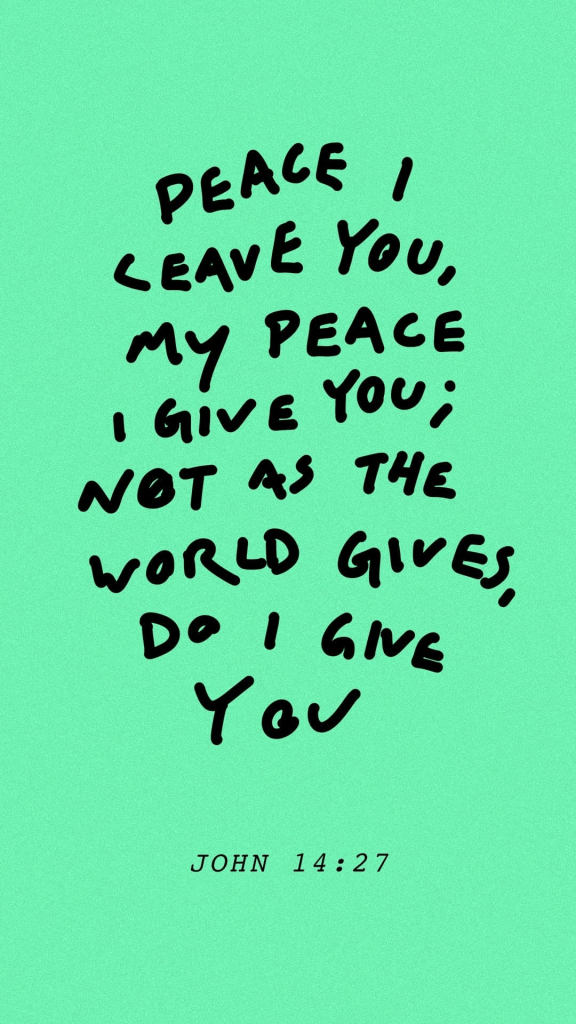
The Bible teaches that peace comes from God, not from external circumstances. Referring to the image at the beginning of this post, Jesus said in John 14:27, “Peace I leave with you; my peace I give you. I do not give to you as the world gives. Do not let your hearts be troubled and do not be afraid.”

This peace is not dependent on having a trouble-free life. It’s a deep, abiding assurance that God is in control, no matter what happens.

Do not be anxious about anything, but in every situation, by prayer and petition, with thanksgiving, present your requests to God. And the peace of God, which transcends all understanding, will guard your hearts and your minds in Christ Jesus.

Philippians 4:6-7

One of the biggest barriers to peace is worry. When we trust God with our fears and burdens, He replaces our anxiety with His perfect peace. I have found that experience helps in this area. The more things we’ve gone through and have seen God carry us through to the other side of the storms, the easier it is to accept that peace when the waves start crashing again.

We can’t overstate the power of prayer and worship in our state of mind. Spending time in prayer and worship shifts our focus from our problems to God’s power. Worship reminds us of who God is-our Provider, our Protector, and our Peace. When we dwell in His presence, peace follows.

If it is possible, as far as it depends on you, live at peace with everyone.

Romans 12:18

Peace is not just something we receive but something we are called to share. This means forgiving others, avoiding unnecessary conflicts, and being agents of God’s peace in our communities. But we can’t share something we don’t have. If there’s no genuine peace in us, then we won’t spread it to those in our lives. Some of the most bitter, harsh, tactless, unforgiving people I know are that way because they don’t know peace that Christ offers them.

You will keep in perfect peace those whose minds are steadfast, because they trust in you.

Isaiah 26:3

The troubles of this world are temporary, but God’s kingdom is eternal. When we focus on the bigger picture-God’s promises and our eternal future with Him-our present worries lose their grip on us. Call it what you will-looking at the silver lining-keeping an eternal mindset-being heavenly minded-it all leads to a clearer outlook on our own lives.

I wish you peace in Christ brothers and sisters.

A Resurrected Life part I

In Ezekiel’s vision from Ezekiel 37, the valley of dry bones was lifeless, barren, and without hope. It represented a people who felt abandoned, broken, and beyond redemption. Yet, in that desolation, God asked Ezekiel, “Can these bones live?” Ezekiel’s response was one of faith: “Sovereign Lord, you alone know.”

God commanded Ezekiel to prophesy over the bones, and as he did, a miraculous transformation began. Bones came together, flesh formed, and breath entered them—they rose as a vast army.

This story reminds us that no situation is too hopeless for God. What feels like a graveyard in your life—whether it’s a broken relationship, a lost dream, or a spiritual drought—can be revived by the power of His Spirit.

God specializes in breathing life into dead things. His Spirit can restore, renew, and rebuild what has been lost. The same God who brought life to the dry bones in Ezekiel’s vision is still working today, calling out to you: “Prophesy to the dry bones. Trust Me to breathe life into what seems dead.”

No matter how lifeless things may seem, place your hope in the God who brings life. He is faithful to revive and restore, turning valleys of despair into fields of victory.

Just as important, this passage points ahead to the New Life and Transformation done on behalf of the believer.

Therefore, if anyone is in Christ, he is a new creation. The old has passed away; behold, the new has come.

2 Corinthians 5:17

The resurrection power transforms believers into new creations, enabling them to live a renewed and righteous life.

When God made man, He breathed life into Adam. When we give our hearts to Jesus, new life is breathed into us. It’s the same idea as what is happening in Ezekiel 37. After all, we were described as “…dead our trespasses and sins” (Eph2:1) but then he says ““But God, being rich in mercy, because of the great love with which he loved us, even when we were dead in our trespasses, made us alive together with Christ—by grace you have been saved—” (Eph2:4-5 ESV) And He does that by breathing life into us.

The Hebrew word for breath used in Ezekiel 37 is: (roo’-akh) rûaḥ also denotes His Spirit. It’s also used in Genesis 1:2: The earth was without form and void, and darkness was on the face of the deep. And the Spirit of God was hovering over the face of the waters. Again, in Genesis 41, when Pharaoh speaks about Joseph, Pharaoh says to his servants, “Can we find such a one as this, a man in whom is the Spirit of God?” It’s Spoken over the judges when the spirit of the Lord came over them to judge Israel.

My question for all of us is, are we living the new and resurrected life? And how do we really know? And that’s what my next post is all about.

Peace in Christ brothers and sisters.

A Crucial Fight

January is Human Trafficking Awareness Month. It is a pervasive and often hidden crime that affects millions of people worldwide. It involves the exploitation of individuals through force, fraud, or coercion for purposes such as labor, sexual exploitation, and domestic servitude. Though it may seem like a distant issue, human trafficking occurs in every part of the world, including our own communities. There are more slaves in the world today than at any other point in human history. Raising awareness is a crucial first step in combating this crime and helping to protect the vulnerable.

The Scope of the Problem

According to the International Labour Organization (ILO), approximately 40 million people are trapped in modern-day slavery, with 71% of them being women and girls. Victims are often lured by promises of a better life, only to be subjected to unimaginable abuse, manipulation, and violence. Traffickers use various means to control their victims, including physical violence, threats, and psychological manipulation, leaving them with few options to escape.

Human trafficking isn’t limited to just large-scale criminal operations. It can happen in seemingly ordinary settings: local businesses, homes, and even schools. Often, the victims don’t even realize they are being trafficked until it’s too late. In many cases, they are threatened with harm to themselves or their loved ones if they try to escape. This reality makes it imperative that we, as a society, become more informed and vigilant.

How We Can Make a Difference

1. Educate Ourselves and Others

The first step in raising awareness is knowledge. Understanding the signs of human trafficking can help us identify and report suspicious activities. Some common indicators of trafficking include:

  • Physical signs of abuse: Bruises, burns, or scars that are consistent with control tactics.
  • Inconsistent stories or answers: Victims may appear fearful, avoid eye contact, or provide rehearsed stories.
  • Isolation: Victims often have little to no contact with people outside their trafficker’s control and may seem afraid of authority figures.
  • Excessive working hours or lack of freedom: Victims may work in poor conditions, under duress, and without breaks or compensation.

Taking the time to educate yourself and your community can make a significant difference in identifying victims early on.

2. Support Anti-Trafficking Organizations

There are numerous organizations working tirelessly to combat human trafficking and support its victims. From providing shelter and legal aid to raising public awareness and advocating for stronger policies, these groups rely on donations and public support to continue their essential work. By donating time, money, or resources, you can help these organizations provide victims with the support they need to rebuild their lives.

The organization I team up with is the A21 Campaign (https://www.a21.org/) I was first introduced to the organization at a conference out in California, 12 years ago. It was at that moment that the full scale of human trafficking became something I was aware of. I had never grasped the depth of the problem. Since that day, over 10 years ago, I have made it a personal mission to raise awareness about this subject. My first child was born the following year and that made it even more important for me. The A21 Campaign operates all of the world. They have major operations in Australia, Bulgaria, Cambodia, Greece, Spain, Thailand, the United Kingdom, South Africa, and all over Latin America.

Some other leading anti-trafficking organizations include:

  • Polaris: A nonprofit organization dedicated to combating and preventing human trafficking through a national hotline and policy advocacy.
  • The International Justice Mission (IJM): An organization that rescues victims of trafficking and violence while working to dismantle trafficking networks globally.
  • Love146: A nonprofit focused on ending child trafficking and exploitation.

Supporting these organizations, or even volunteering your time, can help make a substantial impact in the fight against human trafficking.

3. Advocate for Stronger Laws and Policies

Human trafficking thrives in environments where laws are weak or not enforced. Advocacy for stronger policies at local, national, and international levels is vital for creating systems that prevent trafficking and protect victims. This can include:

  • Stronger labor laws that protect vulnerable workers.
  • Stricter penalties for traffickers and those complicit in the crime.
  • Better victim protection laws that ensure those who escape trafficking can access help, safety, and justice.

By engaging in activism—whether through petitions, contacting lawmakers, or raising public consciousness—you can help push for legislative reforms that reduce the incidence of trafficking.

4. Know How to Report Suspected Trafficking

If you suspect human trafficking in your community, it’s crucial to know how to report it. Many countries have hotlines and online resources where you can anonymously report tips and receive guidance on how to proceed. In the U.S., for example, you can contact the National Human Trafficking Hotline at 1-888-373-7888 or text BeFree (233733).

While it’s important to be cautious and avoid direct intervention that could put you or the victim in danger, reporting trafficking activity is one of the most effective ways to bring attention to the problem and get help to those in need.

In Luke 4:18, Jesus says, “He has sent me to proclaim freedom for the prisoners”. He calls His followers to do the same. All of these men, women, and children are God’s creation, beautiful and valuable beyond measure. In Mark 12:3, He says, “love your neighbor as yourself.” These innocent souls are our neighbors. And they deserve our time, efforts, and attention. It is all our jobs to speak up and speak out. I know the problem seems so overwhelming that you may feel insignificant in the fight. But I encourage you to just take the first step, and then the next. Let’s all help bring freedom to the captives!

Peace in Christ brothers and sisters.

How God Looks at You

The world often judges us by our past. We most often view ourselves on our present. I believe God looks at us through our future.

“For I know the plans I have for you, declares the Lord, plans for welfare and not for evil, to give you a future and a hope. Then you will call upon me and come and pray to me, and I will hear you. You will seek me and find me, when you seek me with all your heart.”

Jeremiah‬ ‭29‬:‭11‬-‭13‬ ‭ESV

The story of the apostle Peter has always been one that resonates with me in someways. Peter was impulsive and battled with pride. I find the same qualities in myself. Peter had highs and lows. He also praised God through his actions at some moments and denied him in others. but when Jesus interacted with Peter, he didn’t look at the mistakes that he had made, or his up and down faith. Jesus had his eyes set on Peter‘s future. By calling him, Peter and the first place, Jesus was making a statement about who he would become. As we read about in the New Testament, Peter was not his original name. Not only did Jesus give him a new name, but he proclaimed that the same faith that Peter had in order to declare Jesus, the Messiah, would be the same faith on which Jesus would build his church. Even after Peter denied Jesus three times on the eve of his crucifixion, Jesus knew that his destiny would not be marked by denial, but by the faithful pursuit of the kingdom of God. Not long after the resurrection of Jesus, he met with Peter and reminded him of his love for him. When Jesus ascended, Peter would be instrumental in preaching one of the greatest sermons and history after which 3000 people gave their hearts to Christ. Peter would go onto live the rest of his days devoted to sharing the gospel. Ultimately he would give his own life For the sake of the gospel.

“When they had finished breakfast, Jesus said to Simon Peter, “Simon, son of John, do you love me more than these?” He said to him, “Yes, Lord; you know that I love you.” He said to him, “Feed my lambs.” He said to him a second time, “Simon, son of John, do you love me?” He said to him, “Yes, Lord; you know that I love you.” He said to him, “Tend my sheep.” He said to him the third time, “Simon, son of John, do you love me?” Peter was grieved because he said to him the third time, “Do you love me?” and he said to him, “Lord, you know everything; you know that I love you.” Jesus said to him, “Feed my sheep. Truly, truly, I say to you, when you were young, you used to dress yourself and walk wherever you wanted, but when you are old, you will stretch out your hands, and another will dress you and carry you where you do not want to go.” (This he said to show by what kind of death he was to glorify God.) And after saying this he said to him, “Follow me.””

John‬ ‭21‬:‭15‬-‭19‬ ‭ESV

Jesus has rescued me from a troubled past. He rescues me still from my pride and my up-and-down faith. But I believe, just as in Peter, Jesus views me in light of the destiny that he has aligned and prepared for me. I believe the same is true for you. God sees you. He knows all of your hurt and your brokenness and your sin. He knows your needs and your wants. He is for you. No matter what you’ve done., or where you find yourself now. He wants a relationship with you. And if He already has that, He wants it to grow to new heights.

“Therefore, if anyone is in Christ, he is a new creation. The old has passed away; behold, the new has come.”

2 Corinthians‬ ‭5‬:‭17‬ ‭ESV

Peace in Christ brothers and sisters.
A Celebration of Light and Dedication

Hanukkah, also known as the Festival of Lights, is a significant celebration in Jewish tradition that commemorates the rededication of the Second Temple in Jerusalem following the Maccabean revolt. While Hanukkah is not directly mentioned in the Old Testament, its themes of light, dedication, and divine intervention resonate deeply with the Christian faith—especially when viewed through the life and ministry of Jesus.

1. Jesus and the Feast of Dedication

In John 10:22-23, we find a direct reference to Hanukkah:

“Then came the Festival of Dedication at Jerusalem. It was winter, and Jesus was in the temple courts walking in Solomon’s Colonnade.”

The Festival of Dedication is another name for Hanukkah, and it is during this time that Jesus speaks profoundly about His identity:

“I and the Father are one.” (John 10:30)

Here, Jesus reveals Himself as the Good Shepherd and the Light of the World—paralleling the themes of Hanukkah, where the menorah’s lights symbolize God’s presence and guidance.

2. The Miraculous Light and Jesus as the Light of the World

Hanukkah celebrates the miracle of the oil that lasted eight days, despite there being only enough for one. This miracle signifies God’s provision and presence in a time of need.

Jesus embodies this same light in His teachings:

John 8:12: “I am the light of the world. Whoever follows me will never walk in darkness but will have the light of life.”

• Just as the menorah lit the Temple, Jesus illuminates the hearts and lives of His followers, guiding them toward God’s truth.

3. Rededication and Spiritual Renewal

The story of Hanukkah is one of rededication—restoring the Temple to its sacred purpose after it was defiled by foreign rulers. Similarly, Jesus calls His followers to a life of spiritual renewal and dedication:

1 Corinthians 6:19-20: “Do you not know that your bodies are temples of the Holy Spirit…? Therefore honor God with your bodies.”

• Christians are invited to rededicate their lives to God, just as the Maccabees rededicated the Temple.

4. Unity of the Old and New

Hanukkah offers a bridge between the Jewish and Christian faiths, highlighting shared themes of divine intervention, light overcoming darkness, and dedication to God. For Christians, celebrating or reflecting on Hanukkah can deepen appreciation for the Jewish roots of their faith and the fulfillment of these themes in Jesus Christ.

5. A Call to Celebrate the Light

Hanukkah is a time of celebration, hope, and gratitude for God’s faithfulness. For Christians, it’s an opportunity to reflect on Jesus as the ultimate Light of the World, whose life and sacrifice bring spiritual freedom and eternal hope.

As the menorah’s lights shine brightly during the eight nights of Hanukkah, they remind us of the enduring presence of God—both in the history of Israel and in the person of Jesus Christ.

Peace in Christ, the Light of the World.

Faith in the Face of Overwhelming Odds

Throughout Scripture, God consistently demonstrates His faithfulness to His people, often in the most unlikely of circumstances. Two powerful examples of this are the story of Gideon’s victory over the Midianites (Judges 6-7) and the fall of Jericho (Joshua 6). Though separated by time and context, both narratives reveal how God uses ordinary people and unconventional methods to display His power and fulfill His promises.

Gideon: Trusting God in Weakness

Gideon’s story begins with fear and doubt. When God calls him to deliver Israel from the Midianites, Gideon protests, saying, “My clan is the weakest in Manasseh, and I am the least in my family” (Judges 6:15). His hesitancy is relatable; he questions whether God is truly with him and seeks repeated confirmation through signs, such as the fleece (Judges 6:36-40). We’ve all been there. Saying something like, “is this truly you God?” Or, “are you sure you want me to do that?”

Despite Gideon’s initial doubt, God remained faithful and patient, guiding him step by step. Just like He’s done in my life and yours. The most remarkable aspect of Gideon’s victory lies in God’s strategy. Facing an army described as “thick as locusts” (Judges 7:12), Gideon starts with 32,000 men. However, God reduces the army to just 300, ensuring that the victory will unmistakably be attributed to Him, not human strength (Judges 7:2). Armed with trumpets, torches, and jars—not conventional weapons—Gideon’s army routs the Midianites.

Gideon’s victory highlights an important truth: God’s power is perfected in our weakness (2 Corinthians 12:9). When we step out in faith, even with trembling hearts, God can accomplish extraordinary things through us.

Jericho: Obedience in the Unconventional

The fall of Jericho is another testament to God’s faithfulness and power. As the Israelites prepared to enter the Promised Land, Jericho stood as a formidable obstacle—a city fortified with impenetrable walls. Yet God’s instructions to Joshua were unconventional: march around the city once a day for six days, and on the seventh day, march around it seven times, then shout and blow trumpets (Joshua 6:2-5).

To human reasoning, this plan seemed absurd. Yet Joshua and the Israelites obeyed without hesitation. Their faith was rewarded when the walls of Jericho collapsed, granting them victory without a single weapon being raised (Joshua 6:20). This story reminds us that God’s ways are not our ways (Isaiah 55:8-9). His plans often defy logic, but they always accomplish His purposes.

Faith, Obedience, and God’s Glory

Both stories share common themes that resonate with believers today:

1. Faith in God’s Promises: Gideon and Joshua both trusted God’s promises, even when the odds seemed impossible. Their faith allowed them to experience God’s miraculous deliverance.

2. Obedience in Uncertainty: Both leaders followed God’s instructions, even when those instructions seemed unconventional. Obedience, even in the face of uncertainty, invites God’s blessing.

3. God’s Glory Displayed: In both victories, it was clear that the outcomes were due to God’s power, not human effort. This ensured that He received the glory.

Life often presents us with challenges that seem insurmountable—health crises, financial struggles, broken relationships, or personal weaknesses. Like Gideon and Joshua, we may feel inadequate or question how victory is possible. Yet their stories remind us that God’s faithfulness is not dependent on our strength or understanding.

When we trust Him, obey His leading, and step out in faith, God works in ways that exceed our expectations. Our “walls of Jericho” can crumble, and our “Midianite armies” can be defeated—not because of our might, but because of His.

As Paul writes in Romans 8:31, “If God is for us, who can be against us?” Gideon and Jericho stand as enduring testimonies to this truth: no matter how overwhelming the odds, God is faithful, and His power is more than enough.

Peace in Christ brothers and sisters.

The Bread of Life

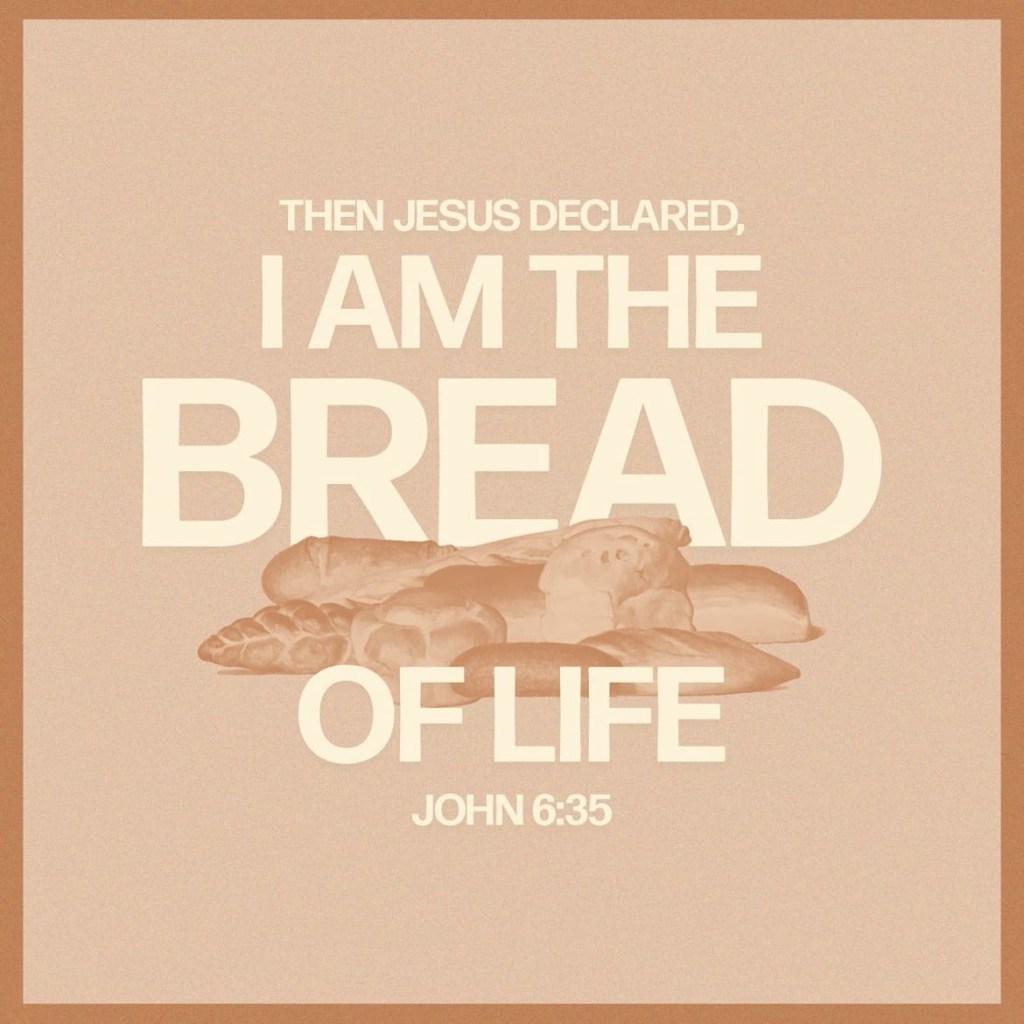
The Bible is rich with symbolism, and few metaphors are as profound as Jesus’ declaration in John 6:35, “I am the bread of life.” When paired with the meaning of Bethlehem—“the house of bread”—the depth of God’s plan for humanity comes into focus. These two ideas are intricately connected, pointing to Jesus as the ultimate provision for our spiritual hunger.

Bethlehem, the birthplace of Jesus, carries a name that means “house of bread” in Hebrew. This small town was known as a fertile region, producing grain and sustenance for its people. However, its greatest gift to the world wasn’t earthly bread but the Savior Himself, who would be born in its midst.

This setting wasn’t coincidental. Bethlehem’s identity as a provider of physical sustenance foreshadowed the arrival of the One who would provide eternal sustenance. Just as Bethlehem once offered earthly bread, it became the birthplace of the Bread of Life.

In John 6, after feeding the 5,000, Jesus used bread as a powerful metaphor for His mission:

“I am the bread of life. Whoever comes to me will never go hungry, and whoever believes in me will never be thirsty” (John 6:35).

Jesus wasn’t speaking of physical hunger but the spiritual longing that only He can satisfy. Earthly bread sustains the body, but Jesus, the Bread of Life, nourishes the soul, offering eternal life to all who believe in Him.

Jesus’ birth in a manger adds another layer to this symbolism. A manger is a feeding trough for animals, and it was here that the Bread of Life was first laid. This humble beginning highlights God’s provision for humanity in the most unexpected way.

Just as animals came to the manger to eat, humanity is invited to come to Jesus for the sustenance that leads to eternal life. His humility and accessibility make the Bread of Life available to all, rich or poor, near or far.

The connection between Jesus as the Bread of Life and Bethlehem’s meaning is deepened by the Passover tradition. During Passover, unleavened bread symbolized God’s provision and deliverance for Israel. In the New Testament, Jesus fulfills this symbolism.

At the Last Supper, He broke bread and said, “This is my body, which is for you” (1 Corinthians 11:24). Just as the unleavened bread reminded the Israelites of their physical deliverance from Egypt, Jesus’ body—broken for us—secures our spiritual deliverance from sin.

Bethlehem, the house of bread, provided physical sustenance to its people. Jesus, born in Bethlehem, offers Himself as the true Bread of Life, nourishing all who come to Him. This divine connection reminds us of the completeness of God’s plan:

• Just as bread is a daily necessity, Jesus is essential for spiritual life.

• Bread must be received to sustain life; Jesus must be accepted by faith to bring eternal life.

• Physical bread satisfies temporarily, but Jesus provides lasting satisfaction.

The connection between Jesus as the Bread of Life and Bethlehem, the house of bread, is a powerful reminder of God’s provision. In a world full of spiritual hunger, Jesus offers Himself as the only source of true and eternal fulfillment.

This time of year, as many reflect on the birth of Jesus, let’s remember that He came not just to be born in the house of bread but to be the Bread of Life for all who believe. He invites us to partake in this bread and experience the abundant life only He can provide.

“Taste and see that the Lord is good; blessed is the one who takes refuge in Him” (Psalm 34:8).

Will you accept His invitation to be spiritually nourished today? Peace in Christ brothers and sisters.

The Bridge

The Brooklyn Bridge was completed in 1883. It connected Manhattan and Brooklyn for the first time. Before the bridge, the two cities were separated by the East River, and the only way to cross was by ferry. The bridge transformed transportation and commerce, allowing people and goods to move more freely. It also symbolized American innovation, as it was the longest suspension bridge in the world at the time of its completion. The bridge not only became a vital infrastructure piece but also a symbol of unity between the two boroughs. Before the bridge was constructed, Brooklyn was an independent city. This bridge served as a link and a unifier that brought Brooklyn into New York. The Brooklyn Bridge was also a social equalizer in its early days. The pedestrian walkway provided access for people of all classes to cross between the boroughs, making the bridge not only a tool for commerce but also for social interaction and community-building. It became a place where people from all walks of life could gather and have access regardless of ethnicity, income, or gender.

In the book of Genesis, we read about a major problem, a division that arises. A shattering of creation and of relationships. A divide greater than the East river.

“The Lord God took the man and put him in the garden of Eden to work it and keep it. And the Lord God commanded the man, saying, “You may surely eat of every tree of the garden, but of the tree of the knowledge of good and evil you shall not eat, for in the day that you eat of it you shall surely die.””‬‬

Genesis‬ ‭2‬:‭15‬-‭17‬ ‭ESV

It is the Lord that put Adam and Eve in the garden, and as we know, they are deceived and choose disobedience. Genesis 3:8-10 says that their sin lead them to hide, to separate themselves from God. And later in Genesis 3:21-24 God sacrifices for them (an important fact not to miss) but still sends them out. Eden is no longer accessible for them. The chasm is impassible. But a bridge will one day be built.

In John 1:51, Jesus said to Nathanael, “Very truly I tell you, you will see heaven open, and the angels of God ascending and descending on the Son of Man.” This powerful image gives us a picture of Jesus as the link between heaven and earth, between God and humanity. He connects the divine to the human, offering us reconciliation with God and access to eternal life. Jesus is that “bridge” between heaven and earth. A bridge that unifies us with the City of God. Gives us access to Eden again. A bridge that anyone can cross regardless of their station in life. A bridge that is actively inviting humanity to cross it.

1. Jesus is the Only Way to the Father

Remember in Gen 2:15 (God put Adam in the garden & Gen 3:21-24 God sent them out of the garden?

In John 14:6, Jesus boldly declares, “I am the way, the truth, and the life. No one comes to the Father except through me.” This statement is central to our understanding of how Jesus functions as the bridge. There is no other path, no other way to cross from death to life, from alienation to reconciliation, from earth to heaven.

The world may offer various paths, but Jesus is the exclusive way that leads to eternal life. He is not just a bridge among many, but the bridge. The only way to overcome the spiritual death we face is through faith in His work on the cross.

“”For God so loved the world, that he gave his only Son, that whoever believes in him should not perish but have eternal life. For God did not send his Son into the world to condemn the world, but in order that the world might be saved through him.”

John 3:16-17 ESV

Through Him, we have been given the gift of salvation and the assurance of eternal life. Jesus not only bridges our life on earth to a relationship with God, but He bridges our earthly existence to eternal life. In John 11:25-26, Jesus says, “I am the resurrection and the life. The one who believes in me will live, even though they die; and whoever lives by believing in me will never die.”

There is this scene in Return of the King…part of the Lord of the Rings trilogy…a hobbit named Pippin is despairing about the looming death. They are surrounded and besieged. The enemy is at the gates, and he says I never thought it would end like this. Then Gandalf, a wizard (and Jesus figure of Tolkien’s universe) responds, “End? No, the journey doesn’t end here. Death is just another path, one that we all must take. The grey rain-curtain of this world rolls back, and all turns to silver glass, and then you see it. White shores, and beyond, a far green country under a swift sunrise.”

Jesus’ resurrection is the ultimate victory over death, ensuring that for those who believe, death is not the end but a doorway into eternal life. Through His resurrection, Jesus has bridged the gap between time and eternity, bringing us the hope of everlasting life in heaven with God.

2. Jesus Bridges the Gap of Separation

The story of humanity begins in the Garden of Eden, where Adam and Eve enjoyed perfect communion with God. In Gen 2:16-17 God laid out the promise of life and death. However, we know what they chose. Through sin, a great chasm formed between humanity and God.

Isaiah 59:2 says ““but your iniquities have made a separation between you and your God, and your sins have hidden his face from you so that he does not hear.” Sin brought separation, death, and estrangement from the holy God who desires fellowship with His creation.

But God, in His love, had a plan from the beginning—to reconcile the world to Himself through Jesus. Romans 5:10 reminds us, “For if, while we were God’s enemies, we were reconciled to him through the death of his Son, how much more, having been reconciled, shall we be saved through his life!”

Jesus came to heal this separation. Through His perfect life, sacrificial death, and victorious resurrection, He became the bridge that spans the chasm created by sin. On the cross, He bore our sins, making it possible for us to be restored to a right relationship with God. He became the mediator, the high priest who represents us before the Father (Hebrews 9:15).

“But now that you have been set free from sin and have become slaves of God, the fruit you get leads to sanctification and its end, eternal life. For the wages of sin is death, but the free gift of God is eternal life in Christ Jesus our Lord.”

Romans 6:22-23 ESV

3. Jesus Gives Us Access to the Father

Back in Gen 3:8-10 Adam and Eve chose to separate themselves from God because of their sin and shame. with John 8:12 and John 10:27-28

Because Jesus has bridged the gap, we don’t have to hide. We now actually have direct access to the Father. Hebrews 4:16 tells us, “Let us then approach God’s throne of grace with confidence, so that we may receive mercy and find grace to help us in our time of need.” This verse is the response to Genesis 3:10.

Before Christ, such direct access was unthinkable. God’s holiness was too great, and our sin too grievous. Access was limited to the high priest who could only enter the holy of holies once a year to make atonement. Reading about this in Leviticus should give us a deep appreciation for God’s holiness and for Christ’s sacrifice which tore the veil on our behalf. Now, through Christ, we can come boldly to the Father in prayer and worship. Not once a year, but every single day of our lives.

God didn’t let Genesis 3:10 be the end of the story. Not for Adam and Eve, not for you and not for me.

Our story is not one of hiding in the dark, but thriving in the light. When Jesus calls, we don’t cower, we come running. Jesus said in John 10, “My sheep hear my voice, and I know them, and they follow me. I give them eternal life, and they will never perish, and no one will snatch them out of my hand.” (John 10:27-28 ESV) We are safely held by our savior, the Bridge over that great chasm of our sin.

4. Jesus, the Bridge to a New Creation

Not only does Jesus bridge the gap between sinful humanity and a holy God, but He also ushers in a new creation. In 2 Corinthians 5:17, Paul writes, “Therefore, if anyone is in Christ, the new creation has come: The old has gone, the new is here!” Jesus reconciles us to God, transforming us and making us a new creation. This is the beauty of the gospel—through Jesus, heaven breaks into our lives, even here on earth.

“But our citizenship is in heaven, and from it we await a Savior, the Lord Jesus Christ,”

Philippians‬ ‭3‬:‭20‬ ‭ESV‬‬

Heaven is not just a future hope; it is a present reality for those who are in Christ. Through the Holy Spirit, the power of the coming Kingdom is already at work in us, and we are called to be ambassadors of this new creation, living as citizens of heaven even while we still walk this earth.

But He is also the bridge to that future reality. The one that envisions an entirely new home.

“Then I saw a new heaven and a new earth, for the first heaven and the first earth had passed away, and the sea was no more. And I saw the holy city, new Jerusalem, coming down out of heaven from God, prepared as a bride adorned for her husband. And I heard a loud voice from the throne saying, “Behold, the dwelling place of God is with man. He will dwell with them, and they will be his people, and God himself will be with them as their God. He will wipe away every tear from their eyes, and death shall be no more, neither shall there be mourning, nor crying, nor pain anymore, for the former things have passed away.” And he who was seated on the throne said, “Behold, I am making all things new.” Also he said, “Write this down, for these words are trustworthy and true.” And he said to me, “It is done! I am the Alpha and the Omega, the beginning and the end. To the thirsty I will give from the spring of the water of life without payment.”

Revelation 21:1-6 ESV

Let this one great, gracious, glorious fact lie in your spirit until it permeates all your thoughts and makes you rejoice even though you are without strength. Rejoice that the Lord Jesus has become your strength and your song – He has become your salvation.

Charles Spurgeon

To end this evening we are going to have some time together with our brothers and sisters. I’d like for each of us to speak life to someone at their table, some encouragement, and pray over each other. We won’t have a last song, so when everyone is wrapping up we will all take communion together as one.