He (Hezekiah) did what was right in the eyes of the Lord, just as his father David had done. He removed the high places, smashed the sacred stones and cut down the Asherah poles. He broke into pieces the bronze snake Moses had made, for up to that time the Israelites had been burning incense to it.
2 Kings 18:3-4 (NIV)
He (Josiah) did what was right in the eyes of the Lord and followed completely the ways of his father David, not turning aside to the right or to the left.
2 Kings 22:2 (NIV)
In the book of 2 Kings chapter 17, the fall of the northern kingdom (Israel) to Assyria in 722 BC is recorded. Alone and vulnerable, the southern kingdom (Judah) remains intact until its fall to the Babylonians in 586 BC. During this 136-year period, Judah experienced blessing and reform during the reigns of two of her greatest kings, Hezekiah and Josiah, recorded in 2 Kings chapters 18-25. We are reminded that obedient kings have a profound and positive impact on God’s people. These two kings attempted to re-establish righteousness and obedience to God’s commands. Sometimes God just needs to clean house and these two men most certainly did that for Judah. God sent them in the midst of their distress after witnessing the fall of their comrades in the northern kingdom who, after refusing to abandon their sinful ways and pagan worship, were taken away into captivity. This was an opportunity for the people of Judah to get things right before it happened to them as well. Out of God’s love for them He extended this opportunity to be guided on the right path, to cling to Him once more. However, Judah was disobedient in their own right once these two kings had left them and eventually fell into their captives’ hands. That doesn’t take away from the fact that God was trying to reel in their hearts and save them from their own ways. My story tells the same message, as I’m sure yours does too. We need to listen and allow God to remove things from our lives and not go back to pick them up again, only to be carried away by them. Praise God for His redemptive heart towards us. Praise God for His pursuit.
So all the elders of Israel gathered together and came to Samuel at Ramah. They said to him, “You are old, and your sons do not follow your ways; now appoint a king to lead us, such as all the other nations have.”
1 Samuel 8:4-5 (NIV)
But now your (Saul) kingdom will not endure; the Lord has sought out a man (David) after his own heart and appointed him ruler of his people, because you have not kept the Lord’s command.”
1 Samuel 13:14 (NIV) [my emphasis]
As we open up to the book of Psalms and read through the prayers of David we can see what it is like to have a true heart after God. He was the man that God would use to unify and strengthen the nation of Israel. David was by no means a perfect man but his heart was often in the right place. He was humble and repentant before God. Two of the most important characteristics required of a child of God.
Hear me, Lord, and answer me, or I am poor and needy. Guard my life, for I am faithful to you; save your servant who trusts in you. You are my God; have mercy on me, Lord, for I call to you all day long. Bring joy to your servant, Lord, for I put my trust in you. You, Lord, are forgiving and good, abounding in love to all who call to you. Hear my prayer, Lord; listen to my cry for mercy.
Psalm 86:1-6 (NIV)
Towards the end of the time of the Judges, the people had longed for a king and no longer wanted a judge over them. They wanted to be like the nations around them, even though God had called them to be separate. However, the Lord gave them what they wanted. He rose up and anointed Saul. But Saul had a problem with following through completely with what God asked of him. In ways, he served the people before he served God. So God raised up another in his place.
After removing Saul, he made David their king. God testified concerning him: ‘I have found David son of Jesse, a man after my own heart; he will do everything I want him to do.’
Acts 13:22 (NIV)
David was chosen to be the seed of the Messiah of God’s children. The Lord brought the nation together and empowered them over their enemies. God gave them a leader, ultimately, in order to bring the nation back to Himself. God wanted them to recognize Him as their King and Judge. But the people lost sight. Even so, God used people, like the Judges, prophets, and certain kings, as part of His plan of redeeming a wayward people.
It’s incredible to see how God will redirect our lives after we make demands of Him. We, at times, will take a path that we think is best for us. Only an awesome God would allow us free will, knowing full well He can restore us and He can make us new. Just as He did for Israel, God has brought people into all of our lives to help guide us on the right path. Maybe we’ve embraced it, maybe we haven’t. But as the Good Shepherd, the Lord is constantly trying to reach us and lead us in the path of life. He doesn’t abandon us to our own despair. He doesn’t walk away from us even when we walk away from Him. Just as the father of the prodigal son God is waiting with open arms to embrace His wayward children. That is redemptive love.
Celebrate your redemption brothers and sisters. There is no greater gift.
“Offer right sacrifices, and put your trust in the Lord. There are many who say, “Who will show us some good? Lift up the light of your face upon us, O Lord!” You have put more joy in my heart than they have when their grain and wine abound. In peace I will both lie down and sleep; for you alone, O Lord, make me dwell in safety.”
Psalm 4:5-8 ESV
Peace is one of those universally sought-after things. But there is a multitude of ways people try to achieve it. One thing is true, peace is not connected to our circumstances. If it is, then peace will always be elusive.
“Peace I leave with you; my peace I give to you. Not as the world gives do I give to you. Let not your hearts be troubled, neither let them be afraid.”
John 14:27 ESV
When Jesus spoke these words, it was on the brink of sending His followers out into a hostile world. Trials and hardships would be a nearly constant companion for them. But in spite of that, Jesus still says they can have peace. He can make that promise because He is the source of that peace. Notice He said that it was His peace that He gave to us. Any reading of the four gospel accounts reveals a life full of circumstances that would not give many of us peace. Jesus was born into poverty, hunted when He was a child, relocated multiple times, lost His father at some point as a child, lived as a wanted man for three years, mocked and ridiculed, abandoned by friends and family, persecuted, beaten, and executed. Even in light of all of that, Jesus (being the Prince of Peace) lived a life at peace and promised that we can have the same.
Our peace is based on Who He is. It’s based on the fact that our life has meaning and purpose. That we are loved and have immense value. We are pursued and fought for. We have grace even though we make mistakes every day. We are accepted in Christ and based on His perfection, not our brokenness. We have peace knowing our trials are temporary and our pain and loss will end one day in the happiest of happily ever afters.
Psalm 4 also says that it is the Lord who puts joy and peace in our hearts. It is in Him, through Him, and because of Him. But sacrifice is required on our part. Romans 12 talks about being a daily living sacrifice. We must lay down our plans for His, our desires for His, our pride for humility, our materialism for a life of service, and our self-centered love for selfless love. There is always sacrifice on the way to peace. He paid the ultimate price, now it’s our turn to surrender selfish ambition for a life spent in bringing joy, life, encouragement, and hope to others. At the end of ourselves, we find peace.
“Then Samuel took a stone and set it up between Mizpah and Shen and called its name Ebenezer; for he said, “Till now the Lord has helped us.””
1 Samuel 7:12 ESV
I’ve been reading a lot lately about God’s deliverance. The entire story of the Bible is a compilation of miraculous occurrences of God’s intervention to rescue and save His creation. He covered Adam and Eve after their sin and fall. He preserves Noah’s family and the animals through the flood. He rescued Lot and his family from wicked Sodom. He preserved Joseph in Egypt. He reached down to save Hagar and her child. He parted the sea for Israel. He tore down the walls if Jericho. He guided David’s stone to take down the giant Goliath. He gave victory to Gideon’s tiny forces against a large enemy. He reached down and struck the army set against Jerusalem in the days of Hezekiah.
“But you, O Lord, are a God merciful and gracious, slow to anger and abounding in steadfast love and faithfulness.”
Psalm 86:15 ESV
These are just a handful of the stories of God’s saving grace. If we take the time to stop and reflect, we will see our own story is also full of stories of God’s deliverance. I know mine is. And like the Prophet Samuel, we should set up a stone of remembrance. However that may look. But the greatest act of deliverance is not symbolized in a stone, but in a cross. Not in a mound of stones, but in one that was rolled away. Every Ebenezer points us to where our hope truly is, but none more so than cross of Christ and His empty tomb.
“For by grace you have been saved through faith. And this is not your own doing; it is the gift of God,”
Ephesians 2:8 ESV
If you’re finding life just a little too heavy right now, like myself, join me in the soul searching experience of remembering and honoring God’s faithfulness. Peace in Christ brothers and sisters.
Why is it that it’s easiest to pray when we face struggles? Do you face that same predicament? I have felt guilty of late that I don’t pray as much when things are going well in my life. I lose a little fervor…a little zeal. But I am trying to change that. Or perhaps I should say, that I am asking God to change that in me.
My Nissan Xterra has had some issues over the last 18 months. It’s my work vehicle and I use it a lot. So there’s no surprise that it requires extra TLC. Around three weeks ago it decided to stall on me while driving to a job. In moments like that, it is easy to drift to worst-case scenarios that include repairs amounting to thousands of dollars. It has generally been the story of my life when it comes to auto repairs. However, this time around was different. After a trip to the parts store, and literally a dozen prayers, it turned out to be a sensor that I was personally able to fix myself. This repair only cost me $60 and a couple hours of my time. I couldn’t have been more relieved. I found myself praying every time I was in the Xterra. Asking God that the repair would be the final solution and that nothing else would go wrong. Many of my jobs are early in the morning, before most of the community is stirring. So a breakdown could be extremely problematic. I would praise the Lord every successful trip I made without the check engine light coming on or the car stalling out. That, however, only lasted a week or so. After I became confident that the car was fixed, my praise and prayer moments decreased somewhat. And then, I felt the conviction.
I couldn’t believe what had happened. How could I allow myself to be so distracted? Why did I lose touch with the reality that I have so many reasons to praise God every moment of every day? Why do I seek Him more in times of distress or need? Aren’t I always in need of His good graces? Why don’t I give thanks more often for the little things in my life, which after thinking about it, many of those little things are actually great big things. We come to expect that our cars will start. We don’t give it a second thought that our hearts are going to continue beating. We rarely wake up and praise God that we have been given one more day. There are so many beautiful mercies that we are given all day and every day. Why do we let so many of them go by without a single word of thanks to the one who gave them to us. We all owe Him a big thanks even for the little things in life. But, a lot of the time, the prayers don’t come until those little things become big things in our eyes.
Rejoice always, pray continually, give thanks in all circumstances; for this is God’s will for you in Christ Jesus.
Can I stand still in the face of uncertainty? In the face of possible tragedy? If there was a good chance that my world was about to fall apart, could I be still? Most of my life so far has answered with a resounding no. But that doesn’t have to continue to be my story. Nor does it have to be yours.
When the people of Israel faced the looming annihilation from Pharaoh at the sea, they were told to stand and see the salvation of the Lord. When the disciples were falling apart in the middle of a raging sea, Jesus awoke and questioned their little faith.
It’s so easy, even for the heart devoted to Jesus, to be overwhelmed in the face of very real danger. It’s in those moments we either need others to remind us, or we need to remind ourselves, that Jesus is in the midst of the danger. He’s there in the pillar of fire. He’s there in the boat. He’s there. You’re not alone, and most likely you don’t need to do anything other than be still. He’s still the same God that parts the sea and calms the sea.
“fear not, for I am with you; be not dismayed, for I am your God; I will strengthen you, I will help you, I will uphold you with my righteous right hand.”
The story of Jesus feeding the five thousand appears in all four of the gospel renditions. It had to be an event that all four authors wanted to empathize. No doubt it was a miracle of epic proportions.
In giving the people physical bread, Jesus showed that he was the compassionate provider that his people needed. By doing such a miraculous feet, Jesus showed that nothing was too big for Him to provide. Through this miracle, Jesus fulfilled more than physical needs, he demonstrated the expectation of those looking forward to a new prophet after Moses. Thinking back to the journey from Egypt to promised land, while Moses was their prophet-leader, the Israelites received manna from heaven. Jesus’ provision of bread here parallels the miracle that the Israelites experienced under Moses. The major contrast: Jesus Himself provides the bread.
Jesus can tell us to ask for our daily bread to be provided, because He is the source. And this is much more than an application to our physical needs. Jesus said that “man shall not live on bread alone but by every word that comes from the word of God. (Matt 4:4).” Not only is Jesus referred to as the bread of life (John 6:48), but he is also called the word of God become flesh (John 1:1-14). As the Bread and as the Word, Jesus is all we need for life itself both physically and spiritually.
In reading Matthew 6:25-34 Jesus reminds us that God’s care for His creation is steadfast. Flowers are arrayed in beauty and birds and fed. His desire is for us to have all we need as well. He knows how to provide for us. We just need to open up our eyes and hearts to receive it. Not only can Jesus multiply anything to provide for our needs, He may just ask for our basket of bread and fish to multiply for the needs of others.
Have you ever thought that life is a struggle no matter what stage you’re in? And it seems to be a struggle for the same thing. Think about it. No matter if you’re a toddler or teenager, 39 or 93, freedom is always something we strive for. Granted, that struggle looks different depending on our age and circumstances. However, freedom seems to be at the core of it all.
When we are small, we rely on our parents for everything. As we grow, we seek ways to be released from the constraints that come along with being a child. We want to make more of our own decisions. We want to try new things, oftentimes even if it goes against our parent’s guidance.
When we move into adulthood, we gain freedom in a much larger measure. What comes with that is a much larger degree of responsibility. Balancing those responsibilities with our new found freedoms can be a real challenge. New obstacles lay in the way. Jobs, bills, opportunities or the lack thereof, Our struggle is not so much to gain freedom, as when we were a child, but to secure it. This freedom also looks different. We don’t exactly have parents telling us what we can and can’t do, we have other obstacles doing that. We get busy making sure the electricity stays on, there’s a roof over our heads, there are clothes on our kid’s backs and food in their tummies. If we aren’t careful, we begin to see these as burdens and get bogged down.
Late in life (granted I am not there yet and this is purely from observation), it seems to be a battle to hold on to that freedom. Again, this freedom looks different and the struggle does too. We try to hold on to that freedom of mobility. Our diet becomes more constrained. Our activities slowly become more limited. Our bodies don’t heal like they used to. Freedom seems to slowly fade away.
The good news is that our lives don’t have to be this way. Not to say that there won’t be challenges. Because there certainly will be. We will be constrained. We won’t be able to do all that we plan or hope for. But, we will be free in the best possible way. And even in our limitations, we can find freedom. You see, all the freedoms I listed above are merely physical ones. But in the struggle for those freedoms, we end up imprisoned emotionally and mentally. Which, in the long run, will strip us of physical freedoms as well.
The path to freedom has already been laid out for us. We don’t need to pave the way for ourselves. Freedom can be experienced regardless of circumstances. Sure, we may not have all the money we would like. We may not be able to go on the trips we want to. But we can be free from the big things. Like worry, stress, fear, and sin. Those things cripple even the wealthy. It doesn’t matter how privileged someone is, or even if they are their own boss, you’re not free if you’re burdened with stress and sin. Humanity has a tendency to put the shackles on themselves. We put ourselves in cells of fear. In our struggle for freedom, we end up with far less.
The thief comes only to steal and kill and destroy; I have come that they may have life, and have it to the full.
John 10:10 NIV
Jesus came into this world to provide the most important form of freedom…from ourselves. We strive and we strive but it was never meant to be that way. The life we seek is the life Jesus wants to give us. The problem is we do some much to run after an opposite life. Our comfort becomes the priority. Our goals become paramount. The liberty to choose what is good for us is as age-old as the garden in which the enemy of our souls first lured Adam and Eve away from God’s plan. But freedom is not found in the struggle, but in the surrender. Instead of trying to dictate so much of our lives, we need to be lead by Him. Plus our souls are free in Christ. All else are fringe benefits.
The life of the Christian is one that seeks the freedom, not of oneself, but of others. The best way is ultimately through a relationship with Jesus. We can look less to our 401k and more to the homeless man on the street. We can put less thought into that new (you fill in the blank) and more time praying for those in desparate need. We can allow ourselves to get uncomfortable in order to bring comfort to others. Freedom is found, not in viewing ourselves as the center of the universe, but as a part of it meant to bring a piece of God’s kingdom closer to home for anyone we can. Bring on the constraints. We go forward to make Him known. Come what may, the Lord will be our guide and our provider. Therein lies freedom.
Now the Lord is the Spirit, and where the Spirit of the Lord is, there is freedom.
Your attitude should be the same as that of Christ Jesus.
Philippians 2:5
This post is inspired by a recent story I read from the Voice of the Martyrs. As usual, I read it at an opportune time. God ordained moments. I hope that this story inspires you as well.
We pick in Romania, many years ago, during an era of extreme persecution towards Christians. A man by the name of Florea had been arrested simply for his faith in Christ. As a follower of Jesus, it was important for him to honor the Sabbath. However, that was problematic, for prisoners did not get a day of rest. They were required to work, every day. Florea stood his ground on his convictions and refused to work. I would love to say that the prison guards honored his faith and passion and made an exception for him. But communism makes no room for Jesus or his followers. So a stand for Jesus meant extreme repercussions.
The Romanian prisoners were forced to labor every day, but each Sabbath Florea refused. For his refusal, the guards routinely beat him so bad he lost the use of his arms and legs. He could only move his head. Because he could no longer labor, Florea was forced to sit in his cell all day long. He had to rely on other prisoners to feed him. In spite of his situation, Florea was not downcast. When other prisoners would complain about their situation, Florea would encourage them. “If the outlook is bad,” he would say, “try the ‘uplook.’ When Stephen was stoned, he looked up and saw Jesus standing at the right hand of God. This comforted Stephen’s heart, and it will comfort yours too.” He encouraged his fellow prisoners not to “look out” to their circumstances but to “look up” at Jesus. One of Florea’s fellow prisoners was Richard Wurmbrand, who was released from the prison and found Florea’s nine-year-old son. He told him what a blessing his father had been in prison. The boy smiled and replied, “I would like to become a sufferer and encourager for Christ as my father has been.”
Voice of the Martyrs
There are no guarantees of circumstances, even for the Christian. We are not promised a nice home, a perfect family, good health, or a living wage. Instead, a Christian is a person with a certain attitude toward any and all circumstances. A person’s attitude makes the difference, regardless of circumstances. A heavenly attitude focuses on God’s presence amid trials. Fixating on our hardships distracts us from a heavenly outlook. We feel burdened. Depressed. Hopeless. Fearful. In contrast, a godly outlook on our troubles brings confidence that God is at work. We relax in God’s presence, waiting to see how he will work out our concerns. Are you undergoing a trial right now? Are you focused on the waves crashing around you or Jesus walking on the water towards you? Let’s stop focusing on the outlook and give the uplook a try.
“Then the Lord saw that the wickedness of man was great in the earth, and that every intent of the thoughts of his heart was only evil continually. And the Lord was sorry that He had made man on the earth, and He was grieved in His heart. So the Lord said, “I will destroy man whom I have created from the face of the earth, both man and beast, creeping thing and birds of the air, for I am sorry that I have made them.” But Noah found grace in the eyes of the Lord… Noah was a just man, perfect in his generations. Noah walked with God.”
Genesis 6:5-9 (NKJV)
In part two of the series, we are taking a look at the person of Noah. The story is one usually thought of as an act of judgement, but it is also one that shows God’s extreme love for mankind. I have heard many people view this story as one of God’s wrath and leave it at that. But when we look closely at this story we see redemption.
Imagine the pure evil and absolute corruption of man at the time of Noah and then ask yourself, “how much love does God have that He still wanted to redeem humanity after their complete abandonment of Him?” Honestly, it doesn’t take a lot of imagination to see a world that is so broken and corrupt and full of sin. We live in a world very much like that today. How could God still want humanity to find redemption? The answer is simple. His love is not human love but divine love. A love that is always trying to reconcile our hearts to His. A love that looks at an earth filled with total decay and depravity and does not give up. A love that would preserve a piece of His creation even when the creation wanted nothing to do with Him.
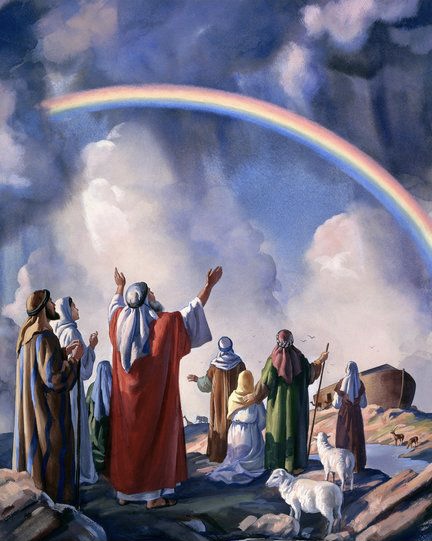
Then God spoke to Noah and to his sons with him, saying: “And as for Me, behold, I establish My covenant with you and with your descendants after you, and with every living creature that is with you… Never again shall all flesh be cut off by the waters of the flood; never again shall there be a flood to destroy the earth.”
Genesis 9:8-11 (NKJV)
Noah and his family were not perfect. It wouldn’t take long for them to be impacted by the mark of sin that we all carry. But God still called them out. He still saved them. We too are imperfect and broken and should find encouragement in this story. God is calling us out of the fallen world to be a part of His new beginnings. We just have to get on the boat.








 For Common Ground