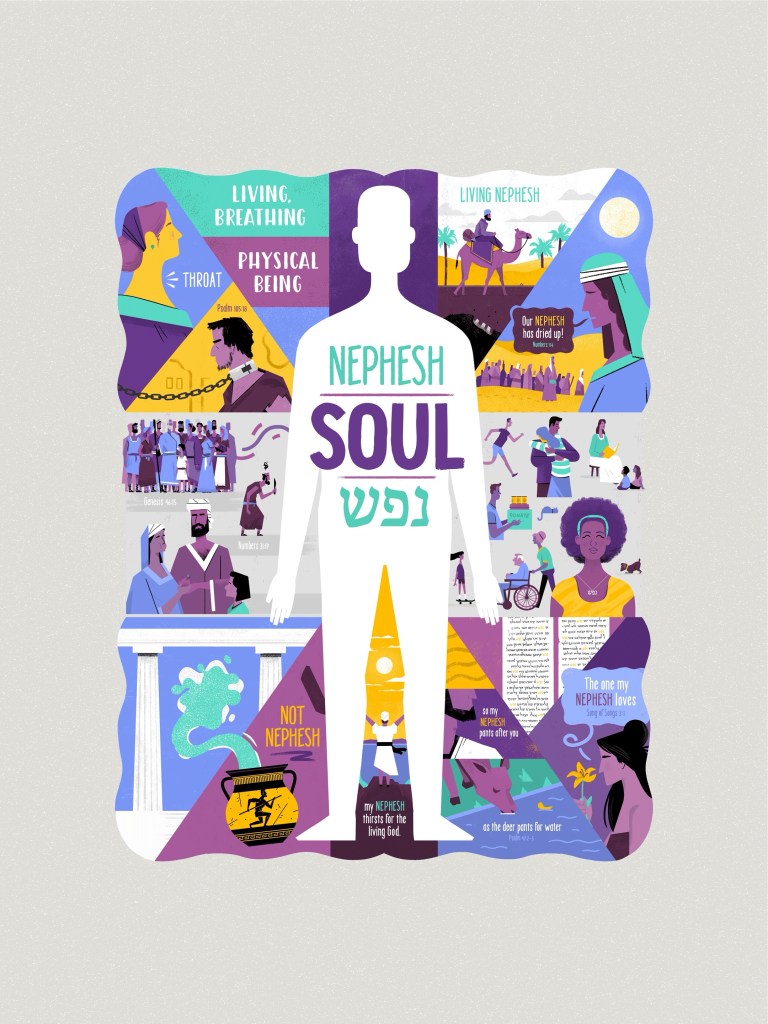
All things that may come in life, all the challenges, the new chapters, it can be easy to lose sight of the eternal. Our souls are often neglected. And that word, soul, is not this separate spirit thing that floats up in the sky after we die. In Hebrew the word is nep̄eš (neh fesh). It’s a powerful word that means your self, life, mind, your very living being. In the Bible it talks about taking care of your soul. The word for keep in Deuteronomy 4 is šāmar (shaw mar) which means to guard it. It also says to do that diligently.
““Only take care, and keep your soul diligently, lest you forget the things that your eyes have seen, and lest they depart from your heart all the days of your life. Make them known to your children and your children’s children—”
Deuteronomy 4:9 ESV
We can’t control the curveballs that life brings. We can’t control how others treat us. We can’t stop the aging process and the new difficulties that it brings. There is so much out of our control. But we can control whether or not we are engaging in life-giving things that help to revive our souls. We can spend time in God’s creation, soaking in the beauty that He made. We can maintain a heart of gratitude, giving thanks for all the little things and the big. We can spend time getting to know our creator through the words He’s given us in the Bible. We can surround ourselves with people who are going to speak truth and love. We can worship, especially when we don’t feel like it. We can keep a heavenly mindset rather than a temporal one. We can use our time to better the lives and world around us. Those things we can control. We can guard our souls and in doing so, we will experience life.
The Bible is full of prescriptions for the believer, to lay down their cares, to surrender their burdens and anxieties. In 1 Peter it says to cast our anxiety on Him because He care for us. Philippians chapter four talks about not being anxious about anything. Not the big things. Not the small things. It’s an invitation to be in communion with Him. To view our God as a loving father who knows what we need especially when we don’t.
I have found though, that it is easier to pray, and to feel the temporary relief that faith and trust brings, than to permanently release those things. That is what I have been working on in my own life. As things add up, problems and stresses compound on one another, it’s even harder to release them all. Yet all the more important. I have been trying to figure out what that looks like. Casting my cares should look far more like tossing a stone into the water rather than a fishing line. I don’t want to real the cares back in. Yet my mind can easily drift in that direction. But how do I give over my burdens while severing the connection? Truth be told, I don’t think that’s the point.
I have been searching for the magical moment of permanent spiritual peace in spite of what stressors I face. What I have found is not something that is passive. Yet I feel it is taught that way often. Pray, release your cares, and go about your day, and it’ll be all good. Never in my entire life has that been the case. And because of that, it can be easy to feel like something is wrong with me. Like my faith is weak. How can I call myself a believer and still deal with stress and feel anxious at times? Am I being convicted or deceived in asking that question?
At moments, and many of them, I can say that I have been in perfect peace. An unshakable sense of calm, reassurance, and gratitude that warms my inner being. And in many of those occasions, life has been really difficult. The difference between those moments and the turbulent times, is one simple things: what my eyes are fixed on. Do you know the story of Jesus walking on the water? Interestingly, my mother in law is actually at the sea today, where that occurred all those years ago. Remember how Jesus called Peter out of the boat? Truth is, you and me can walk on the water even in the heart of a storm, just as Peter did, but only as long as our eyes are fixed on Jesus. The moment Peter turned his attention to the waves, he sank. That has been my experience, every single time. But Jesus didn’t let Peter drown, and He won’t let me drown. And dear reader, He won’t let you drown either.
“You keep him in perfect peace whose mind is stayed on you, because he trusts in you.”
Isaiah 26:3 ESV
Focus on the problem, and you get problems. Focus on Jesus, and you get Jesus. That doesn’t mean you avoid problems. It means you seeks Jesus who provides the solutions. And in the waiting, you keep seeking Jesus. You know what happens? You get more Jesus. He told us once to seek first the kingdom of God and all our needs will be taken care of. We either believe that or we don’t. And the seeking isn’t a morning prayer, a momentary plea for help, a quick devotional, blasting a worship song, but all of those, all day, every day. It is a constant connection. Isaiah says that our mind has to be stayed on Him. The Hebrew word for stayed is sāmaḵ. It pictures a mind that is braced by or supported by something. Much like a building is supported by beams and pillars. Takes those away, and the building collapses. In this case, that support is the Lord Himself. Take your mind off Him, and things start to shake, or sink in the case of Peter.
If you’re battling stress and anxiety, it doesn’t make you a bad person or poor Christian. It just means you’re looking in the wrong direction. Put your eyes back on Jesus, and do what it takes to keep them there. Worship, pray, dance, read, surround yourself with good people and feed your soul with life-giving things. And then, do it all over again.
With a heavy heart, I opened my Bible. I began in Psalm 108 and went no further. This Psalm is a beautiful declaration of faith, joy, and confidence in God. Exactly where I knew my heart should be. David did not write a half-hearted song; it’s worship that springs from deep trust. Even before his circumstances change, David chooses to lift his eyes and his voice to God.
“My heart is steadfast, O God! I will sing and make melody with all my being! Awake, O harp and lyre! I will awake the dawn! I will give thanks to you, O Lord, among the peoples; I will sing praises to you among the nations. For your steadfast love is great above the heavens; your faithfulness reaches to the clouds. Be exalted, O God, above the heavens! Let your glory be over all the earth!”
Psalm 108:1-5 ESV
A Heart Set Firm on God
A steadfast heart doesn’t waver with emotion or circumstance. It’s anchored in who God is. David’s focus isn’t on his enemies or his problems, but on God’s unchanging love and faithfulness. When we choose praise before victory, we declare our faith that God is already at work.
Awakening the Dawn
David says, “I will awaken the dawn.” I love this! What a picture of active worship! Instead of waiting for joy to come, David brings it by starting his day with praise. His music becomes a sunrise of faith. We, too, can awaken the dawn in our own lives by starting each morning with gratitude, worship, and the Word of God.
Praise That Reaches the Nations
David’s praise is not private—it’s global: “I will praise you, Lord, among the nations.” True worship spills over. When we proclaim God’s goodness, others see His glory. Our steadfast faith becomes a testimony that shines far beyond our own circle. The world is changed when God’s people praise Him, especially in their times of difficulty.
Love Higher Than the Heavens
This section of the psalm ends with awe. God’s love is immeasurable—“higher than the heavens”—and His faithfulness stretches “to the skies.” When we look up, we’re reminded that His promises are vast, enduring, and beyond comprehension.
What does it mean for your heart to be “steadfast” today? How can you “awaken the dawn” through worship and gratitude? In what ways can your praise reflect God’s glory to others?
Lord, make our hearts steadfast in You. When we feel weary or uncertain, remind us that Your love never fails. Let our praise rise like the dawn and fill the world with the sound of Your glory. Be exalted, O God, above the heavens—let Your glory shine over all the earth.
Recently my daughter prayed and asked Jesus to help her to let Him in. Keep in mind, she has already accepted Jesus as her Lord and Savior. But, as all followers of Jesus know, we have to continue to pursue that relationship the rest of our lives. I think this is what her precious 11 year old heart was searching for.
In this post I would like to present a picture of what it looks like to let Jesus in. From the beginning of the relationship to the end.
The Invitation
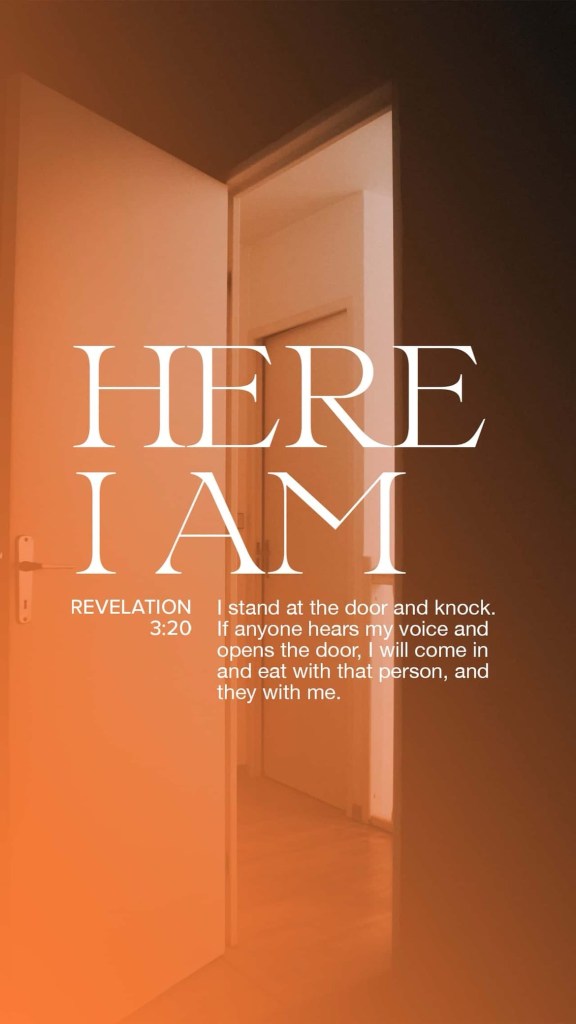
Here I am! I stand at the door and knock. If anyone hears my voice and opens the door, I will come in and eat with that person, and they with me.
Revelation 3:20
This powerful image shows Jesus as someone who initiates relationship, but waits to be welcomed in. Jesus never forces His way into our lives. Opening the door represents faith, surrender, and a desire for fellowship with Him.
Yet to all who did receive him, to those who believed in his name, he gave the right to become children of God.
John 1:12
Letting Jesus in means receiving Him—not just as a visitor, but as your Savior, King, and the center of your life. Believing in Him opens the door to being born again into God’s family.
If you’re like me, you have probably had to repeat this process more than once. I did at the age of 12, and was baptized. I did again at the age of 27 when my faith became of central importance. I have also had many moments since when I am disconnected and I hear Him knocking again. These aren’t salvation moments, I know I am saved and redeemed. These are sanctifying moments. Those reminders that I am not where I am meant to be in my headspace and heart. Those subtle, and sometimes not so subtle redirecting moments.
The Process
I will give you a new heart and put a new spirit in you…
Ezekiel 36:26
When Jesus enters your life, He doesn’t just visit—He renovates. He gives a new heart, replacing coldness or stubbornness with a heart that wants to obey and love Him.
To have found God and still to pursue Him is the soul’s paradox of love.
AW Tozer
Walking with Jesus means both finding and continually seeking Him—never settling for a distant relationship. Always wanting more. Always going deeper.
And we all, with unveiled face, beholding the glory of the Lord, are being transformed into the same image from one degree of glory to another. For this comes from the Lord who is the Spirit.
2 Corinthians 3:18
I think we can all agree that the Christian walk should be a progressive one in the sense that we are moving forward and upward and deeper. And it should also be transformative in the sense that we are more like Jesus in attitude, action, speech, and motivations the longer we know Him. Not to say that we won’t make mistakes or have our “moments”. But it should be a general upward and life altering change throughout life.
Nearness to God brings likeness to God. The more you see God, the more of God will be seen in you.
Charles Spurgeon
Every day should be a commitment to reflect on whether this is true in us.
The Commitment
I have been crucified with Christ and I no longer live, but Christ lives in me…
Galatians 2:20
Letting Jesus in is more than a one-time moment. It means allowing Him to live in you, shape your thoughts, and guide your actions. His presence becomes your source of strength and purpose. Letting Jesus in means surrendering to His Lordship (rulership, authority which overrides our own.) in Medieval times Lords controlled the land, your life, your freedom, your movement, your purpose. They also provided everything their vassals needed in food, land, and protection. Those were imperfect people and an imperfect system. But the analogy works in many ways. Our Lord is not a despot. His heart is for the flourishing of His people. Far too often, I afraid, we treat Jesus as a guest to be entertained or invited in when we need Him. But He is owed so much more.
For by him all things were created, in heaven and on earth, visible and invisible, whether thrones or dominions or rulers or authorities—all things were created through him and for him. And he is before all things, and in him all things hold together.
Colossians 1:16-17
Jesus deserves to be the captain of your ship because He built the ship, maintains the ship, and owns the ship.
Discipleship is the process of becoming who Jesus would be if he were you.
Dallas Willard
A true walk with Jesus transforms your character to reflect Him in your unique life and context. Remember, our mission is to help bring His kingdom wherever we are and wherever we go. I tell my kids (and have to remind myself) all of the time that our sole purpose is to love God and make Him known. What better way to do that than to allow Him to steer our very motivations for life, love, purpose, relationship, and more?
Remain in me, as I also remain in you.
John 15:4
Letting Jesus in is ongoing. It’s not just a decision, but a relationship of remaining close to Him, hearing His voice, and living connected to His love every day. Abiding With Jesus is a Lifelong Commitment.
Letting Jesus in is ongoing. It’s not just a decision, but a relationship of remaining close to Him, hearing His voice, and living connected to His love every day. Abiding With Jesus is a Lifelong Commitment.
Francis Chan
There are very real pitfalls. Those of apathy…of distraction…misalignment…misjudgments…and the like. To let Jesus in is something we have to contend for, hold on to, and adamantly desire. The Christian life is just that, a lifelong lifestyle.
The Christian does not think God will love us because we are good, but that God will make us good because He loves us.
CS Lewis
It is imperative to remember that walking with Jesus is not about earning love but being changed by it. There is so much grace and so much love in the pursuit.
In a world full of noise, opinions, and ever-changing values, the Christian gospel stands as a clear and unwavering beacon of truth. Its message is simple, yet profound: salvation by grace alone, through faith alone, in Christ alone. The purity of the gospel is not something we invent or evolve—it is something we receive, guard, and proclaim.
I realize some who read this may not know exactly what the gospel is. At its core, the gospel is the good news that God, in His love and mercy, took on human form in the person of Jesus (Colossian 2:9), walked among us (John 1:14), lived a perfect life knowing that no person ever could (2 Corinthians 5:21), allowed humanity to hang Him on a cross to be a sacrifice for our sins (Romans 5:8), was buried and rose from the dead three days later (1 Corinthians 15:3-4), giving us the hope of new life and a future resurrection. This message is not about human achievement or moral performance. It’s about divine intervention—God doing for us what we could never do for ourselves. It is unearned, undeserved, and freely given.
The gospel is pure, and holy, and beautiful. And that is why everyone needs to hear it. It does, however, pact a punch. The gospel requires we take a hard and accurate view of ourselves, our needs, our shortcomings, our brokenness, and our sin. Only then can we see the beauty that is the gospel.
When we dilute or modify the gospel—adding works, subtracting grace, changing who Jesus is, softening the reality of sin, or removing the need for repentance—we rob it of its saving power. A compromised gospel may feel more comfortable or inclusive to some, but it cannot save anyone. We have to fight the desires for what is “good in our own eyes” and embrace what is actually good for us. Humility. Embracing grace. Accepting God’s love. Allowing Him to transform us more and more into His own likeness. That is when we become the best version of ourselves. That is when we experience the deepest joys and peace that every soul searches for.
The gospel’s purity is what makes it powerful. It tells the hard truth about sin but offers the glorious truth about redemption. It doesn’t offer self-help; it offers a new self in Christ.
Many voices today claim to speak for God. Some offer “prosperity,” “comfort,” or “love is love” as gospel substitutes, but these fall short of the cross. The true gospel does not promise comfort or success; it promises forgiveness, transformation, and eternal life through Jesus.
Jesus said, “I am the way, the truth, and the life. No one comes to the Father except through me” (John 14:6). That statement is both exclusive and inclusive—exclusive in that Jesus is the only way, but inclusive in that He invites all who will believe.
As followers of Jesus, we are called to preserve the purity of the gospel message, not tamper with it. Jude writes, “Contend for the faith that was once for all delivered to the saints” (Jude 1:3). The gospel is not ours to edit—it is God’s truth to trust, live out, and share. May we never lose sight of the beautiful simplicity and power of the gospel. In Christ alone, by grace alone, through faith alone—that is our eternal hope. And it can be yours too.
“He is the image of the invisible God, the firstborn of all creation. For by him all things were created, in heaven and on earth, visible and invisible, whether thrones or dominions or rulers or authorities—all things were created through him and for him. And he is before all things, and in him all things hold together. And he is the head of the body, the church. He is the beginning, the firstborn from the dead, that in everything he might be preeminent. For in him all the fullness of God was pleased to dwell, and through him to reconcile to himself all things, whether on earth or in heaven, making peace by the blood of his cross.”
I know that there are plenty of doubters and skeptics out there. You, dear reader, may be one of them. But I am here to tell you, God is still in the business of speaking to His children.
Last night, I had a nightmare. Not just one of those weird bad dreams where you’re being chased by something and none of it makes any sense. No, this dream contained among two of the worst things that could happened. They must have been born out of deep unconscious fears that decided to rear their ugly heads. This was one of those dreams you wake from in a panic. With heart rate accelerated, you scramble to get your bearings and snap back to reality. And there I was, a little after 6am on a Sunday when I’m supposed to be sleeping in. Wide awake and reeling. So, after a minute or two, I I take a deep breath and begin to pray.
Lord God, help me to know truth and to relinquish my fears to you. Calm my unnerved heart. Forgive me for all my sins or thought, words, or deeds. Cleanse me inside and out. Help me to find rest in you and to be renewed.
As I pray, my heart is calming a bit. But oddly, I have this overwhelming urge to grab my phone. I resist because I think it’s just a distraction from my prayer time. But the urge grows. So I pause and pick up the phone on my bedside. Recently, I have paused notifications from 10 pm to 7 am. Somehow, I have a notification on my screen from an app called “Abide”. Not only do I have notifications silenced for another hour almost, but I don’t have notifications turned on for this app at all. But there it was. And it read, “Balm for the restless heart. Come and find rest in Me.” And as I read it, shocked and amazed, another notification popped in. This time from the Bible app. And I read these words, “Fear not for I have redeemed you; I have called you by name, you are mine.” And there I was, at peace and overwhelmed all at the same time. Not by the awful feelings I had upon waking, but by His incredible goodness.
Did the skies open and a voice from heaven come to me? No. But there I was, forced awake by a dream that left me sick to my stomach. And in the midst of prayer, I received timely and powerful words through a means that never should have been possible. I will leave you to wrestle with how that is possible. But for me, God is still in the business of speaking to His children. Even in the mundane and what could seem like trivial issues of one’s life, God is there. And He cares. And He speaks.
“Then you will call upon me and come and pray to me, and I will hear you. You will seek me and find me, when you seek me with all your heart.”
When life gets hard, our natural response is usually to ask why. Why is this happening? Why now? Why me? But in John 12:27–28, we see a moment where Jesus, fully aware of the suffering He’s about to endure, says something radically different:
“Now my soul is troubled. And what shall I say? ‘Father, save me from this hour’? No, it was for this very reason I came to this hour. Father, glorify your name!”
John 12:27-28a
His soul is troubled, and yet He doesn’t pray for escape — He prays for God to be glorified. This Is What Trust Looks Like. Jesus wasn’t pretending to be fine. He didn’t mask the heaviness of His soul. He admitted the weight of what He was carrying — and still, His desire wasn’t for comfort, but for God’s purpose to be fulfilled through Him.
That’s not weakness. That’s strength. That’s surrender. What If We Prayed Like That? What if, in the middle of pain, disappointment, confusion, or heartbreak, our first prayer wasn’t “Get me out of this” but “Be glorified in this”? Not because the pain is good. Not because the suffering is easy. But because we trust that God wastes nothing — and that even in the hardest moments, His glory can shine through us.
“I consider that our present sufferings are not worth comparing with the glory that will be revealed in us.”
Romans 8:18
Your Struggle Might Be Sacred
Jesus knew His suffering had purpose. We may not always see the full picture in our own lives, but this much is clear: God is able to bring beauty out of brokenness, and when we offer our trials to Him with open hands, He does something eternal with them. It’s not about denying our pain — it’s about devoting it. Saying, “Use even this, Lord. If you can be seen in this, then don’t take it away too quickly.”
“For our light and momentary troubles are achieving for us an eternal glory that far outweighs them all.”
2 Corinthians 4:17
“Father, Glorify Your Name” — A Dangerous, Beautiful Prayer
This is a bold prayer. It surrenders control. It places trust in God’s bigger plan. And it shifts the story from being all about us… to being all about Him. Jesus prayed it — not just in John 12, but again in Gethsemane: “Not my will, but Yours be done.” And if Jesus could pray it in His darkest hour, maybe we can, too.
“I eagerly expect and hope that I will in no way be ashamed, but will have sufficient courage so that now as always Christ will be exalted in my body, whether by life or by death.”
Philippians 1:20
So next time you feel the weight pressing in, try this: Take a breath. Acknowledge the pain. Then say — even through tears —“Father, glorify Your name.” There’s power in that. And God will meet you in it.
“Dear friends, do not be surprised at the fiery ordeal that has come on you to test you… But rejoice inasmuch as you participate in the sufferings of Christ, so that you may be overjoyed when his glory is revealed.”
There’s a quote that flips a lot of religious assumptions on their head:
Holiness is not the way to Jesus; Jesus is the way to holiness.
It’s short, but it packs a punch. For many of us, whether we’ve grown up in faith or come to it later in life, there’s often a quiet belief that we have to “clean ourselves up” before we can approach Jesus. Like we have to reach a certain level of moral performance before we’re worthy of His presence. But this quote reminds us of the gospel’s core truth: it’s not about what we do to get to Him — it’s about what He does to bring us to God.
“For it is by grace you have been saved, through faith—and this is not from yourselves, it is the gift of God—not by works, so that no one can boast.”
Ephesians 2:8-9
Jesus doesn’t wait for perfection. He invites us as we are.
Think of the people Jesus surrounded Himself with during His ministry — fishermen, tax collectors, sinners, outcasts. They weren’t holy when He called them. But through being with Him, learning from Him, and following Him, they were transformed. Holiness wasn’t the entry ticket; it was the result of walking with Him.
“He saved us, not because of righteous things we had done, but because of his mercy. He saved us through the washing of rebirth and renewal by the Holy Spirit.”
Titus 3:5
We don’t earn Jesus by being good — we grow in goodness by knowing Him.
Trying to earn our way to Jesus through good deeds alone can lead to pride or despair. Pride if we think we’re doing well, despair if we keep falling short. But the gospel frees us from that pressure. It tells us: Jesus came for the broken, not the perfect. He came to save, not to reward the already righteous.
“And by that will, we have been made holy through the sacrifice of the body of Jesus Christ once for all.”
Hebrews 10:10
So what does this mean practically?
It means we don’t have to hide our mess. We come to Jesus with our struggles, our doubts, our inconsistencies — and He begins the slow, beautiful work of making us holy. It’s not instant. It’s a process. But it’s real, and it’s rooted not in our effort, but in His grace.
“But God demonstrates his own love for us in this: While we were still sinners, Christ died for us.”
Romans 5:8
Holiness is the fruit, not the root.
Let Jesus be the root of your life, and holiness will grow. Not as a burden, but as a natural outcome of knowing Him more deeply.
So the next time you feel like you have to “get it together” before you pray, go to church, or even just approach God — remember this: You don’t get holy to find Jesus. You find Jesus, and He makes you holy.
“Jesus answered, ‘I am the way and the truth and the life. No one comes to the Father except through me.’”
John 14:6
Peace and holiness in Christ brothers and sisters.
“For to set the mind on the flesh is death, but to set the mind on the Spirit is life and peace.”
Romans 8:6 ESV
In a world filled with uncertainty, conflict, and stress, finding true peace can seem impossible. Yet, for Christians, peace is not just a fleeting feeling but a gift from God-one that is accessible in every season of life.
The Bible teaches that peace comes from God, not from external circumstances. Referring to the image at the beginning of this post, Jesus said in John 14:27, “Peace I leave with you; my peace I give you. I do not give to you as the world gives. Do not let your hearts be troubled and do not be afraid.”
This peace is not dependent on having a trouble-free life. It’s a deep, abiding assurance that God is in control, no matter what happens.
Do not be anxious about anything, but in every situation, by prayer and petition, with thanksgiving, present your requests to God. And the peace of God, which transcends all understanding, will guard your hearts and your minds in Christ Jesus.
Philippians 4:6-7
One of the biggest barriers to peace is worry. When we trust God with our fears and burdens, He replaces our anxiety with His perfect peace. I have found that experience helps in this area. The more things we’ve gone through and have seen God carry us through to the other side of the storms, the easier it is to accept that peace when the waves start crashing again.
We can’t overstate the power of prayer and worship in our state of mind. Spending time in prayer and worship shifts our focus from our problems to God’s power. Worship reminds us of who God is-our Provider, our Protector, and our Peace. When we dwell in His presence, peace follows.
If it is possible, as far as it depends on you, live at peace with everyone.
Romans 12:18
Peace is not just something we receive but something we are called to share. This means forgiving others, avoiding unnecessary conflicts, and being agents of God’s peace in our communities. But we can’t share something we don’t have. If there’s no genuine peace in us, then we won’t spread it to those in our lives. Some of the most bitter, harsh, tactless, unforgiving people I know are that way because they don’t know peace that Christ offers them.
You will keep in perfect peace those whose minds are steadfast, because they trust in you.
Isaiah 26:3
The troubles of this world are temporary, but God’s kingdom is eternal. When we focus on the bigger picture-God’s promises and our eternal future with Him-our present worries lose their grip on us. Call it what you will-looking at the silver lining-keeping an eternal mindset-being heavenly minded-it all leads to a clearer outlook on our own lives.
Last time I posed the question of how do we really know if we’re living a life of renewal and resurrection power? In this post, I’ve outlined just a few indicators of a faith-filled life. After all, Jesus said that we would know people by their fruit.
1-Are you Experiencing Victory Over Sin?
We know that our old self was crucified with him in order that the body of sin might be brought to nothing, so that we would no longer be enslaved to sin.”
Romans 6;6
The resurrection power frees Christians from the bondage of sin, granting them the strength to live victoriously.
Too many use grace as an excuse to stay in sin, to refuse to change. But as the saying goes, Jesus loves us but he loves us too much to leave us that way. To walk in sin is to surrender the power within us. It’s counterintuitive but we must surrender to win. Surrender pride and pursue purity.
If the Spirit of him who raised Jesus from the dead dwells in you, he who raised Christ Jesus from the dead will also give life to your mortal bodies through his Spirit who dwells in you.”
Romans 8:11
The resurrection power brings the indwelling of the Holy Spirit, enabling believers to live godly lives.
2-Do You Experience Spiritual Empowerment?
I also pray that you will understand the incredible greatness of God’s power for us who believe him. This is the same mighty power that raised Christ from the dead and seated him in the place of honor at God’s right hand in the heavenly realms.
Ephesians 1:19-20
The same power that raised Jesus enables believers to live with authority, confidence, and purpose.
Just like the dry bones that came to life, the power that brought the window’s son back to life in the days of Elijah, the man that was laid on the bones of Elisha, or the power that raised Lazarus and Jairus’s daughter, and the power that enabled Jesus to conquer death. The Bible is full of the life-giving power and it’s a power for us.
John 7:38: “Whoever believes in me, as the Scripture has said, ‘Out of his heart will flow rivers of living water'”
The manner in which we live, the words we say, the things we do, the relationships we build, should all be life-giving. Encouraging others, strengthening others, guiding others in life-giving truth.
3-Are You Experiencing Power Through the Hard Things in Life?
I can do all things through him who strengthens me.”
Philippians 4:13
The resurrection power empowers Christians to face challenges with faith and strength.
Your troubles have come in order to prove that your faith is real. Your faith is worth more than gold. That’s because gold can pass away even when fire has made it pure. Your faith is meant to bring praise, honor and glory to God. This will happen when Jesus Christ returns.”
1 Peter 1:7 NIRV
It’s hard to say that untested faith is genuine. Look at Job, whose faith was deepened as he underwent trials. Look at the apostles, whose faith enabled them to face incredible persecution.
4-Do You Have Boldness in Witnessing?
But you will receive power when the Holy Spirit has come upon you, and you will be my witnesses in Jerusalem and in all Judea and Samaria, and to the end of the earth.”
Acts 1:8
The resurrection power gives Christians the boldness to share the gospel and fulfill their mission.
And look at what happened to the apostles throughout the story of Acts. They were met with resistance and persecution. And when they were reprimanded and beaten and jailed, they didn’t relent.
And now, Lord, look upon their threats and grant to your servants to continue to speak your word with all boldness, while you stretch out your hand to heal, and signs and wonders are performed through the name of your holy servant Jesus.
Acts 4:29-30 ESV
Think about the Apostles that we can read about in Acts 5:12-16. They were praying for people, laying hands on people, healing people, and not in secret, on Solomon’s porch, in front of the temple.
Our witnessing shouldn’t just be when it’s convenient or safe. It’s proclaiming Jesus even when you’re told not to and where you’re told not to. It’s being able to say, “Whether it is right in the sight of God to listen to you rather than to God, you must judge, for we cannot but speak of what we have seen and heard”
“And he departed from our sight and we might return to our heart, and there find Him. For He departed, and behold, He is here.“
-St. Augustine
The power of Jesus rests in us because His Spirit is in us. We find Him in the world around us, and we find Him living within us.
“The New Testament writers speak as if Christ’s achievement in rising from the dead was the first event of its kind in the whole history of the universe. He is the ‘first fruits,’ the pioneer of life,’ He has forced open a door that has been locked since the death of the first man. He has met, fought, and beaten the King of Death. Everything is different because He has done so.”
C.S. Lewis
Everything is different and so be it with us. Are you different because you know Jesus? Are you living a resurrected life? Peace and power in Christ brothers and sisters.












 For Common Ground