The Depths of your Loyalty

1433b2998df04ec0

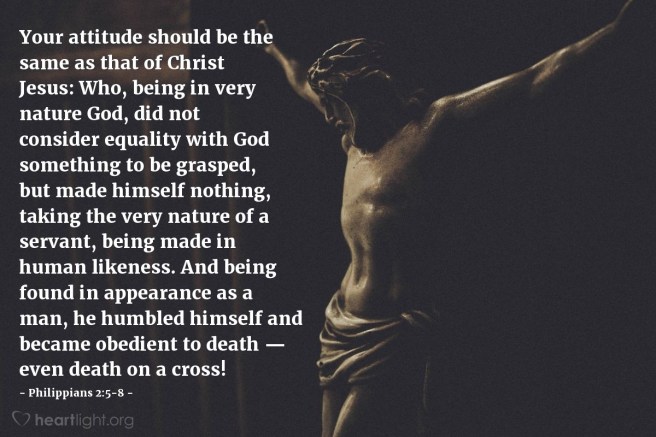
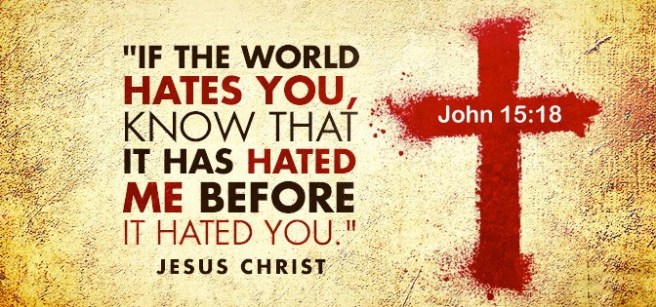
A couple of weeks ago, I was reading an article from Voice of the Martyrs, and as it almost always does, the article tested my faith. Many of you reading this may be familiar with Pastor Richard Wurmbrand. Voice of the Martyrs stems from his work and devotion to spreading the gospel in hostile places. He spent his life discipling others to do the same. Much of his time was spent in Eastern Europe in what was known as the Soviet Block. Communism had taken the area by storm following the end of World War II and faith was starved by the new atheistic regimes. One evil, nazism, had been replaced with another. But faith outlasts fear and hatred. No manner of method used by the enemies of Christ has ever been successful in defeating the devoted. That is a lesson that Mr. Wurmbrand tried to teach his young patrons in this excerpt from the article I read.

The twelve students stood with their pastor along the fence. On the other side was a large ditch, beyond which was an opening to a manmade cave. A large lion paced back and forth in front of the cave’s opening. Their pastor said, “Your forefathers were thrown before such wild beasts for their faith. Know that you also will have to suffer. You will not be thrown before lions, but you will have to suffer at the hands of men who would be much worse than these animals. Decide here and now whether you wish to pledge allegiance to Christ.” The students looked at each other. Before them stood their pastor, Richard Wurmbrand, a man who had spent fourteen years in prison for his work in the underground church. This was the pastor’s last week in Romania, for he and his family had been ransomed from their homeland and would be leaving within a few days. Richard didn’t know if his Sunday school students would suffer under the brutal hand of atheistic Communists, but he wanted to implant a faith that would survive the harshest trials. So he had brought the students to the local zoo to see the lions. Although young, the students fully understood what their pastor meant. With tears, they answered resolutely, “We pledge our allegiance to Christ.”

Decide here and now whether you wish to pledge allegiance to Christ. Wow. I have never been confronted with that proposal in such a way. When I was a child deciding to give my life to Jesus, it wasn’t a matter of life or death. No one ever explained to me that there was so much hate in the world and that people might actually want me in prison, tortured, or killed because of what I believe in. Those are realities I’ve had to learn as I’ve grown up and grown in the faith. I use to have dreams where I was tied up and threatened to renounce my faith or die. I always woke up before the dream played itself out. What I was left with was wondering about just how deep my loyalties are. My life matters less to me than my allegiance to Christ. But what about my wife’s life? Or my children? I have been so privileged to grow up in a nation that acknowledges the right of every human being to choose their beliefs. That is a God-given right of free will. But what if that wasn’t the case any longer? As the world grows more hostile towards Jesus and towards set truth, difficult choices will probably have to be made. For the follower of Jesus, nothing can take precedent over their allegiance to their Savior. It is best to do the hard reflecting now for we may all have to face the day of decision. We need to teach our children to do the same. Jesus over everything!

*This is dedicated to all our brothers and sisters around the world who wage the spiritual war every day. We stand with you in prayer and acknowledge your great courage. You inspire us all.

If then you have been raised with Christ, seek the things that are above, where Christ is, seated at the right hand of God. Set your minds on things that are above, not on things that are on earth. For you have died, and your life is hidden with Christ in God. When Christ who is your life appears, then you also will appear with him in glory.

Colossians 3:1-4 ESV

The Messiah of Psalm Two

kiss son

The Psalms were songs of praise, repentance, remorse, and promise. They proclaim so much about who God is and who were are. The Psalms are also very rich in prophecy. Most breakdowns of the Bible do not have the Psalms grouped with books of prophecy, but few books of the Bible have nearly as much detailed messages for identifying the Messiah. Perhaps the only books that do rival the Psalms in this area would be Genesis and Isaiah. Maybe that’s not a fair statement since Jesus Himself proclaimed that the entirety of the Book is about Him. However, in my studies of prophetic messages about the Messiah, I’ve come across 28 different psalms that point to the coming Savior. Most of those 28 psalms contain multiple Messianic messages for us to interpret. Because my studying and knowledge are limited, and the scriptures are vast, I am fully aware that I have missed so many Messianic prophecies contained in this wonderful book.

Today we are beginning part two of the Messiah Series by looking at the Psalms and Proverbs. Over the next couple of months, we’re going to go through these beautiful songs and look at probably six to eight in detail. For the first one, I’ve chosen the second psalm. This psalm gives a very broad picture of the Messiah, from who his character to his crucifixion. Below, I will break down seven specific connection between the promised Messiah in this song and the revealed Messiah in the New Testament.

Why do the nations rage and the peoples plot in vain? The kings of the earth set themselves, and the rulers take counsel together, against the Lord and against his Anointed, saying, “Let us burst their bonds apart and cast away their cords from us.” He who sits in the heavens laughs; the Lord holds them in derision. Then he will speak to them in his wrath and terrify them in his fury, saying, “As for me, I have set my King on Zion, my holy hill.” I will tell of the decree: The Lord said to me, “You are my Son; today I have begotten you. Ask of me, and I will make the nations your heritage, and the ends of the earth your possession. You shall break them with a rod of iron and dash them in pieces like a potter’s vessel.” Now therefore, O kings, be wise; be warned, O rulers of the earth. Serve the Lord with fear, and rejoice with trembling. Kiss the Son, lest he be angry, and you perish in the way, for his wrath is quickly kindled. Blessed are all who take refuge in him.

Psalm 2 ESV

We have an advantage with the beginning of this Psalm because it is directly quoted in the New Testament by the disciples of Jesus. As the believers prayed for boldness they quoted from the Psalm and followed it up with this:

…for truly in this city there were gathered together against your holy servant Jesus, whom you anointed, both Herod and Pontius Pilate, along with the Gentiles and the peoples of Israel, to do whatever your hand and your plan had predestined to take place.

Act 4:27-28 ESV

A mixed group rose up to persecute Jesus. The nations were truly represented through the Jews and the Gentiles gathered in Jerusalem. Among them were two rulers, Pilate and Herod, both of whom plotted and discussed what to do with Jesus. Both rulers played a role in His destiny.

Also contained in the first three verses is a title. The Messiah/Christ means anointed.  In multiple places, Jesus is described with the same title. Peter said it in his sermon discourse to the people of Jerusalem on Pentecost:

Let all the house of Israel therefore know for certain that God has made him both Lord and Christ, this Jesus whom you crucified.”    Acts 2:36 ESV

Simon’s brother, Andrew, first introduced him to Jesus by calling Him by that very name:

One of the two who heard John speak and followed Jesus was Andrew, Simon Peter’s brother.  He first found his own brother Simon and said to him, “We have found the Messiah” (which means Christ).   John 1:41 ESV

Here are five more New Testaments connections back to the language of the Messiah in Psalm two:

#1- The Wisemen called Jesus the King.

Now after Jesus was born in Bethlehem of Judea in the days of Herod the king, behold, wise men from the east came to Jerusalem, saying, “Where is he who has been born king of the Jews? For we saw his star when it rose and have come to worship him.” Matthew 2:1-2 ESV

#2- God proclaims Jesus to be the Beloved Son at His baptism.

And when Jesus was baptized, immediately he went up from the water, and behold, the heavens were opened to him, and he saw the Spirit of God descending like a dove and coming to rest on him;and behold, a voice from heaven said, “This is my beloved Son, with whom I am well pleased.” Matthew 3:16-17 ESV

#3- Jesus again to declared the Son.

Paul, a servant of Christ Jesus, called to be an apostle, set apart for the gospel of God,which he promised beforehand through his prophets in the holy Scriptures,concerning his Son, who was descended from David according to the fleshand was declared to be the Son of God in power according to the Spirit of holiness by his resurrection from the dead, Jesus Christ our Lord…  Romans 1:1-4 ESV

#4- In Paul’s recount of the crucifixion and resurrection in fulfillment he draws off of the second Psalm.

And when they had carried out all that was written of him, they took him down from the tree and laid him in a tomb. But God raised him from the dead,and for many days he appeared to those who had come up with him from Galilee to Jerusalem, who are now his witnesses to the people.And we bring you the good news that what God promised to the fathers,this he has fulfilled to us their children by raising Jesus, as also it is written in the second Psalm, “‘You are my Son, today I have begotten you.’   

Acts 13:29-33 ESV

#5- And finally, life comes through Jesus, the Son, the Messiah, God in the flesh. To kiss the Son brings life.

Now Jesus did many other signs in the presence of the disciples, which are not written in this book; but these are written so that you may believe that Jesus is the Christ, the Son of God, and that by believing you may have life in his name.   

John 20:30-31 ESV

Praise God for the life-giving Messiah!


Restoration

Over the last couple of months, I have been working on restoring a couple of World War Two era bayonets. It’s quite the process so I have to work on it when I can. It’s not like I’m ever going to strap these to a rifle and go charging into battle. I’m doing it because there’s something about taking an old, discarded, and damaged item and making it like new and valuable again.

I drive down the road most days and see sweet rides from the 1960s, 1950s, and even older. They aren’t rattling down the street losing parts as they go. No, they’ve been rebuilt, polished, and repaired. They look as though they just rolled off the lot.

I’ll think inside of everyone, there is a heart that greatly appreciates restoration. It’s human nature to want to see things made new. Not everyone will go through the process of restoring an object, but the appreciation is there nonetheless. And I think it’s written into the design of every image-bearing human being because of Who we’re made to reflect.

“And he who was seated on the throne said, “Behold, I am making all things new.” Also he said, “Write this down, for these words are trustworthy and true.”” Revelation‬ ‭21:5‬ ‭ESV

God is a God of new beginnings. The entire Bible is a story about restoring the world back to its original design, before sin messed it all up. It’s also about restoring humans back to our original purpose before sin led us astray. We appreciate restoration so much because deep down we long for it to be real inside of us and in the world around us. It’s part of the mission we’re invited into. You don’t even have to be a believer in Jesus to feel it. But the desire broadens to so many more areas and goes to so many deeper levels when you are.

Restoration is in our hearts because our hearts need it so much. That is the offer in the life with Jesus. He takes the old, imperfect, broken, and discarded you, and makes you whole again. He fills the voids, polishes the edges, and refines the character. Jesus, and Jesus only, can make us new. And newness is what we all need.

“Therefore, if anyone is in Christ, he is a new creation. The old has passed away; behold, the new has come.” 2 Corinthians‬ ‭5:17‬ ‭ESV‬‬

Must Gentile Christians Observe the Jewish Feasts?

jesusinthefeasts

Article by Dr. Eli Lizorkin-Eyzenberg

This post was shared with me a week or so ago and I found it very interesting, full of good points. I’ve also written on the subject in the past. If you’d like to read a past article on the matter check out Celebrate Bible-Style.

There are several reasons why this topic is making a powerful comeback. The primary reason is that in the past 20 years Christian Churches around the globe, represented by almost every major Christian denomination, have become much more aware of the Jewish identity of their Savior and King. This, of course, is a wonderful thing.

The question is usually framed in a very simple way: “Must Christians observe the Jewish feasts?” I would submit to you that there are several problems with how the question is formed.

First, the assumption is that “Christians” are members of a non-Jewish movement, independent in every way from the people of Israel. Knowing what we now know about the Jewish background of the New Testament, we can say with full confidence that this is clearly not the case.

Second, the question refers to the Feasts of the Lord as “the Jewish feasts,” as if these feasts did not belong to God himself as their biblically native terminology clearly implies. Only when we adopt the biblical (rather than theological) categories, can we begin to see that we are asking the wrong question. Wrong questions, in turn, are known to lead good and godly people to wrong answers.

Third, the inclusion of “must” is problematic as well. It unintentionally advances the question in the context of the Protestant-Catholic, 16th-century divide regarding personal salvation (faith vs. works).

I would restate the question in a way that, while surely more cumbersome in Christian English (the language of our communication), is more fitting to the biblical context:

“Should the follower of the Jewish Christ, who comes from the nations and not from Israel, also mark as holy ‘the Feasts of Lord’”?

I think the answer to this question is clearly – yes. The question is not “if”, but “how” must Gentile followers of the Jewish Christ observe the Feasts of the Lord in covenantal continuity and partnership with Israel, yet with full realization of the powerful implications brought forth by Jesus’ life, death, resurrection, and ascension.

It is indeed very interesting to note that Christian Churches, especially in their Catholic and Eastern Orthodox expressions, have never claimed that believers should cease to observe the feasts of the Lord.

In fact, both Christian communities (along with most protestant ones) have regularly marked many key biblical feasts with special worship celebrations. Unfortunately, they have often observed the feasts purposely on different dates and often inventing traditions far removed (and sometimes antithetical) to the original biblical injunctions.

Gentile Christians today are called to reunite with the people of Israel through, among other things, Christ-centered observance of the Feasts of the Lord and in so doing to experience their belonging to the Commonwealth of Israel.

For more articles like these are various topics, go to the Israel Bible Center website.

Peace in Christ brothers and sisters!

Communion in Genesis

communion

*Image from crosswalk.com

The act of taking communion is one of the most sacred acts that a believer in Jesus can do. We are told to do it often, even as often as every time we gather together with other believers. Jesus celebrated it with His disciples the night before He carried out the very act it represents. But this was not the first the symbolism of communion was given in the Bible. There are several we can point to but I’d like to focus in on one passage out of the book of Genesis. To understand the context of this passage lets rewind a bit. Abraham had just rescued Lot and many others from enemies in the region. The mysterious figure of Melchizedek, King of Salem, came out to meet Abraham to celebrate the victory. Here’s the passage:

And Melchizedek king of Salem brought out bread and wine; now he was a priest of God Most High. He blessed him and said,

“Blessed be Abram of God Most High,
Possessor of heaven and earth;
And blessed be God Most High,
Who has delivered your enemies into your hand.”

He gave him a tenth of all. The king of Sodom said to Abram, “Give the people to me and take the goods for yourself.” Abram said to the king of Sodom, “I have sworn to the Lord God Most High, possessor of heaven and earth, that I will not take a thread or a sandal thong or anything that is yours, for fear you would say, ‘I have made Abram rich.’

Genesis 14:18-23 NASB

#1-Bread and Wine: While this was a common feature in most ancient meals, it’s symbolic importance can it be ignored. They became integral parts of the Passover meal, which was a foreshadowing in itself of the very thing that the communion represents, the death of Jesus our Messiah. Jesus himself used these two elements to represent His sacrifice during the last supper.

#2-High Priest: Melchizedek is named as the priest and king of Salem. This is the city that would later become Jerusalem. Only one other figure in all of the Bible is mentioned as being both priest and king…Jesus. In Israel, those two positions were kept separate. But in Jesus, they came together as one as Jesus became both our High Priest and the King of kings. The duty of the priest was to mediate or make peace, between God and man.  Communion represents the ultimate act that brought that peace for us. Instead of daily and yearly sacrifices, Jesus made one final sacrifice for all time.

#3-God’s deliverance: In this passage, God delivered Abraham, Lot, and the people from their captors. God did the same thing on a bigger scale in the rescue from slavery in Egypt remembered in the Passover meal. God did it again in an even bigger way through the sacrifice of Jesus on the cross. Because of Him, we have been delivered from the bondage of sin and death.

More than those connections to the symbolism in communion, Abraham’s response in the passage can instruct us on our response to God’s grace in our own lives. Abraham’s heart was full of gratitude, not greedy for gain. He must have realized that God’s victory had been won and there remained nothing more precious for him to possess. Here is what Matthew Henry’s commentary says on the matter:

Observe the king of Sodom’s grateful offer to Abram, Give me the souls, and take thou the substance. Gratitude teaches us to recompense to the utmost of our power, those that have undergone fatigues, run hazards, and been at expense for our service and benefit. Abram generously refused this offer. He accompanies his refusal with a good reason, Lest thou shouldest say, I have made Abram rich: which would reflect upon the promise promise and covenant of God, as if He would not have enriched Abraham without the spoils of Sodom. The people of God must, for their credit’s sake, take heed of doing any thing that looks mean or mercenary, or that savors of covetousness and self-seeking. Abraham can trust the Possessor of Heaven and earth to provide for him.

Communion is a celebration of that ultimate and fully sufficient provision from the Possessor of Heaven and earth. Praise God for His amazing love!

Peace in Christ brothers and sisters

Worshipping God’s Gifts

“The Egyptians were urgent with the people to send them out of the land in haste. For they said, “We shall all be dead.” So the people took their dough before it was leavened, their kneading bowls being bound up in their cloaks on their shoulders. The people of Israel had also done as Moses told them, for they had asked the Egyptians for silver and gold jewelry and for clothing. And the Lord had given the people favor in the sight of the Egyptians, so that they let them have what they asked. Thus they plundered the Egyptians.” Exodus‬ ‭12:33-36‬ ‭ESV‬‬

Not only did God rescue Israel from slavery in Egypt, He also showered them with clothing for the journey and with silver and gold. Later on in the story we see that some of that fabric and those precious metals would be used in the construction of the tabernacle. But God would only ask for those with willing hearts to give to the cause of the project.

“And they came, everyone whose heart stirred him, and everyone whose spirit moved him, and brought the Lord ‘s contribution to be used for the tent of meeting, and for all its service, and for the holy garments. So they came, both men and women. All who were of a willing heart brought brooches and earrings and signet rings and armlets, all sorts of gold objects, every man dedicating an offering of gold to the Lord. And every one who possessed blue or purple or scarlet yarns or fine linen or goats’ hair or tanned rams’ skins or goatskins brought them.” Exodus‬ ‭35:21-23‬ ‭ESV‬‬

The generosity of all those Israelites never ceases to encourage me to be more open with all God had blessed me and my family with. Since they were slaves in Egypt you know they didn’t have much. Most, if not all, of what they brought had to have been given to them upon their exit from the land. That’s because God is a giving God. As if our freedom is not enough (which obviously it’s more than enough) God goes beyond. He always gives more than we deserve. And the response of a thankful heart is to always give back to God’s mission and purposes. But, unfortunately, this passage in Exodus 35 came after a failed response by the people of Israel a few chapters earlier.

“When the people saw that Moses delayed to come down from the mountain, the people gathered themselves together to Aaron and said to him, “Up, make us gods who shall go before us. As for this Moses, the man who brought us up out of the land of Egypt, we do not know what has become of him.” So Aaron said to them, “Take off the rings of gold that are in the ears of your wives, your sons, and your daughters, and bring them to me.” So all the people took off the rings of gold that were in their ears and brought them to Aaron. And he received the gold from their hand and fashioned it with a graving tool and made a golden calf. And they said, “These are your gods, O Israel, who brought you up out of the land of Egypt!”” Exodus‬ ‭32:1-4‬ ‭ESV‬‬

All of us will do one of two things when God opens up His storehouses for us. We will either make gods of it, or we’ll be generous with it. We can be conduits of His generosity and let it flow through our hands. Instead, we often fall in into the trap of being dead ends. We set the ‘things’ God gives us at such a high value we never want to let go of them.

I have a saying that I tell to my kids when they’re being reluctant to share. I say, “we don’t deserve to have anything that we’re not willing to share with others.” That’s a lesson I have to occasionally relearn myself. If there is anything we posses that we aren’t willing to use to benefit or aid others, we’ve made it an idol. We are actually worshipping something that God has blessed us with. We might as well melt it down and make a golden calf out of it. Fortunately, God does not forsake us for our moments of selfishness. Hundreds of years later, in the book of Nehemiah, the Levites were recounting the story of the Exodus as the people confessed their sins before the Lord.

“Even when they had made for themselves a golden calf and said, ‘This is your God who brought you up out of Egypt,’ and had committed great blasphemies, you in your great mercies did not forsake them in the wilderness. The pillar of cloud to lead them in the way did not depart from them by day, nor the pillar of fire by night to light for them the way by which they should go. You gave your good Spirit to instruct them and did not withhold your manna from their mouth and gave them water for their thirst. Forty years you sustained them in the wilderness, and they lacked nothing. Their clothes did not wear out and their feet did not swell.” Nehemiah‬ ‭9:18-21‬ ‭ESV‬‬

I want God’s generosity to create a more generous heart in me. I want to live open handed. When God blesses me, I want to see it as an opportunity to bless others. I want to invest more of my time in the pursuit of heavenly treasures, not earthly possessions. I want nothing to be off limits for those in need.

“”Do not lay up for yourselves treasures on earth, where moth and rust destroy and where thieves break in and steal, but lay up for yourselves treasures in heaven, where neither moth nor rust destroys and where thieves do not break in and steal. For where your treasure is, there your heart will be also.” Matthew‬ ‭6:19-21‬ ‭ESV‬‬

Cheers to the generous life!

Would Jesus be allowed in your Bible Study?

BibleStudy-1

Have you ever stopped to think about how Jesus would respond if He walked into your Bible study gathering? Would He feel welcome? Would He be honored by what He saw? Those may seem like rhetorical questions, but they really aren’t. I think that there are Bible studies, or “small groups” as they are often labeled, out there that would not like Jesus to walk through the door. Or they would at least be in for quite the shock at what He may have to say. Why is that the case for some groups out there? Maybe because they are misrepresenting Him. Maybe because they are straying from the foundations of their faith. Maybe because they act as an exclusive group. Maybe the Bible isn’t really much of the focus in the first place. Maybe Jesus isn’t even their focus.

Allow me to give some examples of what I’m referring to. I know groups where alcohol is a big part of the gathering (and it’s not for taking communion). I know groups that are pretty closed off to outsiders or those with different views from the majority of the group (Heaven-forbid a non-believer come to Bible study). I’ve been to Bible study groups that talk about most anything other than the Bible (it’s more of a social club). I know of groups that are so legalistic and focused on the Old Testament that Jesus is rarely (if at all) mentioned (The irony).

What would Bible Study with Jesus look like? I think we can know the answer to that by taking a look at His life. Read about what He did when He was with people. Jesus was constantly talking about the word. His mission was to gather outsiders and love on people. Jesus brought the liberating truth. He prayed, He served, and He inspired hope. He saw people for who they were and called them into something so much better. He loved the least of society instead of turning His back on them. Jesus lead and loved from the heart of God. I think Jesus-inspired Bible studies would look something like what they did in the first century when those who had experienced Jesus met with one another.

They devoted themselves to the apostles’ teaching and to fellowship, to the breaking of bread and to prayer. Everyone was filled with awe at the many wonders and signs performed by the apostles. All the believers were together and had everything in common. They sold property and possessions to give to anyone who had need. Every day they continued to meet together in the temple courts. They broke bread in their homes and ate together with glad and sincere hearts, praising God and enjoying the favor of all the people. And the Lord added to their number daily those who were being saved.

Acts 2:42-47 NIV

I don’t think it’s ever a bad idea to do a little reflection on our churches, our gatherings, and our relationships to make sure they are reflecting the One whom we love. Who knows…a new shot zeal could rise up among us. We could get a new sense of purpose for why we meet and why we do what we do. That sense of belonging in Christ and the new identity that we have could be revived among us. Our eyes could be turned more to those around us, to the hurting, the broken, and the lost. A new devotion to the mission of love and truth could spring up in our hearts. We could put Jesus more on display for each other, and especially for those who don’t know Him. Who wouldn’t want that?

Peace in Christ brothers and sisters!

Faith of Women Series: the Sinful Woman

Just as this series began with a story of redemption, I thought it appropriate to end with one, since that is what the entire story of the Christian faith is about. Our series started with Rahab, a woman with a less than good reputation. But she proved to be instrumental in the story God was unfolding through the people of Israel. The woman of faith we are focusing on today was an outcast of Jewish society. Much like Rahab, she would not be the top choice in many churches. But she is nonetheless, an example for followers of Jesus to aspire to. Here’s the story out of Luke.

“One of the Pharisees asked him to eat with him, and he went into the Pharisee’s house and reclined at table. And behold, a woman of the city, who was a sinner, when she learned that he was reclining at table in the Pharisee’s house, brought an alabaster flask of ointment, and standing behind him at his feet, weeping, she began to wet his feet with her tears and wiped them with the hair of her head and kissed his feet and anointed them with the ointment.” Luke‬ ‭7:36-38‬ ‭ESV‬‬

In Luke 7 a broken, sobbing, unnamed woman enters the home where Jesus is dining. She anoints his feet with oil and tears, wiping them with her hair. The men present talk about her like she isn’t even there. They are offended by the “sinner” in their presence.

Much debate exists over who the woman in this story is. I would caution anyone to rush into claiming to know her identity. The safest thing to do is to remain silent when the Bible is silent. The question of who she was must be left unanswered. Two answers have, however, been suggested by various sources. They are only theories though. One suggests she was Mary of Magdalene. The belief adopted by some interpreters, and more or less generally received in the Church of Rome, is that the woman was none other than Mary the sister of Lazarus. Both of these assumptions are quite a stretch with no basis of supporting information from the gospel texts. If the name had been important, the Lord would have impressed it on Doctor Luke to include it. The point of this story is not her name, it’s her heart.

“Now when the Pharisee who had invited him saw this, he said to himself, “If this man were a prophet, he would have known who and what sort of woman this is who is touching him, for she is a sinner.”” Luke‬ ‭7:39‬ ‭ESV

We know only one thing about who this woman was: she was a sinner, That label, in this context, denotes that she was a woman well known for her lewd behavior. More than likely she was a prostitute due to the way the phrase is used elsewhere in the Bible. But no matter how much others wanted to label her that way, she wouldn’t allow it to define her destiny. In this concise passage from Luke’s gospel, we see the entirety of God’s mission in play.

“For while we were still weak, at the right time Christ died for the ungodly. For one will scarcely die for a righteous person—though perhaps for a good person one would dare even to die— but God shows his love for us in that while we were still sinners, Christ died for us.” Romans‬ ‭5:6-8‬ ‭ESV‬‬

This woman saw something special in Jesus. She saw a necessity that couldn’t be filled in any other way. Jesus was her freedom. Her past would not deter her. Quite possibly she had been involved in her sinful lifestyle the day of this life-altering encounter. But sin requires a savior. The holiness of Jesus did not deter her, it attracted her. Faith overcame her failures.

“Then turning toward the woman he said to Simon, “Do you see this woman? I entered your house; you gave me no water for my feet, but she has wet my feet with her tears and wiped them with her hair. You gave me no kiss, but from the time I came in she has not ceased to kiss my feet. You did not anoint my head with oil, but she has anointed my feet with ointment. Therefore I tell you, her sins, which are many, are forgiven—for she loved much. But he who is forgiven little, loves little.” And he said to her, “Your sins are forgiven.” Then those who were at table with him began to say among themselves, “Who is this, who even forgives sins?” And he said to the woman, “Your faith has saved you; go in peace.”” Luke‬ ‭7:44-50‬ ‭ESV‬‬

Who among us would go to such great lengths to show Jesus our love for Him? First, she had to recognize her sin and then she had to seek out the cure. Some sources suggest she was a gentile woman. Whether she was or wasn’t she still followed Jesus into the home of a Pharisee. That’s a huge no-no for a “sinful” woman. She could have very well been sealing her own death sentence. Instead of finding death, she found new life. And that’s exactly what faith does. It recognizes our need for Jesus and follows Him into any unknown danger. Her love for Him steered her course, not because she was worthy of Him, but because she knew she wasn’t and He chose her anyways. The same is true for all of us. No one in history ever deserved to kiss His feet or shower them in their tears. Which is precisely why her faith and His love are so amazing.

*I have enjoyed so much going through this series. We’ve looked at some pretty amazing women from the past, who’s faith exceeded our own. I just want to give a huge thank you to all the women in my life who have loved Jesus and followed Him into the unknown and spend their lives trying to make Him known. I’m a blessed man. Take the time to thank the women of faith in your own life. They are so important and are far too often overlooked. Thank you also to all the women of faith who have been reading this series. You’re changing the world around you!

Peace in Christ brothers and sisters

A leap from the edge

Parenthood gives us so many glimpses at the realities of how God views and wants to interact with us as His children. It’s just another grace of His and for me, it really makes the Bible come alive in unique and powerful ways. One such moment happened recently. My family and I were over at a friends house swimming. After a long time of playing we got out to have some lunch. When we were all finished and it was time to get back to the water we all waded it, that is, all but my oldest daughter. She walked around the pool’s edge rounding up toys to put in the pool before joining the rest of us. It was then that I had a fun idea.

My mind drifted back to times when I was little and I would leap from the pool’s edge into my dad’s arms. That’s how I learned to not be afraid. It wasn’t long before I would jump on my own. So I got my five year old daughter’s attention and said, “why don’t you jump from the edge and I’ll catch you?” Up to this point in the day she had mainly splashed around in the shallows with a floating vest on. Now I’m asking her to take a leap into the deep end. She paused and said, “no way daddy!” As most any father would, I encouraged her to face her fear and to give it a shot. Her hesitation turned to trepidation. It an attempt to calm her little heart I looked at her and said, “sweetheart, do you trust me?” Her eyes shifted from the water to me and she replied in a soft voice, “yes.” I smiled and told her, “that’s all you need. I know it’s a big jump and we’re in the deep end, but I’m in the deep end with you.” After a few more seconds of hesitation, my daughter inched to the side of the pool. Draping her toes over the edge, slowly bending her knees, legs shaking a bit, arms stretched out towards me, she jumped.

During a simple fun day at the pool, this moment probably did more for me than it did for her. I hope she gained confidence in overcoming something that was big and scary for her. But in that moment I felt the Holy Spirit teaching me like I was trying to teach my daughter. You see, what my daughter was asked to do is, in a way, a lot like scenarios that we find ourselves in with a fair amount of regularity. As followers of Jesus, we’re asked to take many leaps from the waters edge. Sure, it looks different in each of our lives but the idea behind it all is the same. A life of faith is a life lived by jumping in to the deep end when we can’t swim. But our faith tells us that our Heavenly Father is in the deep end with us, ready to catch us so we don’t seek to depths. We are all faced with the same choice that my daughter had, do I let me fear of the unknown and possible danger keep me from jumping, or do I listen to my Father’s voice and trust Him to catch me?

Faith of Women Series: Lydia

One who heard us was a woman named Lydia, from the city of Thyatira, a seller of purple goods, who was a worshiper of God. The Lord opened her heart to pay attention to what was said by Paul. And after she was baptized, and her household as well, she urged us, saying, “If you have judged me to be faithful to the Lord, come to my house and stay.” And she prevailed upon us.” Acts‬ ‭16:14-15‬ ESV

Scripture does not supply us with any information regarding Lydia’s background apart from the fact that she lived in Thyatira which was one of the Macedonian colonies. Thyatira was conspicuous for its many guilds which were united by common pursuits and religious rites. One of these guilds was that of dyers. The water of the area was so well-adapted for dyeing, and the unique purple dye of Thyatira brought the city universal renown. This is the atmosphere that Lydia found her self in. According to Acts 16:14, Lydia was a well-known seller of this product making her an example of a successful business woman in a prosperous city.

I believe there are several observations about Lydia that make her a great example of faith. First, she is labeled as a worshipper of God. No one knows for sure if she was of Jewish descent. Most speculate she wasn’t due to her name and where she lived. Most in Thyatira wanted nothing to do with the God of Israel. It was a center of Greek paganism and the worship of many other gods, mainly Apollo. The fact that she worshipped the God of Israel made her set apart from the crowd and willing to be different for her convictions.

A second observation about Lydia is that she was actively seeking out the things of God. In verse 13 Paul said that they went to a place of prayer by the riverside on the sabbath day. Lydia was there. She was a woman of prayer, not afraid to be seen among other believers, outside the gates of the city wall. She risked a lot for her faith…to be active in her faith. This is where she met Jesus. As a worshipper of God, Lydia only knew him in part. In Jesus, we get a much fuller picture of who God is, since Jesus is the full embodiment of God’s holiness and character and love.

Thirdly, Lydia responded to the gospel without hesitation. As Paul preached, she soaked it all in. The Holy Spirit moved in her and when it did, she took the call to be baptized, making her public confession of her faith in Jesus.

Lastly, Lydia showed her love for others. She most likely contributed to her family’s salvation and baptism and immediately requested that those carrying the gospel come to her home to be taken care of. Her faith becomes action in the form of her generous hospitality. She maintained that hospitality by continuing to take care of Christians after this original encounter. After Paul and Silas got out of prison (for preaching the gospel) they went to see her where many brothers and sisters in Christ were. It is very likely that Lydia had started a home church there.

“Yes, I ask you also, true companion, help these women, who have labored side by side with me in the gospel together with Clement and the rest of my fellow workers, whose names are in the book of life.” Philippians‬ ‭4:3‬ ‭ESV‬‬

In Paul’s letter to the church at Philippi, he asked for the prayers and support for the women who had labored beside him in the furthering of the gospel. Lydia was undoubtedly one of them. Her presence and example would continue to carry on. Her life was spent for the gospel of Jesus. Today, she is regarded as one of the greatest women of faith among the Orthodox Christian church, which has its roots in region Lydia called home.