Doorposts and Crossbeams

maxresdefault

I’ve heard a lot of versions of the gospel. Some are extremely burdensome, and others, well, could easily just leave Jesus out of it. When people try to put their own twist on the message, it gets really distorted. I wonder how many non believers are confused by the mixed messages. Actually, it’s those in the church who are probably more susceptible to becoming confused. The gospel, in it’s simplicity, is beautiful and easy to understand. Salvation is not a road with twists and turns meant to get us lost. It’s a straight path, narrow as it may be, that’s paved by One person, and guided by the One who made it. The gospel is meant to bring joy and hope to a desperate world.  Confusing and complicated things don’t do either of those things. One easy way to understand the message of the gospel is through doorposts and crossbeams.

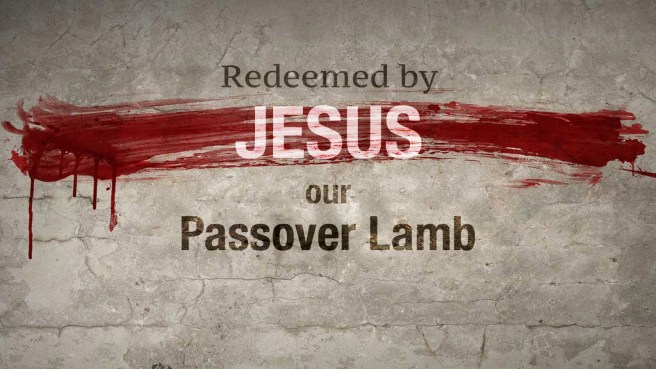
The Passover is a beautiful illustration of the gospel. It’s a story of redemption. It’s a story of deliverance from bondage. It’s a story of faith in the grace of God. It’s a story of victory. Israel was in slavery in Egypt when God responded to their dyer need out of His own love for His children. After Aaron and Moses delivered God’s message to Pharaoh, nine nasty plagues reeked havoc on Egypt. The tenth, however, would be the worst of them all. The tenth plague would be God’s wrath on sin, idolatry, pride, false religion, cruelty, and so much more. The Destroying Angel would sweep through the land of the most powerful empire on earth and lay waste in one of the most heart-wrenching ways. The people would bear the weight of their rebellion against the God that loved them. But, as always, God made a way.

When the LORD goes through the land to strike down the Egyptians, he will see the blood on the top and sides of the door frame and will pass over that doorway, and he will not permit the destroyer to enter your houses and strike you down.

Exodus 12:23 (NIV)

The blood on the doorposts, was the blood of a lamb. That’s it. In faith, Israel would kill a spotless lamb and cover the doorposts of their homes with the blood. That blood would save them from the wrath of God that was about to be poured out. It wasn’t only the good Israelites that got to be covered with the blood. It wasn’t even just the Israelites who were covered. Anyone who could humble themselves enough and trust in the blood, could be covered. I’m convinced that even Pharaoh himself could have done this. But, as we can read from the Exodus story, Pharaoh was anything but humble. His faith was in himself.

The gospel is that straight forward. Love in all it’s simplicity. Jesus hung on crossbeams to bleed for all of us. His blood covers anyone who wants to put their faith in Him. You don’t have to be a good person to surrender to Jesus…you just have to surrender and let the blood do it’s work. We don’t have to be the spotless ones because Jesus was that on our behalf. Those rescued from Egypt were imperfect people, and so is the Church. But, we are rescued all the same. We are rescued from the wrath of God to come on this rebellious and self-worshiping world, only because of the blood of Jesus. When God looks at you, He sees His child. He sees someone covered by the most precious blood. But, just like those who God rescued from Egypt, we have to follow Him out of slavery. God didn’t deliver Israel so they could stay put in bondage. God covered them and bid them to come and follow. When He stepped out of heaven in the person of Jesus, He did the very same thing. The sacrifice of Jesus means we’re covered and invited. That invitation has always been to whoever will come. To whoever, will put their faith in God’s love. To whoever is covered by the blood.

For God so loved the world that He gave His one and only Son, that whoever believes in Him shall not perish but have eternal life.

John 3:16 (TLV)

Happy Passover brothers and sisters!

Fun Ways to Teach Kids about God

tERJElSDTXuN0YbABgOd_JT-Blog-bible stories wisdom

Hear, O Israel: The Lord our God, the Lord is one. You shall love the Lord your God with all your heart and with all your soul and with all your might. And these words that I command you today shall be on your heart. You shall teach them diligently to your children, and shall talk of them when you sit in your house, and when you walk by the way, and when you lie down, and when you rise. You shall bind them as a sign on your hand, and they shall be as frontlets between your eyes. You shall write them on the doorposts of your house and on your gates.

Deuteronomy 6:4-9 (ESV)

Knowing the word of God is important. Teaching the next generation is equally important. But as any parent can testify, that can be challenging. When they are really young, their attention span is nonexistent. As they grow, rebellion can seek in a bit. But teaching our kids can be exciting and impactful. Nothing can replace the value of doing devotions and bible stories with our kids at bedtimes or after a breakfast meal. But sometimes we need to spice things up a bit. And that’s ok!

I’ve come up with a list of 12 activities that can help parents with children who are toddlers or teenagers. I’ve done them with kids of all ages and they are fun and they leave an imprint. You can make them as in depth and challenging as you’d like. Or you can keep them simple. Give them a try and have a blast! If you have other ideas, please comment on this post.

  1. Make a Fort
    • Build a fort out of anything safe around your house, whether inside or out.
    • Take time to share about how God protects them like forts were used to protect people
    • Bible verse: Psalm 18:2
  1. Balancing Act
    • Have your kids try to balance on several objects that are really difficult.
    • Then place your kids on something that is really easy to balance on.
    • Share about God’s word being a firm and steady foundation that we can stand on.
    • Bible verses: Matthew 7:24-27
  1. Trust Fall
    • Standing on an elevated platform or on the floor, have your child fall back into your arms. Repeat as long as they have fun.
    • Talk about how we can trust the Lord to catch us in uncertain times and especially when we’re afraid.
    • Bible verses: Psalm 84:12, 56:3, 31:14
  1. Being Blinded
    • Blindfold your kids and give them directions so they don’t run into things. Guide them around the house or outside.
    • Share about how the Lord leads us, especially when we don’t know what lies ahead of us in life.
    • Bible verses: Proverbs 3:5-6
  1. Water Act
    • You need to do this outside or in the bathtub. Fill a clear container with water. Then using food color, or a dark beverage like soda, pollute the water so that it’s no longer clear. Talk about how sin does that to our lives.
    • Then continue to fill the container with water again until the container is full of clear liquid. Talk about how Jesus, the living water, cleanses us from our sin and makes our lives clean again.
    • Bible verses: 1 John 1:7-9
  1. Tabernacle
    • Build a tabernacle in your yard similar to those that were constructed during the Feast of Tabernacles from Leviticus 23. You can make it out of anything really. A canopy works great. Dress it how with lights and more!
    • While sitting under the tabernacle, share about how Jesus walked among us and other ways that God wants to be with us (Holy Spirit, Temple, in the future, etc…).
    • Bible verses: John 1:1-14
  1. Treasure Hunt
    • Hide things all over the house or yard and have them look for them. They should be things that are valuable to them so they are even more motivated to find them.
    • After they’ve found everything, talk about how Jesus pursues us when we are lost and will never give up on us.
    • Bible verses: any of the stories from Luke 15
  1. Orchard
    • Go to a local orchard in season where you can find grape vines or fruit trees.
    • Use them as illustrations to talk about living a life that bears good fruit and how we depend on the vine (Jesus) to make that happen. If a branch gets cut off, it dies and doesn’t bear fruit.
    • Bible verses: John 15:4 and Galatians 5:22-23
  1. Dodge Ball
    • Have your kids try to get from one side of the house or yard, to the other, while you throw soft objects at them (parent therapyJ) and try not to get hit.
    • Then give them a shield of some kind and repeat the attempts. Talk about how much easier it is to defend yourself when you have a shield and how faith is that shield in life. Because to get from one end of life to the other, life will bombard us with a lot.
    • Bible verses: Ephesians 6:16 and 1 John 5:4
  1. Heavy Relay
    • Using a bucket or bag, have them race or just try to run. Each time, add another heavy object (books or rocks work well) until it becomes too heavy for them to run. Then empty the bag and have them run again.
    • Talk about how sin weighs us down in life but how Jesus wants to remove the weight from us.
    • Bible verses: Hebrews 12-1-2
  1. Dress Up
    • If you have girls, princess dress up works great. If boys, then it’d be a prince obviously. Same principle. After dress up, do a photoshoot.
    • The focus of this activity is to tell them about how they are princes or princesses of the King of Kings
    • Bible verses: 2 Corinthians 6:8 and 1 John 3:1
  1. Explore Nature
    • This can work anywhere from a back yard to hitting the trails. A camp trip works great too!
    • While in nature, point out all the amazing things that God has created for us to enjoy.
    • Bible verses: Creation story in Genesis 1, Psalm 95:4-5, Psalm 19:1, Romans 1:20

How do you swing the Sword?

For the word of God is living and active, sharper than any two-edged sword, piercing to the division of soul and of spirit, of joints and of marrow, and discerning the thoughts and intentions of the heart.

Hebrews 4:12 (ESV)

The Bible is sometimes referred to as a sword. That’s because it’s the best weapon a person has against the lies of cultures that are pervasive in every society. The Bible cuts through our selfish motives, pride, deceit, carelessness, and so much more. It shows everyone of us just how much we need a Savior, then introduces us to Him. It shows us the remedy for the ills of life and the purpose for which we were all created. It’s the ultimate source of strength, encouragement, and hope. It is a lifeline for sinking men and women across the globe.

In Ephesians chapter six, the Bible is called the Sword of the Spirit. It is meant to be wielded to crush the enemy lines that seek to spread darkness and chaos throughout humanity. But that enemy is not in the flesh. It’s spiritual power that seeps into every facet of this world. But all too often, this sword is swung at those who need to experience its life changing qualities, not the sting of another’s insult. The Bible is a tool to fight evil, not to fight people. This sword is meant to build bridges not cut down people in its wake. This sword is meant to bring healing, not further injury to those who are already wounded. As followers of Christ, we use His sword to fight for those in our life, not against them.

With one fell swoop of His Sword, God could wipe out fallen humanity. In a moment of real honesty, we’d have to admit that we’d all deserve it. But He doesn’t. God uses His Sword to mold us into what we are actually supposed to be. God doesn’t destroy with this weapon, He creates new life in us. I wish more believers would want to do the same. I know many who do. But I also know of a lot who would just as soon run someone through with the sword than love them. I think it’s pretty obvious who’s been touched by God’s redeeming grace by how they use His Word. His Sword is an instrument of love. Handle with care.

Love IS: Forever

flat,1000x1000,075,f

Love is a complex idea. It isn’t something that can be tied down to a single expression, feeling, or relationship. Love goes beyond all our boundaries. It takes us to all new heights. And love makes life worth living. In this final post of the series, I want to talk about how love is meant to outlast everything. First, one more time through our verses:

Love is patient and kind; love does not envy or boast; it is not arrogant or rude. It does not insist on its own way; it is not irritable or resentful; it does not rejoice at wrongdoing, but rejoices with the truth. Love bears all things, believes all things, hopes all things, endures all things.

1 Corinthians 13:4-7 (ESV)

So many relationships come to an end because people “fell out of love” with one another. But we can’t fall out of true love. That’s because true love outlast every hardship. True love does not despair. True love can carry any load.  According to verse seven, love bears, believes, hopes, and endures ALL things. The ultimate evidence of this is not how we’ve been loved by others, but how we’ve been loved by our Maker. Think about it…God’s love has endured a sinful and broken humanity for thousands of years. And you know what? His love has never diminished.

Praise the Lord! He is good. God’s love never fails

Psalm 136:1 (CEV)

Instead of looking at each of us to define love, we should really look at the one who invented the concept. I’ve loved imperfectly. You’ve loved imperfectly. But God is perfect love. Not only is God’s love never ending, but He continued to rescue humanity from their weaknesses and mistakes, purely out of His love. Eventually, He would show His love to the point where He would come to earth to die for those who had even despised His love. At our worst, God’s arms were stretched wide open.

…but God shows his love for us in that while we were still sinners, Christ died for us.

Romans 8:5 (ESV)

Look around. We aren’t worthy of His love. Not a single one of us. We all sin, whether in thought, words, or actions, every single day. We’ve all turned our backs on Him at some point. We’ve all tried to live life independent from Him at some point too. But He is the picture of what true love really looks like. God’s love isn’t extended to just those who deserve it, but to every single human ever created. God’s love has just been given to you and me when we were at our best (whatever that looks like). God’s love has endured all of our shortcomings. Out of His love He has bore our sins. Out of His love he patiently desires the salvation for every human being. Out of His great love, He carries the grief of our sinful deeds.

Because we are people of God, we should be people of love. Not a love of our own imagination, but a love as demonstrated by God himself. Those in your life, even your spouse, may not seem worthy of you love. But that isn’t what matters. A godly love is one that transcends worthiness. Don’t let people’s faults get in the way of your love for them, especially when it comes to your spouse. I’ll end with a quote from American author and theologian, Frederick Buechner, because I absolutely love it!

The love for equals is a human thing–of friend for friend, brother for brother. It is to love what is loving and lovely. The world smiles. The love for the less fortunate is a beautiful thing–the love for those who suffer, for those who are poor, the sick, the failures, the unlovely. This is compassion, and it touches the heart of the world. The love for the more fortunate is a rare thing–to love those who succeed where we fail, to rejoice without envy with those who rejoice, the love of the poor for the rich, of the black man for the white man. The world is always bewildered by its saints. And then there is the love for the enemy–love for the one who does not love you but mocks, threatens, and inflicts pain. The tortured’s love for the torturer. This is God’s love. It conquers the world.

Love others. Love your spouse. Love them deeply. Be patient to the very end, no matter how long, and always reach for kindness as your expression of love. Never seek to do what is wrong, or to see revenge or hurt in others, but shower your marriage and all other relationships with truth. Set God as your example and love those around you with an unending kind of love. May your marriages, and all your relationship blossom into beautiful expressions of heaven.

Love IS: True

Welcome to part three of a four part series on ways to define love according to the bible. In part one, we explored some of the emotional do’s and don’ts of love. In part two, it was all about acting out our love for others through kindness. This post is more focused on the foundation of love. Before we jump in let’s look at our series verses.

Love is patient and kind; love does not envy or boast; it is not arrogant or rude. It does not insist on its own way; it is not irritable or resentful; it does not rejoice at wrongdoing, but rejoices with the truth. Love bears all things, believes all things, hopes all things, endures all things.

1 Corinthians 13:4-7 (ESV)

Right in the middle of this passage is this statement about love: “it does not rejoice at wrongdoing, but rejoices with the truth.” According to the dictionary, truth is something that is proven based on fact and reality. But in this context, truth corresponds with what we do because the opposite to truth is wrongdoing. So truth is a correct way of living based on a correct way of thinking. Wrongdoing is a false way of living based on a false way of thinking. We all know that how we think is how we will live. To rephrase the previous statement: love wants nothing to do with falsehood and bad living but celebrates the truth and the right way to live.

The person who deceives us the most, is us. In the church atmosphere there is a lot of talk about how Satan deceives us. He is the father of lies and the first of anyone to lie. It is his main weapon against humanity. However, his work is easy because of humanity’s propensity to sin and gravity towards rebellion against God. Rebellion against God is rebellion against truth. In essence, it is to rejoice in wrongdoing. In the book of James we’re told that this wrongdoing occurs when we are led astray by our own desires. We are the masters of lying to ourselves. We can justify about any action. Humans, because of our sin nature, have an ability to make wrong, look right. This can easily happen in any relationship, especially a marriage. Anything we do in marriage that is contrary to biblical principles is the equivalent to rejoicing in wrongdoing. That might sound harsh but it’s true.

When we care about someone, sometimes we can give them the power to convince us to do something we know is not right. When we love someone, we can fall victim to the idea that we just want them to be happy and we’ll let them pick their path. We don’t intercede because we don’t want to make waves. I’ve known a lot of people who have had convictions in their own hearts about something, but they’ve allowed their spouse to derail their pursuit of those convictions. That’s why it’s important to have open dialogue with one another, no matter the issue. And we have to know that condoning others in doing wrong, or participating in something we know to be wrong, is not showing love, it’s showing the exact opposite.

True love has to be founded on truth thinking and true living. A relationship that includes secrecy of any kind is on shaky ground. It’s the equivalent of telling your spouse that you don’t trust them. How can that be love?

A relationship where either person seeks to get revenge, make the other pay, or intentionally harm them emotionally through words or actions, has disaster written all over it. A heart of love for another never seeks their harm but always their wellbeing.

True love is love built on truth. Right way of thinking, leading to the right way of living. What is a true way to think about our spouse? They are a gift, unique, with gifts and talents too. They have dreams and a purpose. They are your spouse, but first and foremost they are God’s child. We should treat them like the prince or princess they are, even when they don’t act like it. We control how we see them, and we control how we love them.

Peace in Christ brothers and sisters

Love IS: Other

AAEAAQAAAAAAAAVLAAAAJGZiMmY2OWU2LThmNjYtNDQyMi04NDQxLTExM2VjOGRiNzM2YQThis is part two of a four part series titled “Love IS”. Throughout the four posts we will be breaking down the extremely well known passage out of Paul’s first letter to the Corinthians.

Love is patient and kind; love does not envy or boast; it is not arrogant or rude. It does not insist on its own way; it is not irritable or resentful; it does not rejoice at wrongdoing, but rejoices with the truth. Love bears all things, believes all things, hopes all things, endures all things.

1 Corinthians 13:4-7 (ESV)

In the first post I talked about the emotions that can be used to test our love. Four of them were emotions not to feel and only one was one that true love feels towards others. This post will be more about how we affect others by how our emotions play out. Just like last time, Paul tells us more ways that love should not manifest itself and gives us one more loving attribute to demonstrate in our lives. Once again, lets start with the naughty list.

Love should not be boastful, insist on its own way, or rude. What do each of those things have in common? They are all self-centered actions. No thriving relationship can ever revolve around one person. The root of, probably most conflicts, is when one person demands their way and won’t budge. The act of insisting on our own way is a form of boasting. It’s the equivalent of saying, “I know what’s best and you don’t know what you’re talking about.” But boasting certainly goes way beyond that. Last time we talked about people being arrogant. Arrogance is the emotion that leads to boasting. Another word for arrogance is pride, which is not a positive attribute, no matter how society tries to promote it.

Pride comes before destruction, and an arrogant spirit before a fall.

Proverbs 16:18 (HCSB)

Boasting is anything a person does to draw attention to themselves. It’s putting yourself at the center of whatever relationship you’re in and setting your wants and needs as priority. People who are boastful are generally rude, especially when their demands or expectations aren’t met. They can’t seem to understand why others don’t view them how they view themselves. When the bible says that pride leads to destruction and a fall, it’s not a warning to take lightly. Relationships shatter, churches split, teams fail, and lives are ruined all because of pride. Pride in oneself and true love cannot coexist. They are enemies of one another. Instead of being self focused, love is a reflection of a person’s heart that seeks the good of another.

The act of being kind, requires a person to regard the feelings of others, to look beyond themselves, and to intentionally influence another for their good, even at their own expense at times. Showing kindness to someone can save a relationship, end strife, and even save lives. Other words for showing kindness include: affection, warmth, gentleness, concern, and care. When we’re rude, it shows that we value ourselves above all. When we’re kind, it shows that we value others above ourselves.

Do nothing from selfish ambition or conceit, but in humility count others more significant than yourselves. Let each of you look not only to his own interests, but also to the interests of others.

Philippians 2:3-4 (ESV)

If we want our marriages to thrive then we need to be more concerned with what our spouse’s needs are than our own. We need to making a real attempt to show them kindness every day. That can take several forms. For some, the simple act of asking about their spouse’s day or how they’re doing and genuinely listening is a big step. Or how about asking them what you can do to help them or make life easier for them. Kindness can be seen in a warm embrace or a gentle response. Kindness is setting our own emotions aside out of concern for what the other is going through. In the last post we talked about how patience requires humility. Well, so does kindness. In fact, the patient person is far more likely to be a kind and caring person. The kind person is one who goes through a day thinking of others. The kind person is a concerned person. The kind person is sad for those who are grieving, and celebrates with the victories of others. The world of a kind person is so much bigger than themselves. The act of being kind is a tangible reflection of love. Make it a priority, every day, to show kindness to your spouse. Not just when it’s convenient, when you feel like it, or if you feel they deserve it, but always. Because love is kind.

Rejoice with those who rejoice, weep with those who weep. Live in harmony with one another. Do not be haughty, but associate with the lowly. Never be wise in your own sight. Repay no one evil for evil, but give thought to do what is honorable in the sight of all. If possible, so far as it depends on you, live peaceably with all.

Romans 12:15-18 (ESV)

Love IS: Emotional

patience-in-relationships-740x400-2-1501136899

Today is part one of a four part series titled: Love IS. For every part of this series we will be focusing on a familiar set of verses out of the first of Paul’s letters to the Corinthians. Many people have these verses inscribed on wedding invitations and champagne flutes, but the focus is going to be on living them out in our marriages. My hope is, for you and me, that our love for our spouse (now or in the future if you’re not married) will be described in this way:

Love is patient and kind; love does not envy or boast; it is not arrogant or rude. It does not insist on its own way; it is not irritable or resentful; it does not rejoice at wrongdoing, but rejoices with the truth. Love bears all things, believes all things, hopes all things, endures all things.

1 Corinthians 13:4-7 (ESV)

I’m going to be jumping all around these verses over the next four posts so hang in there with me. I’ve tried to group all of these into four basic themes rather than going through each individual word. The first theme I chose is based on certain emotions that we should and shouldn’t have in love. Love, by itself, is not an emotion (despite what many cultures will say). On the other hand, love does produce many emotions. We’re told of five emotions, four we shouldn’t feel, and only one that we should if we are loving authentically. Let’s start with what not to feel.

Some people will say, “I can’t help the way I feel.” Not true. Not even close. The Cognitive theory states that emotions are not fixed, but flexible. We can actually train our minds to have certain responses. We can also control our responses based on a basic understanding of our chemical responses to emotional onslaughts. Negative emotional responses come from perceived threats. Those can be threats to our time, our bodies, our goals, our preconceived ideas about something, our intelligence, and so much more. That’s why people get so ‘fired up’ about politics and religion. When our minds detect a threat, our bodies react. Those chemical reactions can sometimes create negative emotional outbursts, and worse yet, lead to some people bottling up their emotions so that they erupt like Mount St. Helens later on down the road.

This passage says that to love is to not be arrogant, irritable, envious, or resentful. All of these are emotional responses to something that the person has perceived as a threat. When people are irritable, they are lashing out for a variety of reasons. It could be that things simply aren’t going the way they planned, they aren’t getting to do what they want, or maybe they aren’t being treated the way they hoped. Perhaps pressure at work (threat to money, time, performance, etc…) is causing a person to treat their spouse with shortness or harshness. Maybe you don’t feel good (threat to our health and energy) and you take it out on your spouse. How about resentful? So many marriage crumble because of this nasty little “R” word. People become resentful when things are not how they think they should be, generally over a longer period of time, or their spouse isn’t who they want them to be. This is a harmful dagger that has driven a wedge between so many couples. Lay the dagger down.

The other two come from either a feeling of inferiority or superiority, both of which we create in our own minds. A person is arrogant because they think they are better than their spouse (yes some people actually think that). If you’ve ever thought that your spouse is lucky to have you or that they don’t deserve you, then you’ve been guilty. Or someone can be envious if they think their spouse has something that they should. For example, a spouse becomes envious because their loved one has achieved their dreams and they themselves have not. On the adverse to a previous example, if you’ve ever thought that you don’t deserve your spouse or how could they ever be with you, then you’ve been guilty of this.

It’s obvious that love should never produce these things in a marriage. What all four of the previously mentioned emotions do is simply divide people. Love is meant to be a bond. Love unifies. So, divisive emotions should not exist in a loving marriage, or any relationship for that matter. And when you’ve lost someone who is close to you, it becomes blatantly obvious that these emotions are a complete waste of time and energy.

Now, we are left with one commendation from Paul on emotions. He tells us to be patient. For most of us, that is a constant work-in-progress. Practicing patience is hard enough. Patience places unity above our own perceived rights. Patience is a flexible emotion that can respond well to whatever circumstances arise. One of the synonyms for patience is the word stoic. The picture of a stoic person is one who can endure whatever trials, backlashes, criticisms, and all the previously mentioned negative emotions, and  aren’t shaken or riled. They are constant and steady. But the patience that the bible is talking about goes way beyond being stoic. Patience in this sense means loving others from a heart at peace regardless of what is happening to you.

The patient spouse puts the expectations on themselves to treat the other with love and honor instead of demanding that their spouse meets their expectations. The patient spouse is willing to drop their ‘to-do’ list in a heartbeat to meet the needs of the other. The patient spouse always meets their loved one half way, and if needed, will go the rest of the way. The patient spouse slows down, is present, and is calm through the changes in life. Sounds like a pretty high bar doesn’t it? One word carries with it so much. For one, a person needs to be extremely humble in order to be patient. And I’m not talking about outward patience here. I’m talking about the inward, sincere form of patience. Because those who display outward patience only are steaming below the surface and harboring ill feelings. That won’t last, and it’s not fair to either partner. Outward patience is not humble, it’s fake. It’s masking one’s true feelings. I know people who are sweet and gentle on the outside, but underneath are their true feelings which generally come out in gossip sessions or person bashing with a friend. The patient person sees no need to vent because they don’t hold on to ways they’ve been wronged. They can take each situation in stride no matter how hard it  may be.

I’m willing to bet that no one reading this fits the description of a truly patient person. I certainly don’t. That’s why this has taken me weeks to write. But the good news is, that it gives us a bar to shoot for. But not on our own. To be sincerely patient, we need more than our own strength, we need Jesus to change our hearts. Then we can love people, no matter how they love us. The effects of that kind of patience in a marriage can be exponential. It can keep a marriage together. It can make a marriage flourish. But this love needs to be present in all of our relationships. That really difficult coworker, the unfair parent, the two-faced friend or relative…we should love them all with the humble patience that should mark a follower of Jesus.

“But to you who are listening I say: Love your enemies, do good to those who hate you, bless those who curse you, pray for those who mistreat you. If someone slaps you on one cheek, turn to them the other also. If someone takes your coat, do not withhold your shirt from them. Give to everyone who asks you, and if anyone takes what belongs to you, do not demand it back. Do to others as you would have them do to you.

“If you love those who love you, what credit is that to you? Even sinners love those who love them. And if you do good to those who are good to you, what credit is that to you? Even sinners do that. And if you lend to those from whom you expect repayment, what credit is that to you? Even sinners lend to sinners, expecting to be repaid in full. But love your enemies, do good to them, and lend to them without expecting to get anything back. Then your reward will be great, and you will be children of the Most High, because he is kind to the ungrateful and wicked. Be merciful, just as your Father is merciful.

Luke 6:27-36 (NIV)

Are you the Banana or the Apple?

apples-bananas

This morning I was rummaging through my bundle of bananas, looking for just the right one. I admit, I don’t like bananas that have blackened bruises all over them or are overly ripened (aka…mushy). I would actually prefer to buy a bundle of bananas that are a little green, and sacrifice a little nutrients (the greener they are the less time they were allowed to ripen on the tree and have less nutrients), in order to have a batch that lasts longer. So, what does this have to do with anything at all? I promise you that my little spiel has a point to it. So please hang in there.

After selecting a banana, I carried it off to work for a mid morning snack. I was slightly disappointed because I couldn’t find a banana without blackened spots and bruises on it. They had ripened quite fast it seemed, and kind of looked like someone used them for bowling. Okay, that may be an exaggeration. Anyways, my options were limited. So I just grabbed one and headed off for the day. When it came time to eat my delicious banana, I peeled back the skin, expecting to see bruised spots that I’d have to cut off. But, to my surprise, it was pretty near the perfect banana.  As I took the first bite, an epiphany dawned in my mind. And now, the point of me telling you all of this.

When it comes to picking fruits and vegetables, people are attracted to those without deformities, bruises, nicks, and the like. Tons upon tons of produce gets wasted every week from grocery stores discarding the non-selected items. Meanwhile, millions are starving around the world. It makes me feel so incredibly petty to be so selective about food when so many are without any at all. It’s definitely a “first-world” problem to have to choose just the right fruit or vegetable. Then conviction sets in and I’m just happy to have a banana in the first place. But that’s not the point of my story. I just can’t help going off on sidebars sometimes.

The real purpose behind me sharing my banana story with you is to relate how we look at produce, to how we look at people. There is no difference. Most of us have spent countless days searching for just the right one. We have our ideas of what we want. They can’t be under-ripened or over-ripened (whatever that means for you personally). So many people out over looked or not ‘selected’ for friendships or other relationships, simply because they are too bruised by life. They’re too small, too big, slightly odd shaped, not the right shade of color, too soft, or whatever the reason. So many people spend so much money on making themselves look just right. They want that glossy firm exterior that everyone reaches for.

Two weeks ago I cut into what I thought was a pristine apple. To my dismay, it had a giant rotten spot inside of it. There’s only one place for apples like that…the garbage. You can’t eat around it and you can’t feed it to any animals. The fruit is spoiled. People can be a lot like my banana from today, or my apple from two weeks ago. There are a lot of people who carry a lot of bruises, and have been beaten up by life, but underneath the surface, they are beautiful and exactly what you want. There are also a lot of people who look gorgeous and spotless on the surface, but they are simple rotted out in their core.

Let’s get real honest for second. No matter how hard we try, none of us would be good enough to be selected if we were produce at our local grocery store. All of us are imperfect. All of us have blemishes. Some of us carry those on the outside, while others do their absolute best to conceal them.  All of us are either the banana or we are the apple.

During His time on Earth, Jesus confronted the ‘apples’ of His day. In a conversation with the ‘elite’ and ‘perfect’ of the first century, Jesus said this:

Woe to you, teachers of the law and Pharisees, you hypocrites! You are like whitewashed tombs, which look beautiful on the outside but on the inside are full of the bones of the dead and everything unclean. In the same way, on the outside you appear to people as righteous but on the inside you are full of hypocrisy and wickedness.

Matthew 23:27-28 (NIV)

Nothing gets by the One who created all of us. He sees past the beautiful exterior to what is really below the surface. We can’t approach Jesus with a facade. It won’t fool Him like it fools others. And eventually people see through us too. But that doesn’t stop us from trying to cover up flaws and look like we have it all together. But there is no disguise good enough. Nor should we want one.

In a conversation with the Prophet Samuel, who was trying to select a leader for the nation of Israel, God told him, “The LORD doesn’t see things the way you see them. People judge by outward appearance, but the LORD looks at the heart.” Our core is what matters. Our blemishes and bruises don’t define us in eyes of God and they shouldn’t determine how we’re viewed by others either.

In John chapter 4, Jesus meets with a young woman from Samaria. She would be the typical discarded person. She had been married five times, was now living with someone who she wasn’t married to, full of shame, and certainly judges by society. That didn’t stop Jesus. In fact, those are the people that were drawn to Him most. In the conversation Jesus gave her a great promise.

Jesus said to her, “Everyone who drinks of this water will be thirsty again, but whoever drinks of the water that I will give him will never be thirsty again. The water that I will give him will become in him a spring of water welling up to eternal life.”

John 4:13-14 (ESV)

His invitation of eternal life, of eternal love, to be embraced by God in the flesh, was open to everyone. You don’t have to be polished up to be with Jesus. The lady at the well was anything but refined and popular. In fact, most of the people He spent His time with her very unpolished individuals.

Jesus looks at our greatest needs: love, hope, and a new heart, and He openly offers them all to us free of charge. Jesus doesn’t look at us with His eyes, He looks at us with His Spirit. That’s because, the person we really are has nothing to do with how we look. That’s why race, and skin color, hair color, height, weight, or any other physical representation does not define anyone. Yet humanity loves to group others based on what they look like. How unfair and inaccurate. Unfortunately, it’s easier to categorize people on appearance, because that way, you don’t have to get to know them. And that’s why so many, spend so much effort on the outside, and neglect the inside. Even the nicest car in the world is worthless if you disregard the care of it’s engine. We have to start with our heart and our mind, which can only be made new and whole by Jesus.

Jesus knows everything about us. And nothing stops Him from wanting to spend unlimited amounts of time with each and everyone of us. He will welcome anyone, no matter how bruised and ‘imperfect’ they are. He is not overlooking you or moving you aside to grab another. His affection is for you. And because Jesus loves us that way, we should love others just the same.

God proved His love on the Cross. When Christ hung, and bled, and died, it was God saying to the world, ‘I love you.’

Billy Graham

A Pick’me up story for today

image_bg_9

Remember this: Whoever sows sparingly will also reap sparingly, and whoever sows generously will also reap generously. Each of you should give what you have decided in your heart to give, not reluctantly or under compulsion, for God loves a cheerful giver. And God is able to bless you abundantly, so that in all things at all times, having all that you need, you will abound in every good work. As it is written:

“They have freely scattered their gifts to the poor; their righteousness endures forever.”

Now he who supplies seed to the sower and bread for food will also supply and increase your store of seed and will enlarge the harvest of your righteousness. You will be enriched in every way so that you can be generous on every occasion, and through us your generosity will result in thanksgiving to God.

2 Corinthians 9:6-11 (NIV) [my emphasis]

I came across a story the other day, that really brightened my day. I hope it does the same for. Here it is:

Olivia, Eric, and their three daughters — an infant, toddler and 5-year-old — were living in a partially converted school bus. The family of five had been moving across the U.S. when they broke down in Greeley, Colorado.

Broke and homeless, Olivia was certain this holiday season would be nonexistent for her kids.

Meanwhile, Virginia Finch and her daughters were preparing Thanksgiving meals for the homeless. They heard about a family living behind the nearby gas station and went to deliver the food to them.

It was Olivia and her brood.

Finch and her daughters listened to their heartbreaking story. The second they got home, they began putting a plan in place for what they could do for the troubled family. With the cold season approaching, the Finch family could not bear to think of the babies suffering in the cold.

“There’s no way I’m going to leave a baby with no crib for a bed on the holidays,” Finch thought to herself.

That’s when she thought of the second house that her family was preparing to sell or rent. She returned to Olivia with a proposition, and at first, the struggling mom of three thought it was some kind of cruel joke: Finch asked the homeless family if they would like to live in the house.

Story from Littlethings.com

We may not all have a house to give, but we all have a life to spend giving.

We love each other because he loved us first.

1 John 4:19 (NLT)

You can’t share something you don’t have

genuine

One night, my four year old daughter refused to let me leave her room because she was afraid. It was bedtime, and for those of you with children, you know that bedtime can be a challenge. I’m convinced that children are born with the innate ability to negotiate. All of a sudden they are starving, or dying of thirst, have an urgent need to go to the bathroom, or just have to be with you. The routine is often the same in homes across the globe. But occasionally, our children are genuinely scared and need our consolation. There are those moments when fear and loneliness stir their precious little hearts. That was the case for my daughter on that particular evening.

“Daddy, please don’t leave my room,” my daughter says.

“What’s wrong sweetheart?” I asked.

“I’m afraid!”, she responds.

“What are you afraid of?” I inquired.

She paused for a brief few seconds and said, “I don’t know…I…I just don’t want to be alone. I’m scared.”

From there I had to assess whether or not she was sincere or just postponing the inevitable moment that she would have to succumb to sleep. I truly believe she was really shaken that night. I didn’t know why. She couldn’t explain it. We hadn’t watched any movies that could’ve scared her, and her day was very ordinary. But she was scared, and that’s what mattered.

For the next 5 to 10 minutes I tried to calm my daughter’s fears by reminding her that she is never alone. I told her that mommy and daddy are in a room not too far from hers. More importantly, I tried to get her to see that Jesus is always present in her life. Have you ever tried explaining that to a toddler? It’s extremely difficult. But I did my best and then we prayed together. I told her I loved her and we called it a night.

When I left her room I was overwhelmed by what had just happened. My daughter’s struggle with fear and loneliness is not all that unlike adult struggles with the same issues. We may not squirm and fuss like a toddler does. No, we’ve gotten much better at keeping it inside. We get afraid, often of our own imaginations. And loneliness hits everyone and some point and time. We’re made to be relational beings which makes being alone really difficult sometimes, especially if we never learned to cope.

What I prayed for my daughter, and what I tried to tell her, was that our hearts can rest at peace. That we never have to be afraid. That joy can fill our minds and our hearts at all times. Then it hit me. Do I even experience that? Am I trying to tell me daughter to have something I don’t even have? Am I at peace? Do I have unspeakable joy continually in my heart? It was challenging…extremely challenging.

Don’t worry about anything, but pray about everything. With thankful hearts offer up your prayers and requests to God. Then, because you belong to Christ Jesus, God will bless you with peace that no one can completely understand. And this peace will control the way you think and feel.

Philippians 4:6-7 (CEV)

When it comes down to it, I can spout out bible verses like the one above, all day long and give my daughters consoling pep talks about their security, love, and acceptance in Christ. But if I’m not showing them those truths by my attitude and how I carry myself…well then, it’s potentially very empty. Our children are likely to forget most of the things we say to them, but they will always remember how we affected them.

If I don’t feel accepted and cared for by Jesus, then I can’t expect them, or anyone else to. If I don’t overcome fear and doubt by choosing to believe that God has my best interests in mind, always, then I offer them nothing. I don’t want to merely give others, especially my children, words on a page. I want to give them a real way of life. I want to show them that they have a real Savior who died for them, and loves them, and will never leave them. Will I be perfect? Not even close. But I hope to be genuine.