The Imitation Golden Rule

_imgWhen I was a kid, I used to collect rocks. I absolutely loved them! It’s amazing that I never became a geologist. Now I’m passing that love on to my children. In all of my rock collecting as a child, I accumulated quite the assortment. Of all of the rocks I sorted through, only one disappointed me. I can remember distinctly as a child combing through a quarry and finding a sparkling golden nugget. I ran up to my parents thinking that I had struck it big. Come to find out, it was a little something called ‘fools gold’. I didn’t get it. Fools gold? I felt kind of dumb and let down all at the same time. When it comes to the so called ‘golden rule’, many people kind of treat it the same way. Jesus provided the real deal, but so many of us are wheeling and dealing the imitation goods and are so surprised when it doesn’t get the same return.

So in everything,do to others what you would have them do to you, for this sums up the Law and the Prophets.

Matthew 7:12 (NIV) [my emphasis]

It’s interesting that so many people, Christian and non-Christian alike, know this phrase as the golden rule. But I’m not so convinced that all of them know the meaning of it. A few years back, one of my students quoted it in class. I asked him if he could tell me who said that. His response was typical. He said, “I thought it was just a principle we are taught as kids.” I gently informed him that these were words spoken by Jesus Christ. Since it was a public classroom, mentioning His name changed the entire atmosphere.

Ironically, when the boy used the phrase, it was in a sarcastic and hurtful tone towards another. So I asked him if he enjoys being talked to like he had just spoken to his classmate. Of course he rolled his eyes and muttered under his breath, “well, all people talk like that.” My teacher ears kicked in and I called him out on it. I said, “first of all, not all people talk like that. Second, just because we know a lot of people who are rude, doesn’t mean we want to be treated that way. Third, if we don’t want to be treated that way, then we shouldn’t treat others that way.” He then slumped into a reflective state and class continued on. He wasn’t mean to another student the rest of the semester. He was actually one of the kindest among his classmates.

This was a classic example of how people misuse this verse. They use it when it’s convenient to prove a point, but not when it forces them to change their ways. Here are what I believe are the two most common misinterpretations of the verse:

1-“…in everything, treat others how you’ve been treated.”

I think this IS society’s golden rule. At least this is how I’ve seen it play out most of my life. It’s also how I’ve been guilty of not applying it like Jesus intended. People with this mindset may start off with good intentions, but if wronged, it will cause a hardness in their heart that callouses over and determines how they relate with others. If loved, they love. If served, they serve.

2-“…in everything, demand that others treat you how you want to be treated.”

Self entitlement is extremely common. People are out to ‘get theirs’ in life. They apply that to relationships, careers, and the like. If others treat them well, it may or may not have any bearing on how they choose to treat others. It’s a ‘me-centered’ universe and their end game is to be treated how they think they deserve and they’ll treat others according to their convenience and mood.

When I read Matthew seven not long ago, it was like a dagger to the heart. I had this image in my mind like I was watching myself interact with others; like it was a movie. You see, it’s a lot easier to critique the actions and words you see and hear from others. But for some reason, the same standards don’t always get applied inwardly. I had a highlight (or low-light) reel run through my mind of several instances of how I mistreated others. They were subtle, but they made me feel ashamed. They made me feel like a hypocrite.

Then I feel like the Lord persuaded me to view situations differently. A thought came to mind. What if I entered every conversation, and took every action, from the perspective of ‘what if this was said or done to me’? That can be the filter but it doesn’t stop there. I believe the words of Jesus are proactive. What I mean is, we should go out of our way to try and change the culture of speech and action. We should enter every conversation with the aim of speaking life, encouragement, truth, gentleness, and hope. That’s what we all want to hear right? We should also try to serve and love all because we all want that from others. So I leave you with the two questions that I’ve been wrestling with ever since my last encounter with Matthew seven.

1-Are you saying the things you want to hear?

2-Are you doing the things you’d like to be done to you?

Imagine how the world around us would change if we did our part to live out the ‘golden rule’.

Peace in Christ my brothers and sisters!

My God, my Children, and Me

father-child-hand2I’ve been thinking a lot about parenting and how God looks at me as His child compared to how I see my own children. I had a friend of mine named Connor tell me, before my first daughter was born, that God was going to show me a lot about His feelings towards me through my experience in fatherhood. He was so right!  I’ve learned so much about grace, love, and sacrifice that I never really knew before. And since my second daughter has been born, it has only heightened my experience.

God has so many beautiful characteristics that I’ve been learning more about. And one of my favorites qualities has to be His patience. Lord knows I give Him opportunities every day to be patient with me. We all do right? We either wouldn’t be here, or our life would look very different, if He wasn’t a patient God. But have you ever wondered why? Why is God so patient with us? Why is He so patient with all the ‘bad’ people in the world? I Know I wouldn’t be nearly as patient with me as He is. And we certainly aren’t as patient with others as He is. Yet another reason why we would all make lousy gods.

I feel like being a parent has given me a unique insight into the realm of patience. (And all the parents in the world said, “Amen.”) Let’s face it, kids provide a lot off opportunities for us to grow in patience. Dinner time, nap time, clean up time, play time, road trips, and on and on. Our patience is tried. But this in not a wrap on children. This is more a comparison between us (as grown ups) and our children.

Have you ever watched your children from a place where they were completely unaware of your presence, just to see what they were going to do? There’s a situation, and your children are presented with a choice to do what was right or what was wrong. So you watch, hoping that they make the right choice. As a parent, there is an urge to intervene, always. The natural desire to steer our children in the right direction has been written on our hearts. But there are times when intervention is not the right course of action. There are times when a parent needs to observe, to hope, and to pray. Because our children need to learn to fly and apply the lessons they’ve been taught. Besides, obedience untested, is no obedience at all.

I would love to say that my kiddos pass the obedience test with flying colors, every time. But they’re human, just like us. I’d like to say I pass the test every time. But I don’t. And I imagine God, being our Father, observes us day in and day out. Sometimes He intervenes, and sometimes He doesn’t. But every time, He is watching, and hoping that we make the right choices.  This illustration has limits though; I get that. Since God knows everything that will ever happen, He already knows every choice we will ever make in life. (That’s both scary and extremely comforting!) Nothing we do is a surprise to Him. Unlike with human parents, hoping their children make the right choices, God already knows before the choice is even presented. Granted, there are times that parental intuition kicks in and you know what your kids are going to do or say before it happens. But that’s rare in comparison to an omniscient God.

I think God’s all-knowing nature makes His patience even greater. Think about it. If you knew all the mistakes your children were going to make, how much patience would it require for you to allow them to mess up and then to find their way back, guiding with care and love, just as our God does? You’d probably be like me; ready to jump in so that our children would have a mistake free life. You’d want to make the path to the good life obvious. You’d give them an instructions on how to live, how to relate to others, how to view themselves, and continually remind them of your love for them so they never forgot. You’d try to introduce them to people who’d be a good influence in their life. You’d give them all of their needs plus so much more. Sound familiar? This is exactly how God has reached down to humanity since the dawn of our existence.

As parents, these are the things we try to do. Only we operate with limited knowledge, limited experience, and not to mention, we’re all flawed. And even the best parents cannot lead their children into a fault free life. Why? Because even the best parents have faults. Parenting is trial and error. Parenting is like nothing else in the world. It’s so hard, and yet, it is so fun! I have two little girls, and they are amazing. They make me laugh. They make me want to cry. The can turn the hardest days around with a simple “I love you daddy.” They can frustrate me, but they also fill my heart with so much joy.

I think we have the same effect on our Heavenly Father. Don’t you think He longs to hear His children say. “I love you daddy”? There’s no doubt we frustrate Him, even though He’s already seen the road map of our lives. But His children are His treasure. You bring Him so much joy. He knows your screw ups. He knows your faults. Yet He died for you anyways. There is no length too far that God has not already gone for you and me. There is no list of bad choices that will make God lose his patience with you. His heart is for you. It always has been.

The LORD is compassionate and gracious, Slow to anger and abounding in loving-kindness.

Psalm 103:8 (NASB)


Learning from Horses

original-photo

One day, not long ago, I was driving down the long driveway of a ranch. Off to my left was a large corral with several obstacles set up throughout. A women and a child were propped up against one of the side rails looking on with excitement. As I came around the corner an amazing image came into view. I saw a little girl, no more than six, gliding ever so gently through the air on the back of a an animal that weighs more than 1000 pounds. Where she wanted to go, the horse would go. When she wanted to turn, the horse would turn. When it came time to leap over an obstacle, this majestic animal would carry it’s passenger over with care. When the girl prompted the horse to run, it didn’t hesitate. The command to slow and stop were obeyed with equal effort. I had to stop for a moment and take it in. It was a most beautiful site; almost magical.

It was obvious that power and grace could coexist in the same moment, in the same creature, and that the outcome was  magnificent. What I saw in this horse was nothing short of a gentleness and a care for it’s rider. The life of this child was at the mercies of this half ton Thoroughbred, who seemed to care for her like she was her own.  In that instant I was captivated by the power of humility.

Strength is not best displayed in dominance, but in selflessness.

 This is my commandment, that you love one another as I have loved you. Greater love has no one than this, that someone lay down his life for his friends.

John 15:12-13 (ESV)

No one has had, or ever will have, more power than Jesus Christ. He is God in the flesh. He has the power over life and death. He has created this gorgeous planet and awe inspiring universe. Yet, in Jesus, the greatest power meets the greatest humility.  Don’t forget to be awestruck by the what Christ has done for all of us. It is, after all, the paramount act of love in all of history.

Peace to all of you in Christ Jesus, the lover of our souls.


How to Fight Selfishness in Marriage

how-to-fight-selfishness-in-marriage

I was doing some homework at breakfast, planning to meet a close friend and mentor the next morning. And I needed to be ready. I love connecting with him, but every time I do, he asks me the same question: “What has God been teaching you lately?”

I don’t always have an answer, and I wanted to prepare a theologically deep and appropriately pithy response. And then, just as my brain was getting into a groove, Erin interrupted me.

“I’m going to Denver next weekend,” she said, “and I was wondering if you’d bring Annie (our 10-year-old daughter) up to meet me so she and I can have a special date. There’s a fun play in town that I know she’d love.”

What? I mentally gasped. That’s, like, almost three hours of driving! Plus it’s on a Sunday … my day of rest. The Broncos are playing a really good team. The nerve of her asking for such a sacrifice. It’s ridiculous!

I didn’t say that to Erin, of course. I simply said, “Really? That would be a pretty long round-trip drive for me, plus the show tickets are really expensive.”

Erin could see she wasn’t going to get much traction with me and dropped her request. No big deal, right? Now I could get back to thinking about my friend’s inevitable question: What has God been trying to teach you lately?

Hmmm, I thought. Not much.

I was still in that same frame of mind on the way to breakfast the following morning and just about to conclude that God wasn’t trying to teach me anything, so tight the two of us were. Things between my heavenly Father and me are going pretty well, I thought. No big lessons for Greg.

And then, at that exact moment, God tapped me on the noggin and reminded me of Erin’ request.

What had God been teaching me lately? I had a clear answer as I slid into the booth for breakfast: He’d been showing me my own selfishness.

Since that morning, God has made me more aware of how my selfishness causes issues in my marriage. And, just in case you might act selfishly on occasion, too, I’ll share some of the things I’ve learned.

First admit — to yourself and your spouse — that you’re selfish. How do you know when you’ve been selfish? Look for the following signs: You’ve ignored your spouse’s feelings and interests and insisted on having your own way. You’ve made demands, not requests. You’ve withheld sex or thrown tantrums if your wishes haven’t been fulfilled.

Remember your spouse’s incredible value. The more you treasure your husband or wife, the more likely you will be to approach him or her selflessly and sacrificially. As Jesus told us, “For where your treasure is, there you heart will be also” (Matthew 6:21).

Learn to make sacrifices. The ultimate weapon against selfishness is sacrifice, and a happy marriage is often predicated on two people trying to out-serve each other. “Do not withhold good from those to whom it is due, when it is in your power to do it,” we read in Proverbs 3:27.

Ironically, even an act of sacrifice can turn into an act of selfishness. Here’s a personal example:

Erin is a counselor in an office a few minutes away from our house. She often sees clients in the evening, and if she sees a strange car in the office parking lot after the sun goes down, she’ll sometimes be nervous about leaving the building. So Erin will call and ask me to drive over — just to make sure she gets to her car safely.

It makes me feel valued, and that’s a great feeling. But a while ago, I remember a sense of superiority slipping into my thoughts: Look at what a good husband I am. Erin had better remember how I gave up my time for her.

Act in humility. If you need help finding reasons to be humble, follow Dr. Tony Evans’ example: Meet with your spouse every week for an hour to hear where you’ve messed up. Just listen during that time. (If your spouse struggles in this area, too, switch roles.) These types of meetings can train you in the art of humility.

The fight against selfishness means shelving the “me” and stressing the “we.” Make sure that your marriage has room for both of you: Embrace your interdependence — your inherent need and love for each other.

Finally, remember Colossians 3:12: “Therefore, as God’s chosen people, holy and dearly loved, clothe yourselves with compassion, kindness, humility, gentleness and patience” (NIV).

When we remember that we are indeed God’s chosen — clothed in kindness — a little drive up the highway doesn’t seem like such a big thing, does it?

An article from Focus on the Family

640x480Dr. Greg Smalley is vice president of Marriage and Family Formation at Focus on the Family and the author of several books.

Mirror, Mirror on the Wall

31Wci55k5UL._SX331_BO1,204,203,200_

“Judge not, that you be not judged.  For with the judgment you pronounce you will be judged, and with the measure you use it will be measured to you.  Why do you see the speck that is in your brother’s eye, but do not notice the log that is in your own eye?  Or how can you say to your brother, ‘Let me take the speck out of your eye,’ when there is the log in your own eye?  You hypocrite, first take the log out of your own eye, and then you will see clearly to take the speck out of your brother’s eye.”

                                                                          Matthew 7:1-5 (ESV)[my emphasis]


Don’t judge me! Have you ever heard those words before? Have you ever said them?

A few years back I had a student make a very wild and audacious comment to a question that I had posed. The focus of the discussion was to challenge choices made in history and label them as being the correct or incorrect decision based on what they had learned. There were obvious faults in some of the choices while others required more reasoning in order to conclude whether it was right or wrong. The student’s comment in the middle of the class discussion caught me completely off guard. In fact, when he said it I sort of laughed it off and chalked it up as him joking around. But he quickly informed me of his seriousness. This is what he said:

“If Hitler believed he was right in what he was doing to the Jews, then who are we to say he was wrong.”

I hope that everyone who just read that was as shocked as I was when I heard him say it. I admit, when he told me that he was serious I actually got a little angry. I tried not to let that show but it probably came out in the tone of my voice as the conversation ensued. I tried to understand the insanity of his claim so I asked him to explain. He was entitled to the opportunity. In the process of defending himself, the student brought up the concept of relativism.

Relativism: a view that ethical truths depend on the individuals and groups holding them

-Merriam Webster Dictionary

This philosophy has gained popularity over the last few decades, especially in its application to moral relativism. The student argued that, even though the majority of the world looked on in horror, and most refer to it as one of the greatest acts of barbarism and evil in modern history, Hitler could still be right in what he was doing if he thought he was.

In the United States alone, relativism has shaped many unpleasant aspects of our history. Relativism has made room for things like slavery, abortion, segregation, discrimination of any sort, pornography, new definitions of marriage, and being able to choose your own gender. With a list like that, who knows what it will lead to in the decades to come? If societies remove absolute truths, then individuals residing in them have no right to declare another’s opinions or lifestyles as wrong. What is wrong to one person does not have to be wrong to another. That means there is no judge in a society steered by pure moral relativism. Fortunately we’re not there…yet.

I’ve heard a lot of Christians say that we are never to judge anyone. But what exactly does that mean? The key to understanding what Jesus is saying on this matter is to look at the question he asks in Matthew 7:3. How can we judge our brothers and sisters without first looking at the one in the mirror?

If there is only one judge, and we aren’t Him, where does that leave us? We shouldn’t condemn. We shouldn’t be hypocrites. We shouldn’t elevate ourselves. But what should we do? In a world that wants to be gray…in a world that cherishes political correctness…in a world that wants to remove all offense…in a world quick to be defensive…what are we to do?

In chapter six of my book I discuss seven things believers are called to do in a world such as ours. It all basically boils down to allowing Jesus to restructure our hearts so we can shine the light in the lives of others. Not shrinking back, but cause the darkness to be illuminated through the truths of the Bible. If you’d like your own copy of the book its available on amazon or  Barnes and Noble if you prefer.

God bless brothers and sisters. Keep sharing the love and truth of Jesus in a world so desperate for it.

Building Altars While Waiting on God

week4-large

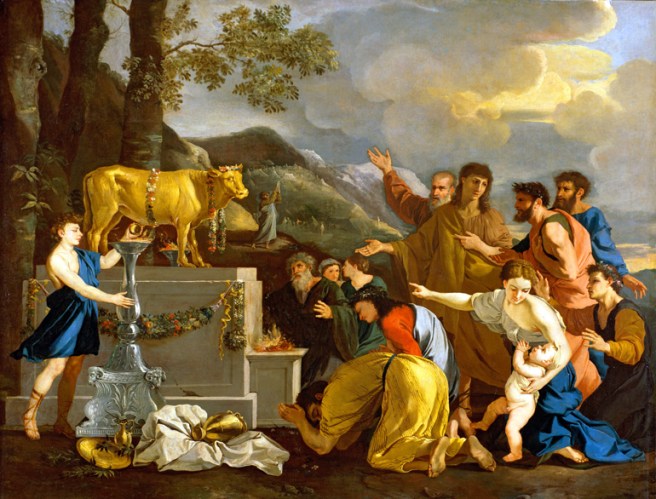
“When the people saw that Moses delayed to come down from the mountain, the people gathered themselves together to Aaron and said to him, “Up, make us gods who shall go before us. As for this Moses, the man who brought us up out of the land of Egypt, we do not know what has become of him.””

Exodus 32:1 (ESV)

Waiting is one of the hardest things to do in life. It doesn’t matter if it’s something small, like waiting for your food when you’re out at dinner, or waiting to save up enough money to buy that special something. Or maybe something really big like waiting for healing, or for your loved one to come back home after being gone for a really long time. Waiting is just tough. No one likes to do it. If someone said they did, they’re not being honest. That’s why rush hour and Department of Motor Vehicles make people shudder.

It’s no different when it comes to waiting for God. Since God is invisible, we often don’t see Him at work. That doesn’t mean that He’s not at work. We just don’t see it. Because of that, we can fall into the very same trap that the Israelites did in the Exodus out of Egypt. Many days had gone by, and the people started to grow restless. Out of impatience, and selfishness, they called on Aaron (Moses’ brother) to craft gods for them. They wanted something they could see, touch, and experience.

Before we jump to any kind of judgement, we better do some introspection. Life is speeding up. Each new decade brings a faster pace of life with more ‘on demand’ qualities. We live in a universe that consists of Instant messaging, high speed wireless connections, and touch screen everything. Waiting is not a part of the game. To wait, is counter cultural. To wait is being impractical and inefficient. To wait is a societal sin. Am I right? I’ve had the advantage of growing up in a pre-internet world, and watching the transition in society unfold before my very eyes. And it has not been pretty.

I would be a hypocrite if I just took shots at the internet, smartphones, and the high speed life. I’m even typing this on my iPhone. The reason I say it hasn’t been pretty is because it feed the beast inside me. I am a doer. I love getting things done. Yes even multiple things done at once. I love fast connections and high efficiency. So much so, that when I don’t get a lot done, I feel as though my day was not as useful. And that, my dear friends, is the problem. We are taking major steps backwards in human development as we embrace the tech-filled life.

A life absent if waiting, is a life full of altars. It’s a life that has demanded that gods be made to go before them. Sound a bit extreme? How about this. I’ll list a few human constructed altars that I’ve had in my life and I’ll leave the rest to you.

Altar #1-human self sufficiency

Why wait I’m God to provide for us when we can make our own way? That’s the attitude of a me first, now not later mentality. We hear people say ‘create yourself’ or ‘be the master of your own soul’. That’s a harsh accusation against the One who actually created us and breathed the very soul into us. But think about it. We spend so much of our life trying to create situations where we don’t actually need God.

Altar #2-Refusing to rest

The principal of rest is interwoven into the human story. God designed it that way since creation. To always be doing is to deny God’s instruction. Rest can actually be one of the most efficient and useful things we can do with our lives. A lack of rest destroys our health and greatly limits our brain function. Where’s the efficiency in that? It also makes our life to full to actually spend with God (even when doing things for God).

Altar #3-Digital reinforcement

God made us relational beings with a need to be connected to others. The digital social media universe has created artificial relationships with little depth and a breeding ground for hostility and depression like has never existed before. We live in a world where people would rather have their faces in a phone texting people, or scrolling to read about other’s lives, rather than have a good rich conversation with those in the room with them. But we love to rack up the ‘likes’, ‘re-posts’, and hundreds of ‘friends’ and ‘followers’.

Altar #4-Fillers

We constantly try to fill our own needs. We do this with Sports, money, careers, hobbies, video games etc…we even teach this to our children at a young age when we have them involved in everything under the sun or allow them to park in front of a screen for hours on end. I’m not talking about doing something you love and brings enjoyment. But moderation seems to be an after thought for many. You’ll know if it’s an altar if it is used as an escape from reality or is a part of your identity.

All four of the altars above, keep us from doing one thing: waiting on God. Our lives are so full, we forgot to carve out space for Him. To even phrase it like that seems wrong. We can’t be digitally connected to Him. If we could, I’m sure most people would rather text Him then spend quality time with Him. But God wants far more than a surface level relationship with His creation.

God made us to enjoy Him. And we cannot do that if our lives are full of gods we’ve made for ourselves. Sometimes enjoying God means waiting for Him to say “go” or “stay”. God wants to be the filler of our needs and not replaced with lesser things. God wants to be our rest because that’s often where He meets with us. God wants to be our sufficiency. And let’s face it, any notion of being a self made man or women is just lie anyways. We’ve never taken a breath that wasn’t given to us and have no talent that wasn’t ingrained in us from God himself.

We have to get past the altar-filled life and relearn the art of waiting. Even if He stays silent on the mountain for 40 days like He did with the Israelites, they were still free. That freedom had been bought for them. We may not be hearing the answers from Him right now, or seeing Him move in huge ways, but we too are free. We need to stop filling up our lives and hoping God moves in the meantime. We need to smash our idols and make room for Him to move.

It’s in the waiting that we experience real peace. It’s in the waiting that we can step back and see life through the big picture. It’s in the waiting that we can hear God more clearly. And it’s in the waiting that we are changed. Join me brothers and sisters, in slowing down. Join me in the waiting.

Peace to all of you in Christ Jesus!


Marriage on Display

Every marriage has an audience. Whether it’s your children, the next generation, church members, nonbelievers, coworkers, or other couples, your marriage is sending a message to those around you.

I heard a pastor this last weekend make a statement that shocked me. He said that a marriage can either convince people that hell really exists, or that God really exists. I literally said, “Oh my gosh” out loud in my truck when I heard it. But after some time of really thinking about it, I believe he’s correct in what he said.

So now for the hard part. If you’re married, what does your marriage put on display to others? Does it show more of the brokenness and hurt in this world? Or does your marriage reveal a God who is loving full of mercy? Does it show the pride and the ‘me-centered’ attitude that originated with Satan himself. Or does it show the sacrificial love that lays one’s life down for others, like Jesus did on the cross of Calvary? Is it full of anger and bitterness or radiating gentleness and forgiveness?

If your marriage story isn’t what it should be, don’t lose heart. God redeems lives and He can redeem marriages. I know you haven’t been perfect. Neither have I. No one has other than Jesus Himself. We will all have good days and bad days. But as a trend, our marriage should speak life and love. If we have chosen to follow Jesus, then our love should be most evident in the one we’ve chosen to join our lives too.

Peace to you and your marriage!

Sunlight and Roots part #2

23540

I was told once, by a landscaper that I worked for, that the best way to strengthen your lawn is to water it less often. At first, that made no sense to me. It sounded so counter-intuitive.  But I took him at his word and sure enough, it worked beautifully. When you water heavy, but far less often, it makes the roots grow deep. Doing this in the spring and early summer prepares them for the heat of the summer and makes them better prepared to weather droughts.

We all go through phases in our lives that resemble scorching hot summer seasons and droughts. The heat is turned up to sweltering levels. We feel exhausted and beat down. Maybe its because we’ve been burnt by someone else. Or perhaps things seem to be stacking up beyond what we can handle. Circumstances might seem hopeless and way out of our control. Life can beat us up and beat us down. But if our roots have grown deep, it won’t matter how frizzled we get on the surface, because we’ll be built to last.

We are afflicted in every way, but not crushed; perplexed, but not driven to despair; persecuted, but not forsaken; struck down, but not destroyed; always carrying in the body the death of Jesus, so that the life of Jesus may also be manifested in our bodies.

2 Corinthians 4:8-10 (ESV)

The Apostle Paul had spent his life for the gospel. He had been met with more than just sarcasm and ridicule. His last several years were spent wading through that long hot summer but they were the most fruitful of his life. Arguably, he did more than any other for the spread of the good news of salvation in Jesus Christ. Who knows, you and me may be able to trace our salvation back to someone he lead to Christ personally. The only thing that kept him going through those difficult years was his faith in the One that saved him.

Hard times are going to come. They may last for a long time. We may, like Paul, be called home in the midst of that dry hot season of life. But that can be the most glorious time of our life if we’re rooted in Christ. He won’t ever leave your side. He won’t ever give you more than you can handle through Him. And He will always use those times for His glory, for your good, and for the good of others. If you’re walking through the luscious spring rains of life, soak it up and dig deep. You’ll need those deep roots again.

Therefore, as you received Christ Jesus the Lord, so walk in him, rooted and built up in him and established in the faith, just as you were taught, abounding in thanksgiving.

Colossians 2:6-7 (ESV)

When our roots are deep, they can draw off of the never ending source of living water that can feed our souls, heal our hearts, bind our wounds, and break our chains. Jesus knows what it’s like to be hated, to be mocked and ridiculed, to be beaten, and to experience the worse kind of pain. But His love never diminished through it all. And His Spirit lives in us.

Peace to you brothers and sisters!

Sunlight and Roots part #1

reaching_the_light_by_nitrok-d8ubd13

Have you ever noticed that flowers and plants will always reach towards the sunlight? Put them in a dark room with one source of light, and they will bend in its direction. Keep them in darkness and they wither and die. But all they need is that kiss of light to energize them to life. God has ingrained in them the ability to seek the light which is their source of life. And so He has with us.

We live in that dark room. Just look around you. Read the news. Scroll social media. There is so much heartbreak and devastation. Greed and pride are the mainstay of the day. The human heart believe that it is the center of the universe. The weak are exploited and trafficked all over the world. Terrorist attacks are at an all-time high. Humanity is disregarding God’s standards and rewriting rules on sexuality, marriage, and gender. Those worshiped in America the most are the celebrities and athletes rather than the One who made them. We accumulate all we can and continue to long for more. Almost a million babies are killed each year because of the need for ‘pro-choice’. None of this is new; I realize that. And fortunately, this isn’t the complete story.

There is a source of light in our world of darkness. It’s not the human spirit. It’s the Holy Spirit. It’s not human power that draw the shades back to let light into the darkness. It’s the forces of humility and grace. We have a light. His name is Jesus. And those who follow Him reflect his light so that it pushes back even more of the darkness.

If you find yourself suffocating under the pressures of life. If you feel burdened and broken. If you’ve been wrecked by the harshness of this world. No matter how dark your room is, reach for the Light. He is your source of life. As you do, reflect His light in the world around you. Someone you know really needs it.

Jesus spoke to the people once more and said, “I am the light of the world. If you follow me, you won’t have to walk in darkness, because you will have the light that leads to life.”

John 8:12 (NLT)

Peace brothers and sister.

Jesus Raised the Bar, He didn’t remove it

follow JesusI’ve been journeying through the sermon on the mount (Matthew chapters 5 through 7) over the last couple weeks and there seems to be a common phrase that Jesus used.

You have heard it said…but I say…

Matthew 5

Jesus makes use of this phrase in verses 21, 27, 33, 38, and 43 of chapter 5. If He felt compelled to use it so often in such a condensed portion of scripture it must be important. But what was He trying to say? I think it’s easy to fall into a trap here. There are prominent misconceptions about this that are easy to believe, but are false regardless of their believably. People can sometimes take them out of context (which is never a good idea) and that leads them to make faulty conclusions. I’ve done that too. Who hasn’t?

Lets start with what Jesus is NOT saying. He is not saying that the law is void and null. Jesus is not rewriting the law of God because to do so would be to rewrite the character of God. How do we know that Jesus isn’t saying this? Because Jesus is the exact imprint of God and Jesus lived out the law. If the law wasn’t important, then the life of Jesus didn’t matter. I would fear for anyone who believed that. We also know that Jesus isn’t abolishing the law because of His own words. The following verses preceded His statement above.

“Do not think that I have come to abolish the Law or the Prophets; I have not come to abolish them but to fulfill them. For truly, I say to you, until heaven and earth pass away, not an iota, not a dot, will pass from the Law until all is accomplished. Therefore whoever relaxes one of the least of these commandments and teaches others to do the same will be called least in the kingdom of heaven, but whoever does them and teaches them will be called great in the kingdom of heaven. For I tell you, unless your righteousness exceeds that of the scribes and Pharisees, you will never enter the kingdom of heaven.

Matthew 5:17-20 (ESV) [my emphasis]

Jesus was the embodiment of the law. He lived it perfectly. He reflected God perfectly. So would He say that none of that is important any longer? Absolutely not! That would be like Jesus saying, “follow me, except don’t do all that stuff that I did when I was on earth.” We also know that Jesus was not making corrections to the law. To think that would mean that God made mistakes in the past and Jesus was His editor. Malachi 3:6 says that God does not change. Since God does not change, His word does not change.

For a long time I felt bad for people of the Old Testament. They had a strict law code and system to adhere to. It seemed so heavy to carry. But then I started to see exactly what the coming of Christ did and I began to see how He didn’t remove that godly standard, but actually raised the bar for everyone. When Jesus says, “you have heard…but I say…” He’s doing a few things. One, He’s removing false conceptions about what it means to follow the law of God. Humanity has always distorted truth. Second, He’s clarify the heart of the law and therefore, the heart of God in His purity. Third, Jesus is calling humanity to go way deeper. Below are some examples:

#1- Instead of just not murdering someone, you shouldn’t be angry with a person and withhold grace and forgiveness. The life of the Christian in these terms should reflect Christ, hanging on the cross, wrongfully convicted, suffering for others, and doing so that many would come to grace and find forgiveness in God. The Christian heart should not be an angry heart. The Christian heart should never want God’s full judgement for anyone because they’ve been saved from it themselves by what Jesus has done. Instead, the Christian should do what they can to extend love and grace, not wrath, even to those who abuse and exploit us.

#2-Instead of just keeping yourself from sleeping with another besides your spouse, you shouldn’t even long for another. That means you shouldn’t desire to undress others with your eyes, or seek out a fantasy world through books, articles, videos, pictures, and any other source. Your whole heart should be for your spouse. If you’re not married, the rules still apply. In addition to that, longing for anything more than God amounts to adultery towards God himself. Placing material objects, comfort, people, money, or anything else at the highest level of importance in our lives demotes God. When we do that, our heart betrays us worse more than ever.

Prior to the arrival of Jesus on planet earth, humanity had a standard by which to measure themselves and to know the heart of God. But it was still lived out by imperfect people. Even the greatest figures in the bible messed up and fell short of the mark. But when Jesus arrived, humanity saw it all displayed. And that removed any ounce of deniability. They could not longer say that they didn’t know what God meant or how it should look to live for Him. When I give my students and assignment with verbal instructions, I understand that some of them will not get it right. But when I give them the instructions and then demonstrate them over and over, they won’t be able to say that they don’t know what’s expected. Jesus demonstrated God’s heart, God’s character, God’s law, and God’s love. Then He looked out at humanity and said the following words:

I am the way, and the truth, and the life; no one comes to the Father but through Me.

John 14:6 (NASB)

Jesus raised the bar for everyone because He showed us what a life lived for God really looks like. After centuries of men, women, and kings getting it wrong, humanity had perfection revealed. God himself, clothed in humanity, out of grace and love, said, “let me show you how.” He now bids us to come and do the same. We won’t be perfect as he was perfect, but that should never deter us. The life of the Christians is aimed at Christ’s life, surrendered in Christ’s death, and empowered by Christ’s Spirit. There is no higher standard than that.

Therefore be imitators of God, as beloved children; and walk in love, just as Christ also loved you and gave Himself up for us, an offering and a sacrifice to God as a fragrant aroma.

Ephesians 5:1-2 (NASB)

To imitate perfection is a very intimidating notion. But we aren’t on our own in this endeavor. God’s Holy Spirit is within us, God’s children surround us, and God’s grace covers us.