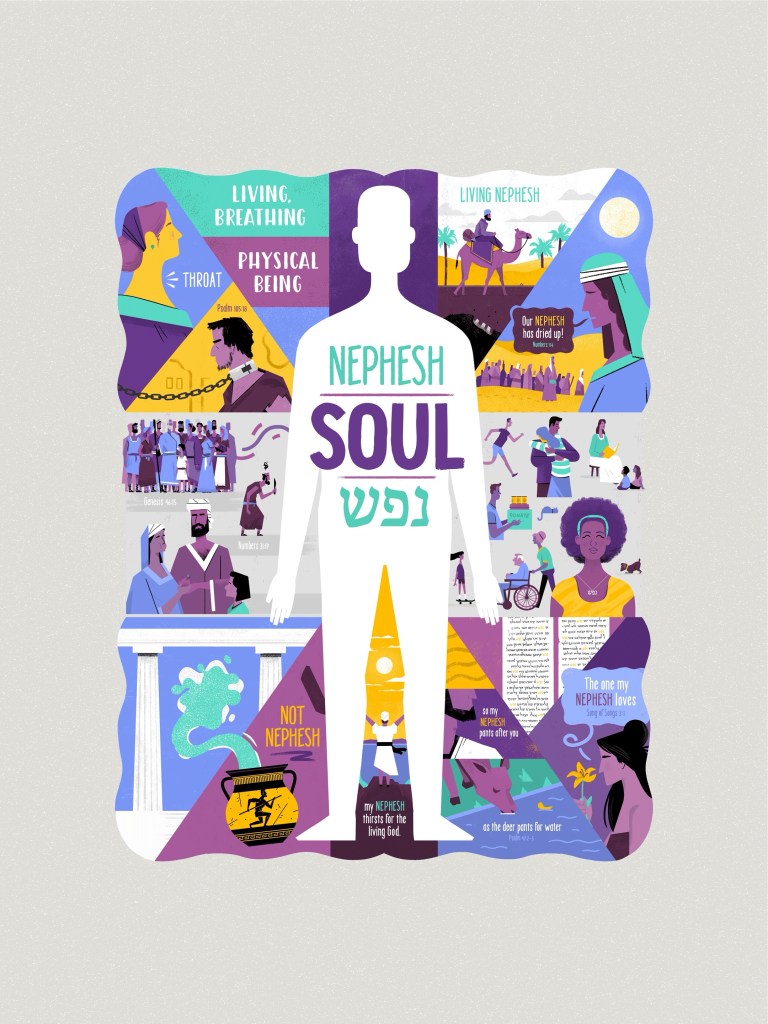
All things that may come in life, all the challenges, the new chapters, it can be easy to lose sight of the eternal. Our souls are often neglected. And that word, soul, is not this separate spirit thing that floats up in the sky after we die. In Hebrew the word is nep̄eš (neh fesh). It’s a powerful word that means your self, life, mind, your very living being. In the Bible it talks about taking care of your soul. The word for keep in Deuteronomy 4 is šāmar (shaw mar) which means to guard it. It also says to do that diligently.
““Only take care, and keep your soul diligently, lest you forget the things that your eyes have seen, and lest they depart from your heart all the days of your life. Make them known to your children and your children’s children—”
Deuteronomy 4:9 ESV
We can’t control the curveballs that life brings. We can’t control how others treat us. We can’t stop the aging process and the new difficulties that it brings. There is so much out of our control. But we can control whether or not we are engaging in life-giving things that help to revive our souls. We can spend time in God’s creation, soaking in the beauty that He made. We can maintain a heart of gratitude, giving thanks for all the little things and the big. We can spend time getting to know our creator through the words He’s given us in the Bible. We can surround ourselves with people who are going to speak truth and love. We can worship, especially when we don’t feel like it. We can keep a heavenly mindset rather than a temporal one. We can use our time to better the lives and world around us. Those things we can control. We can guard our souls and in doing so, we will experience life.
The Bible is full of prescriptions for the believer, to lay down their cares, to surrender their burdens and anxieties. In 1 Peter it says to cast our anxiety on Him because He care for us. Philippians chapter four talks about not being anxious about anything. Not the big things. Not the small things. It’s an invitation to be in communion with Him. To view our God as a loving father who knows what we need especially when we don’t.
I have found though, that it is easier to pray, and to feel the temporary relief that faith and trust brings, than to permanently release those things. That is what I have been working on in my own life. As things add up, problems and stresses compound on one another, it’s even harder to release them all. Yet all the more important. I have been trying to figure out what that looks like. Casting my cares should look far more like tossing a stone into the water rather than a fishing line. I don’t want to real the cares back in. Yet my mind can easily drift in that direction. But how do I give over my burdens while severing the connection? Truth be told, I don’t think that’s the point.
I have been searching for the magical moment of permanent spiritual peace in spite of what stressors I face. What I have found is not something that is passive. Yet I feel it is taught that way often. Pray, release your cares, and go about your day, and it’ll be all good. Never in my entire life has that been the case. And because of that, it can be easy to feel like something is wrong with me. Like my faith is weak. How can I call myself a believer and still deal with stress and feel anxious at times? Am I being convicted or deceived in asking that question?
At moments, and many of them, I can say that I have been in perfect peace. An unshakable sense of calm, reassurance, and gratitude that warms my inner being. And in many of those occasions, life has been really difficult. The difference between those moments and the turbulent times, is one simple things: what my eyes are fixed on. Do you know the story of Jesus walking on the water? Interestingly, my mother in law is actually at the sea today, where that occurred all those years ago. Remember how Jesus called Peter out of the boat? Truth is, you and me can walk on the water even in the heart of a storm, just as Peter did, but only as long as our eyes are fixed on Jesus. The moment Peter turned his attention to the waves, he sank. That has been my experience, every single time. But Jesus didn’t let Peter drown, and He won’t let me drown. And dear reader, He won’t let you drown either.
“You keep him in perfect peace whose mind is stayed on you, because he trusts in you.”
Isaiah 26:3 ESV
Focus on the problem, and you get problems. Focus on Jesus, and you get Jesus. That doesn’t mean you avoid problems. It means you seeks Jesus who provides the solutions. And in the waiting, you keep seeking Jesus. You know what happens? You get more Jesus. He told us once to seek first the kingdom of God and all our needs will be taken care of. We either believe that or we don’t. And the seeking isn’t a morning prayer, a momentary plea for help, a quick devotional, blasting a worship song, but all of those, all day, every day. It is a constant connection. Isaiah says that our mind has to be stayed on Him. The Hebrew word for stayed is sāmaḵ. It pictures a mind that is braced by or supported by something. Much like a building is supported by beams and pillars. Takes those away, and the building collapses. In this case, that support is the Lord Himself. Take your mind off Him, and things start to shake, or sink in the case of Peter.
If you’re battling stress and anxiety, it doesn’t make you a bad person or poor Christian. It just means you’re looking in the wrong direction. Put your eyes back on Jesus, and do what it takes to keep them there. Worship, pray, dance, read, surround yourself with good people and feed your soul with life-giving things. And then, do it all over again.
There is a song called “Surface Pressure” from the movie Encanto. In the scene where the song is introduced, Luisa, the middle sister who is gifted with incredible strength, reveals just how much pressure she feels as a part of, not just the family, but the community as well. So many people rely on her and she carries a lot, both physically and, come to find out, emotionally. I think many of us can find ourselves in a similar situation, minus the carrying of extremely heavy loads like this fictional character does. But we, and I speak about myself in this, try to carry so much when a lot of it, we thrust upon ourselves.
I’ll be honest, there isn’t one area of my life where I can’t easily feel bogged down and drained from constant demands and expectations. Whether at home, teaching, running a business, trying make ends meet, don’t get me wrong, I am a very blessed man with a lot of blessings in my life, especially my wife and kids. Bur it all can get very heavy very quickly. Because of this, it is imperative that I know that I don’t have to carry this alone. I would be crushed, like so many are, if I tried to do all of this alone.
“Cast your burden on the Lord, and he will sustain you; he will never permit the righteous to be moved.”
Psalm 55:22 ESV
We live in a world that constantly reminds us of our limits. Limited time. Limited energy. Limited patience. Limited strength. Some days we feel capable and confident; other days we feel exhausted, overwhelmed, and unsure how to take the next step.
Yet Scripture points us to a different source of strength—one that does not run dry. True strength is not found in self-reliance or sheer determination. It flows from a living relationship with Jesus Christ. When we walk closely with Him, we discover that our strength is no longer dependent on circumstances or personal ability, but on His unchanging power.
Jesus invites us into a relationship, not a formula. He says:
Remain in me, as I also remain in you. No branch can bear fruit by itself; it must remain in the vine.”
John 15:4
When we remain in Him, His life flows through us. Our weakness becomes the place where His strength is revealed.
The apostle Paul understood this paradox well. After pleading with God to remove a persistent hardship, he heard the Lord respond:
My grace is sufficient for you, for my power is made perfect in weakness.
2 Corinthians 12:9
God does not wait for us to be strong before He works. He meets us in our weakness. When we acknowledge our need for Him, we make room for His power to move in ways we could never achieve on our own.
“Humble yourselves, therefore, under the mighty hand of God so that at the proper time he may exalt you, casting all your anxieties on him, because he cares for you.”
1 Peter 5:6-7 ESV
Limitless strength through Jesus does not mean a life free from struggle. It means we are never alone in the struggle. His strength sustains us in parenting, ministry, work, relationships, and seasons of loss or uncertainty.
“All the ways of a man are pure in his own eyes, but the Lord weighs the spirit. Commit your work to the Lord, and your plans will be established.”
Proverbs 16:2-3 ESV
A relationship with Jesus is nurtured through daily connection—prayer, Scripture, worship, and obedience. As we spend time with Him, our perspective shifts. Fear gives way to faith. Anxiety gives way to peace. Weariness gives way to endurance.
I can do all things through Christ who strengthens me.
Philippians 4:13
This is not a promise of unlimited success, but of unlimited strength to face whatever comes with Christ at the center.
When we stop striving to manufacture our own strength and instead lean into our relationship with Jesus, we discover a freedom that transforms how we live. His strength is steady. His grace is sufficient. His presence is constant.
No matter how depleted you feel today, the invitation remains open: come to Jesus, and let His strength become yours.
Come to me, all you who are weary and burdened, and I will give you rest.
Matthew 11:28
In Him, our strength is never truly limited—because it comes from an infinite and limitless source.
A new year feels like standing at the edge of a fresh page—clean, unwritten, full of possibility. We often enter January carrying mixed emotions: hope and anticipation, but also weariness from the year behind us. Scripture reminds us that God meets us right here, at the turning of the calendar, and walks with us into what’s next.
Before we make resolutions or set goals, it’s comforting to remember that God has already gone ahead of us. Nothing about the coming year surprises Him.
“For I know the plans I have for you,” declares the Lord, “plans to prosper you and not to harm you, plans to give you hope and a future.”
Jeremiah 29:11
We don’t step into the unknown alone. We step forward with a God who plans with purpose and love.
The new year invites reflection, but it also invites release. Regrets, failures, and disappointments don’t have to define what’s ahead. God specializes in renewal.
“Forget the former things; do not dwell on the past. See, I am doing a new thing! Now it springs up; do you not perceive it?”
Isaiah 43:18–19
What if this year we trusted God enough to let go—making room for the “new thing” He wants to do?
The coming year will have challenges. But God doesn’t promise us everything at once—He promises daily grace.
“Because of the Lord’s great love we are not consumed, for his compassions never fail. They are new every morning; great is your faithfulness.”
Lamentations 3:22–23
Every morning brings fresh mercy. Every day brings enough strength for that day.
We may not see the full picture, but faith invites us to take the next step—trusting God with the rest.
“Trust in the Lord with all your heart and lean not on your own understanding; in all your ways submit to him, and he will make your paths straight.”
Proverbs 3:5–6
God doesn’t ask us to know everything—only to trust Him with everything.
As this new year begins, may we walk in hope, grounded in truth, and confident in God’s presence.
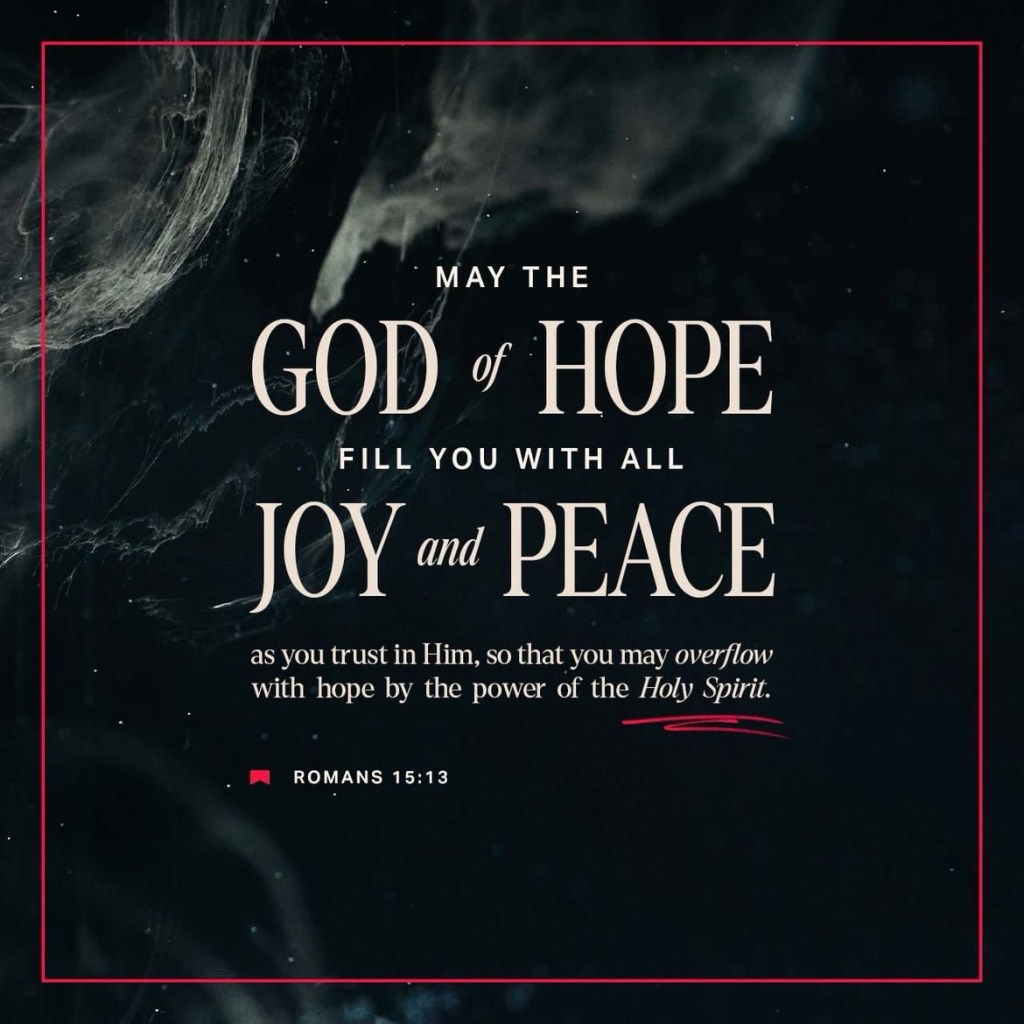
“May the God of hope fill you with all joy and peace as you trust in him, so that you may overflow with hope by the power of the Holy Spirit.”
Romans 15:13
Here’s to a new year—not just of new goals, but of deeper faith, renewed joy, and steady trust in the God who makes all things new.
With a heavy heart, I opened my Bible. I began in Psalm 108 and went no further. This Psalm is a beautiful declaration of faith, joy, and confidence in God. Exactly where I knew my heart should be. David did not write a half-hearted song; it’s worship that springs from deep trust. Even before his circumstances change, David chooses to lift his eyes and his voice to God.
“My heart is steadfast, O God! I will sing and make melody with all my being! Awake, O harp and lyre! I will awake the dawn! I will give thanks to you, O Lord, among the peoples; I will sing praises to you among the nations. For your steadfast love is great above the heavens; your faithfulness reaches to the clouds. Be exalted, O God, above the heavens! Let your glory be over all the earth!”
Psalm 108:1-5 ESV
A Heart Set Firm on God
A steadfast heart doesn’t waver with emotion or circumstance. It’s anchored in who God is. David’s focus isn’t on his enemies or his problems, but on God’s unchanging love and faithfulness. When we choose praise before victory, we declare our faith that God is already at work.
Awakening the Dawn
David says, “I will awaken the dawn.” I love this! What a picture of active worship! Instead of waiting for joy to come, David brings it by starting his day with praise. His music becomes a sunrise of faith. We, too, can awaken the dawn in our own lives by starting each morning with gratitude, worship, and the Word of God.
Praise That Reaches the Nations
David’s praise is not private—it’s global: “I will praise you, Lord, among the nations.” True worship spills over. When we proclaim God’s goodness, others see His glory. Our steadfast faith becomes a testimony that shines far beyond our own circle. The world is changed when God’s people praise Him, especially in their times of difficulty.
Love Higher Than the Heavens
This section of the psalm ends with awe. God’s love is immeasurable—“higher than the heavens”—and His faithfulness stretches “to the skies.” When we look up, we’re reminded that His promises are vast, enduring, and beyond comprehension.
What does it mean for your heart to be “steadfast” today? How can you “awaken the dawn” through worship and gratitude? In what ways can your praise reflect God’s glory to others?
Lord, make our hearts steadfast in You. When we feel weary or uncertain, remind us that Your love never fails. Let our praise rise like the dawn and fill the world with the sound of Your glory. Be exalted, O God, above the heavens—let Your glory shine over all the earth.
Therefore, my friends, I want you to know that through Jesus the forgiveness of sins is proclaimed to you. Through him everyone who believes is set free from every sin, a justification you were not able to obtain under the law of Moses.
Acts 13:38-39
In these powerful verses, the Apostle Paul delivers a revolutionary truth at the heart of the Christian gospel. Speaking to both Jews and Gentiles in the synagogue at Pisidian Antioch, Paul announces something radically new: forgiveness and freedom through Jesus Christ.
Paul begins with good news: “through Jesus the forgiveness of sins is proclaimed to you.” This is not forgiveness earned or negotiated—it is proclaimed. That word carries weight. It means the message is public, certain, and available to all who hear it. The gospel doesn’t whisper forgiveness—it declares it loudly for sinners, doubters, and outcasts alike.
In a world weighed down by guilt and striving, this message still breaks chains. In a world that has so many who are trying to figure out who they are, struggling with their gender identity, battling impure sexual desires, the gospel has the power to set them free. Free from guilt and free from brokenness. Our forgiveness is not based on merit or rituals, but on the person and work of Jesus. This includes the mistakes we regret, the habits we hide, and the guilt we carry. Jesus doesn’t offer partial freedom. He offers total release. This is a bold claim, but it’s the core of the gospel: Christ sets us free.
Paul contrasts this freedom with what the law of Moses could not do. The law was holy and good, but it could only reveal sin—it couldn’t remove it. It could show us our need for righteousness, but it couldn’t make us righteous. I know people who unfortunately cling to the Old Testament, believing the law can save. Elevating law over Jesus. Clinging to a form of self righteousness. Only Jesus, through His death and resurrection, could provide the justification the law could never achieve. In Christ, we’re not just forgiven—we’re declared righteous before God. This is grace, not earned status. It’s a gift, not a wage.
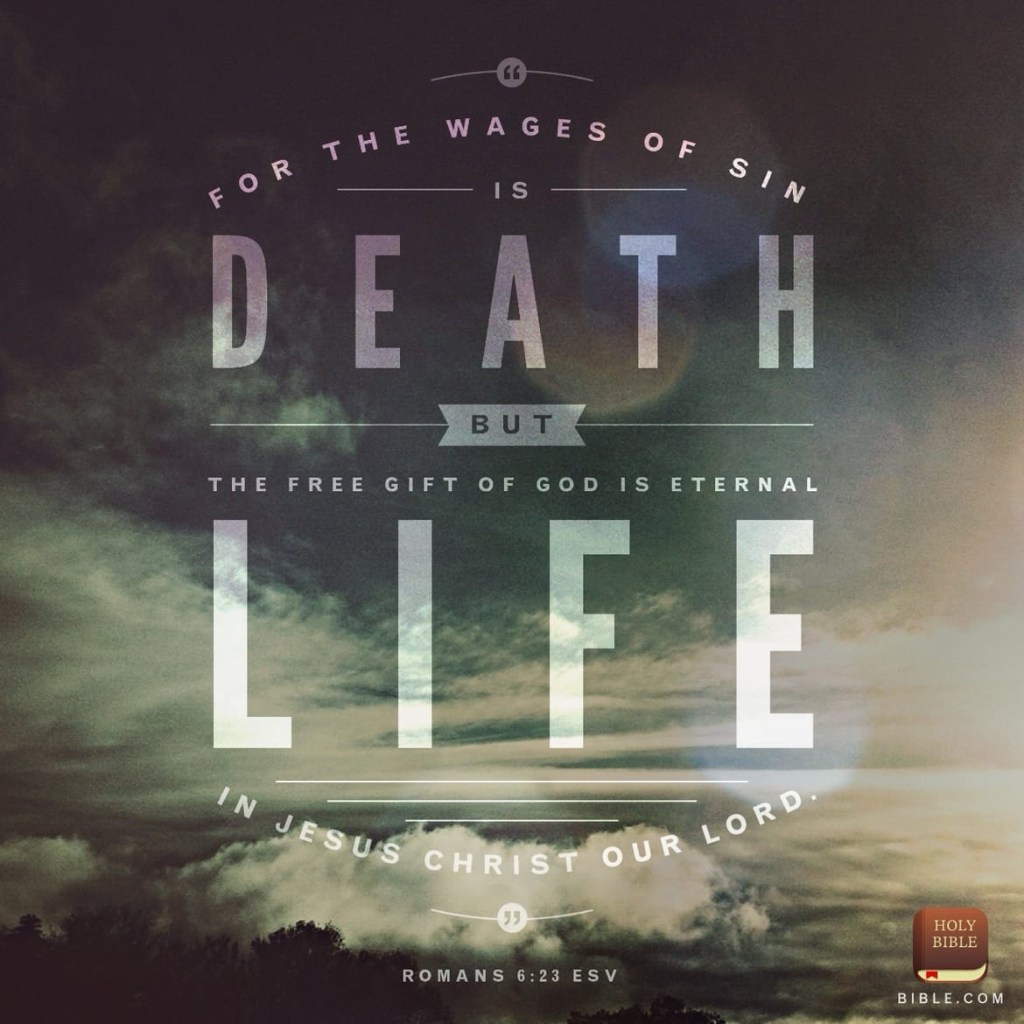
“For the wages of sin is death, but the free gift of God is eternal life in Christ Jesus our Lord.”
Romans 6:23 ESV
So today, let these words encourage your heart:
• You are forgiven.
• You are free.
• You are justified by faith, not by works.
Let this message be the one you proclaim to others, too. Because in Christ, freedom isn’t a dream—it’s a reality. Now let the weight fall off your shoulders. Love Jesus and make Him known. Run after the One who has set you free.
In a world full of noise, opinions, and ever-changing values, the Christian gospel stands as a clear and unwavering beacon of truth. Its message is simple, yet profound: salvation by grace alone, through faith alone, in Christ alone. The purity of the gospel is not something we invent or evolve—it is something we receive, guard, and proclaim.
I realize some who read this may not know exactly what the gospel is. At its core, the gospel is the good news that God, in His love and mercy, took on human form in the person of Jesus (Colossian 2:9), walked among us (John 1:14), lived a perfect life knowing that no person ever could (2 Corinthians 5:21), allowed humanity to hang Him on a cross to be a sacrifice for our sins (Romans 5:8), was buried and rose from the dead three days later (1 Corinthians 15:3-4), giving us the hope of new life and a future resurrection. This message is not about human achievement or moral performance. It’s about divine intervention—God doing for us what we could never do for ourselves. It is unearned, undeserved, and freely given.
The gospel is pure, and holy, and beautiful. And that is why everyone needs to hear it. It does, however, pact a punch. The gospel requires we take a hard and accurate view of ourselves, our needs, our shortcomings, our brokenness, and our sin. Only then can we see the beauty that is the gospel.
When we dilute or modify the gospel—adding works, subtracting grace, changing who Jesus is, softening the reality of sin, or removing the need for repentance—we rob it of its saving power. A compromised gospel may feel more comfortable or inclusive to some, but it cannot save anyone. We have to fight the desires for what is “good in our own eyes” and embrace what is actually good for us. Humility. Embracing grace. Accepting God’s love. Allowing Him to transform us more and more into His own likeness. That is when we become the best version of ourselves. That is when we experience the deepest joys and peace that every soul searches for.
The gospel’s purity is what makes it powerful. It tells the hard truth about sin but offers the glorious truth about redemption. It doesn’t offer self-help; it offers a new self in Christ.
Many voices today claim to speak for God. Some offer “prosperity,” “comfort,” or “love is love” as gospel substitutes, but these fall short of the cross. The true gospel does not promise comfort or success; it promises forgiveness, transformation, and eternal life through Jesus.
Jesus said, “I am the way, the truth, and the life. No one comes to the Father except through me” (John 14:6). That statement is both exclusive and inclusive—exclusive in that Jesus is the only way, but inclusive in that He invites all who will believe.
As followers of Jesus, we are called to preserve the purity of the gospel message, not tamper with it. Jude writes, “Contend for the faith that was once for all delivered to the saints” (Jude 1:3). The gospel is not ours to edit—it is God’s truth to trust, live out, and share. May we never lose sight of the beautiful simplicity and power of the gospel. In Christ alone, by grace alone, through faith alone—that is our eternal hope. And it can be yours too.
“He is the image of the invisible God, the firstborn of all creation. For by him all things were created, in heaven and on earth, visible and invisible, whether thrones or dominions or rulers or authorities—all things were created through him and for him. And he is before all things, and in him all things hold together. And he is the head of the body, the church. He is the beginning, the firstborn from the dead, that in everything he might be preeminent. For in him all the fullness of God was pleased to dwell, and through him to reconcile to himself all things, whether on earth or in heaven, making peace by the blood of his cross.”
In this fourth part of the series, we look at the character of a believer when it’s tested by life’s pressures. That character is derived from the posture of one’s heart, which has been devoted to its Savior.
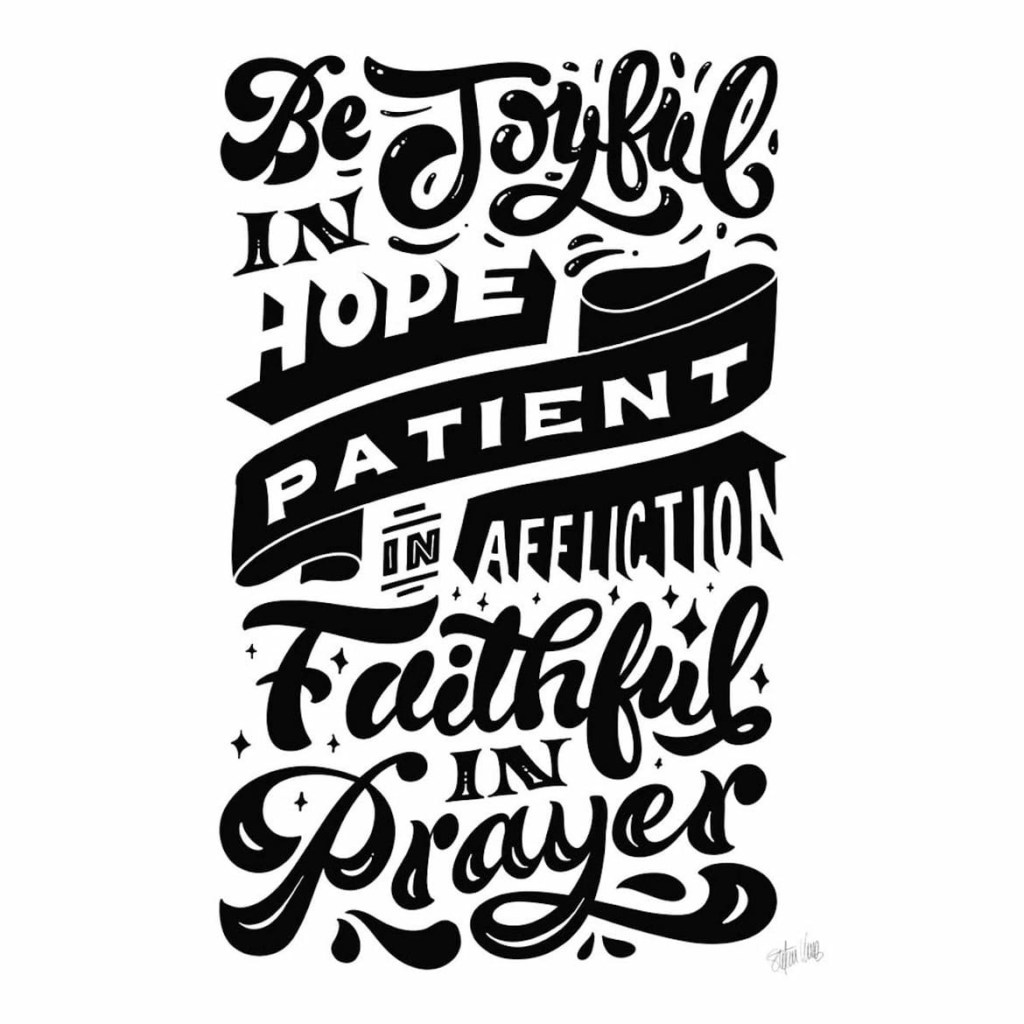
Be joyful in hope, patient in affliction, faithful in prayer.
Romans 12:12
Life doesn’t always unfold the way we envision it. Unexpected trials, long seasons of waiting, and moments of heartbreak can leave us disoriented. Yet in the middle of life’s unpredictability, Romans 12:12 offers a steadying reminder—a threefold call that aligns our hearts with God’s rhythm: hope, patience, and prayer.
Be Joyful in Hope
Hope is not mere wishful thinking. Biblical hope is rooted in the certainty of God’s promises. It’s not optimism based on circumstances but assurance anchored in who God is. Paul encourages us not just to have hope, but to rejoice in it.
Why joy? Because our hope is alive. It points beyond the temporary trials of today to the eternal glory that awaits. When we rejoice in hope, we’re acknowledging that God is still at work, even when we can’t see it. Our joy becomes an act of trust.
Be Patient in Affliction
Affliction tests our endurance like little else. Whether it’s grief, illness, anxiety, or injustice, suffering has a way of wearing us down. But patience in affliction doesn’t mean passive resignation—it means active endurance. It’s a quiet strength that says, “I will not give up, because I know God hasn’t given up on me.”
This patience is forged in the fire of faith. It’s a discipline that requires us to rely not on our own strength, but on God’s sustaining grace. In waiting patiently, we grow in character, empathy, and spiritual depth.
Be Faithful in Prayer
When the future is uncertain, prayer becomes our lifeline. Paul reminds us to be faithful in it—not just praying occasionally or when life gets hard, but making it a habit, a rhythm, a conversation that keeps us connected to the heart of God.
Prayer isn’t always about finding answers; it’s about finding God. It’s where we bring our fears, our doubts, our joys, and our confusion. And in return, we often find peace that transcends understanding.
Putting It All Together
Romans 12:12 isn’t just a single verse—it’s a spiritual posture. It teaches us how to live in the tension of “already, but not yet.” Already redeemed, but not yet restored. Already loved, but not yet home.
In a world full of chaos, this verse gives us a blueprint for peace: Hope anchors us. Patience steadies us. Prayer connects us. All of these helps us be a reflection of God’s light to a world in desperate need of hope.
When life gets hard, our natural response is usually to ask why. Why is this happening? Why now? Why me? But in John 12:27–28, we see a moment where Jesus, fully aware of the suffering He’s about to endure, says something radically different:
“Now my soul is troubled. And what shall I say? ‘Father, save me from this hour’? No, it was for this very reason I came to this hour. Father, glorify your name!”
John 12:27-28a
His soul is troubled, and yet He doesn’t pray for escape — He prays for God to be glorified. This Is What Trust Looks Like. Jesus wasn’t pretending to be fine. He didn’t mask the heaviness of His soul. He admitted the weight of what He was carrying — and still, His desire wasn’t for comfort, but for God’s purpose to be fulfilled through Him.
That’s not weakness. That’s strength. That’s surrender. What If We Prayed Like That? What if, in the middle of pain, disappointment, confusion, or heartbreak, our first prayer wasn’t “Get me out of this” but “Be glorified in this”? Not because the pain is good. Not because the suffering is easy. But because we trust that God wastes nothing — and that even in the hardest moments, His glory can shine through us.
“I consider that our present sufferings are not worth comparing with the glory that will be revealed in us.”
Romans 8:18
Your Struggle Might Be Sacred
Jesus knew His suffering had purpose. We may not always see the full picture in our own lives, but this much is clear: God is able to bring beauty out of brokenness, and when we offer our trials to Him with open hands, He does something eternal with them. It’s not about denying our pain — it’s about devoting it. Saying, “Use even this, Lord. If you can be seen in this, then don’t take it away too quickly.”
“For our light and momentary troubles are achieving for us an eternal glory that far outweighs them all.”
2 Corinthians 4:17
“Father, Glorify Your Name” — A Dangerous, Beautiful Prayer
This is a bold prayer. It surrenders control. It places trust in God’s bigger plan. And it shifts the story from being all about us… to being all about Him. Jesus prayed it — not just in John 12, but again in Gethsemane: “Not my will, but Yours be done.” And if Jesus could pray it in His darkest hour, maybe we can, too.
“I eagerly expect and hope that I will in no way be ashamed, but will have sufficient courage so that now as always Christ will be exalted in my body, whether by life or by death.”
Philippians 1:20
So next time you feel the weight pressing in, try this: Take a breath. Acknowledge the pain. Then say — even through tears —“Father, glorify Your name.” There’s power in that. And God will meet you in it.
“Dear friends, do not be surprised at the fiery ordeal that has come on you to test you… But rejoice inasmuch as you participate in the sufferings of Christ, so that you may be overjoyed when his glory is revealed.”
There’s a quote that flips a lot of religious assumptions on their head:
Holiness is not the way to Jesus; Jesus is the way to holiness.
It’s short, but it packs a punch. For many of us, whether we’ve grown up in faith or come to it later in life, there’s often a quiet belief that we have to “clean ourselves up” before we can approach Jesus. Like we have to reach a certain level of moral performance before we’re worthy of His presence. But this quote reminds us of the gospel’s core truth: it’s not about what we do to get to Him — it’s about what He does to bring us to God.
“For it is by grace you have been saved, through faith—and this is not from yourselves, it is the gift of God—not by works, so that no one can boast.”
Ephesians 2:8-9
Jesus doesn’t wait for perfection. He invites us as we are.
Think of the people Jesus surrounded Himself with during His ministry — fishermen, tax collectors, sinners, outcasts. They weren’t holy when He called them. But through being with Him, learning from Him, and following Him, they were transformed. Holiness wasn’t the entry ticket; it was the result of walking with Him.
“He saved us, not because of righteous things we had done, but because of his mercy. He saved us through the washing of rebirth and renewal by the Holy Spirit.”
Titus 3:5
We don’t earn Jesus by being good — we grow in goodness by knowing Him.
Trying to earn our way to Jesus through good deeds alone can lead to pride or despair. Pride if we think we’re doing well, despair if we keep falling short. But the gospel frees us from that pressure. It tells us: Jesus came for the broken, not the perfect. He came to save, not to reward the already righteous.
“And by that will, we have been made holy through the sacrifice of the body of Jesus Christ once for all.”
Hebrews 10:10
So what does this mean practically?
It means we don’t have to hide our mess. We come to Jesus with our struggles, our doubts, our inconsistencies — and He begins the slow, beautiful work of making us holy. It’s not instant. It’s a process. But it’s real, and it’s rooted not in our effort, but in His grace.
“But God demonstrates his own love for us in this: While we were still sinners, Christ died for us.”
Romans 5:8
Holiness is the fruit, not the root.
Let Jesus be the root of your life, and holiness will grow. Not as a burden, but as a natural outcome of knowing Him more deeply.
So the next time you feel like you have to “get it together” before you pray, go to church, or even just approach God — remember this: You don’t get holy to find Jesus. You find Jesus, and He makes you holy.
“Jesus answered, ‘I am the way and the truth and the life. No one comes to the Father except through me.’”
John 14:6
Peace and holiness in Christ brothers and sisters.












 For Common Ground