A Tent and a Savior

The feast of Tabernacles is underway for 2019. A couple of nights ago my daughters and I set up our makeshift tabernacle in our backyard. We look forward to it all year long. Throughout the rest of this week we will get to sit under the tabernacle and talk about the amazing God we serve. My wife and I will share stories with our children of how God came through in big ways in our lives. We get to teach them about restoration and hope. For our kids, they get to hear how God is real in their parents lives. As they get older, they’ll have stories of their own. It’s a week out of the year that has value that cannot be measured. It’s one more way for my wife and I to explain to our young children who Jesus is and why He came to Earth. As a parent, there is nothing more valuable that I could teach them.

In 2011, two years before our first daughter was born, my wife and I began learning about the feasts of the Lord. Even though I had been a Christian all my life, these were pretty new to me. I had never studied or observed them prior to 8 years ago. Did that make me any less of a Christian? Not in the slightest. Did that make me any less saved? No a chance. However, I have come to realize that I was missing out on a huge opportunity to worship and learn about my Savior beyond the boundaries of church, small groups, and personal devotions. Now I am so thankful that my children will not have the same experience. They will get to learn about Jesus in a more full way than I did and how the scriptures present Him through intricate foreshadowing. After all, the feasts are all about Him.

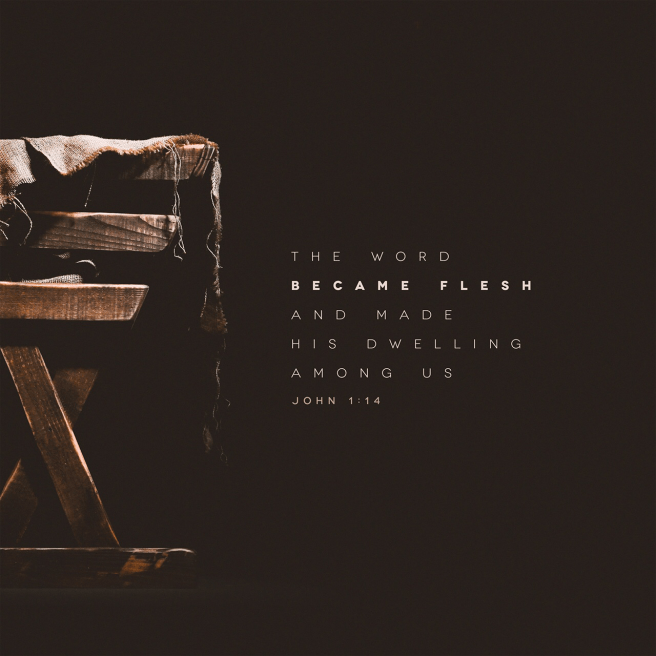
When John chose to introduce his readers to who Jesus was, he selected a specific image that all Old Testament readers would have been very familiar with. He chose the tabernacle. The tabernacle itself was always meant to be a piece of Eden. Since humanity was exiled from the garden because of sin, our hearts have been longing to return. And for God, that’s His end game. Eden was the place where heaven and earth overlapped. It was where God walked among man. And when that came crashing down as man invited sin into his heart, God has set into motion a plan to restore humanity and the world to its rightful design. After God rescued Israel from bondage in Egypt, He established a special covenant relationship with them. In doing so His presence would once again be among men. This time, it would be housed in a tent of meeting. Everything with in the design of the tent had garden imagery from the tree of life to the very stitch of the fabric. It served as a reminder of what we had forfeited and where God was drawing us back to.

It’s no wonder that Jesus would be described in a way that drew readers focus to the tabernacle. In comparing Him to the tent, readers would have to reconcile several things. One, that Jesus was the way to get people back to the garden. He would be the tool of restoring humanity and all of creation. Two, that God was fully embodied in the person of Jesus. And lastly, that in order to seek out God, everyone would have to go through Jesus. Those are the realities that we get to teach our kids about who Jesus is.

“In the beginning was the Word, and the Word was with God, and the Word was God. He was in the beginning with God. All things were made through him, and without him was not any thing made that was made. In him was life, and the life was the light of men. The light shines in the darkness, and the darkness has not overcome it. There was a man sent from God, whose name was John. He came as a witness, to bear witness about the light, that all might believe through him. He was not the light, but came to bear witness about the light. The true light, which gives light to everyone, was coming into the world. He was in the world, and the world was made through him, yet the world did not know him. He came to his own, and his own people did not receive him. But to all who did receive him, who believed in his name, he gave the right to become children of God, who were born, not of blood nor of the will of the flesh nor of the will of man, but of God. And the Word became flesh and dwelt among us, and we have seen his glory, glory as of the only Son from the Father, full of grace and truth. (John bore witness about him, and cried out, “This was he of whom I said, ‘He who comes after me ranks before me, because he was before me.'”) For from his fullness we have all received, grace upon grace.” John‬ ‭1:1-16‬ ‭ESV‬‬

Yom Kippur in Yeshua

MidwkGraphic

Brothers and sisters, we are atoned for! We are covered, cleansed, and ever-changing because of our Messiah Jesus. Today is the high holy day of Yom Kippur. In Israel, it’s one of the most sacred days of the calendar. For followers of Jesus, its a reminder of the depths of the sacrifice it took to make us new. It should not be a day of despair for anyone who has pledged their life to Christ. Today, we celebrate the saving power of our God. Today, we rejoice in our freedom from death itself. I pray for all of us to experience a new reverence and awe for Jesus. May our love grow deeper as we remember the life we’ve been rescued from and are continuing to be drawn out of. If we’ve strayed, let’s place our feet back on the narrow path. If we’re distracted, let’s take our eyes off of the waves of life and put them back on the one walking on the water. If we’re weary, let’s stop and sit at His feet. Today is a new day son and daughter because you are written in the book of life.

See what great love the Father has lavished on us, that we should be called children of God! And that is what we are!

1 John 3:1 NIV

The Depths of your Loyalty

1433b2998df04ec0

A couple of weeks ago, I was reading an article from Voice of the Martyrs, and as it almost always does, the article tested my faith. Many of you reading this may be familiar with Pastor Richard Wurmbrand. Voice of the Martyrs stems from his work and devotion to spreading the gospel in hostile places. He spent his life discipling others to do the same. Much of his time was spent in Eastern Europe in what was known as the Soviet Block. Communism had taken the area by storm following the end of World War II and faith was starved by the new atheistic regimes. One evil, nazism, had been replaced with another. But faith outlasts fear and hatred. No manner of method used by the enemies of Christ has ever been successful in defeating the devoted. That is a lesson that Mr. Wurmbrand tried to teach his young patrons in this excerpt from the article I read.

The twelve students stood with their pastor along the fence. On the other side was a large ditch, beyond which was an opening to a manmade cave. A large lion paced back and forth in front of the cave’s opening. Their pastor said, “Your forefathers were thrown before such wild beasts for their faith. Know that you also will have to suffer. You will not be thrown before lions, but you will have to suffer at the hands of men who would be much worse than these animals. Decide here and now whether you wish to pledge allegiance to Christ.” The students looked at each other. Before them stood their pastor, Richard Wurmbrand, a man who had spent fourteen years in prison for his work in the underground church. This was the pastor’s last week in Romania, for he and his family had been ransomed from their homeland and would be leaving within a few days. Richard didn’t know if his Sunday school students would suffer under the brutal hand of atheistic Communists, but he wanted to implant a faith that would survive the harshest trials. So he had brought the students to the local zoo to see the lions. Although young, the students fully understood what their pastor meant. With tears, they answered resolutely, “We pledge our allegiance to Christ.”

Decide here and now whether you wish to pledge allegiance to Christ. Wow. I have never been confronted with that proposal in such a way. When I was a child deciding to give my life to Jesus, it wasn’t a matter of life or death. No one ever explained to me that there was so much hate in the world and that people might actually want me in prison, tortured, or killed because of what I believe in. Those are realities I’ve had to learn as I’ve grown up and grown in the faith. I use to have dreams where I was tied up and threatened to renounce my faith or die. I always woke up before the dream played itself out. What I was left with was wondering about just how deep my loyalties are. My life matters less to me than my allegiance to Christ. But what about my wife’s life? Or my children? I have been so privileged to grow up in a nation that acknowledges the right of every human being to choose their beliefs. That is a God-given right of free will. But what if that wasn’t the case any longer? As the world grows more hostile towards Jesus and towards set truth, difficult choices will probably have to be made. For the follower of Jesus, nothing can take precedent over their allegiance to their Savior. It is best to do the hard reflecting now for we may all have to face the day of decision. We need to teach our children to do the same. Jesus over everything!

*This is dedicated to all our brothers and sisters around the world who wage the spiritual war every day. We stand with you in prayer and acknowledge your great courage. You inspire us all.

If then you have been raised with Christ, seek the things that are above, where Christ is, seated at the right hand of God. Set your minds on things that are above, not on things that are on earth. For you have died, and your life is hidden with Christ in God. When Christ who is your life appears, then you also will appear with him in glory.

Colossians 3:1-4 ESV

Restoration

Over the last couple of months, I have been working on restoring a couple of World War Two era bayonets. It’s quite the process so I have to work on it when I can. It’s not like I’m ever going to strap these to a rifle and go charging into battle. I’m doing it because there’s something about taking an old, discarded, and damaged item and making it like new and valuable again.

I drive down the road most days and see sweet rides from the 1960s, 1950s, and even older. They aren’t rattling down the street losing parts as they go. No, they’ve been rebuilt, polished, and repaired. They look as though they just rolled off the lot.

I’ll think inside of everyone, there is a heart that greatly appreciates restoration. It’s human nature to want to see things made new. Not everyone will go through the process of restoring an object, but the appreciation is there nonetheless. And I think it’s written into the design of every image-bearing human being because of Who we’re made to reflect.

“And he who was seated on the throne said, “Behold, I am making all things new.” Also he said, “Write this down, for these words are trustworthy and true.”” Revelation‬ ‭21:5‬ ‭ESV

God is a God of new beginnings. The entire Bible is a story about restoring the world back to its original design, before sin messed it all up. It’s also about restoring humans back to our original purpose before sin led us astray. We appreciate restoration so much because deep down we long for it to be real inside of us and in the world around us. It’s part of the mission we’re invited into. You don’t even have to be a believer in Jesus to feel it. But the desire broadens to so many more areas and goes to so many deeper levels when you are.

Restoration is in our hearts because our hearts need it so much. That is the offer in the life with Jesus. He takes the old, imperfect, broken, and discarded you, and makes you whole again. He fills the voids, polishes the edges, and refines the character. Jesus, and Jesus only, can make us new. And newness is what we all need.

“Therefore, if anyone is in Christ, he is a new creation. The old has passed away; behold, the new has come.” 2 Corinthians‬ ‭5:17‬ ‭ESV‬‬

Must Gentile Christians Observe the Jewish Feasts?

jesusinthefeasts

Article by Dr. Eli Lizorkin-Eyzenberg

This post was shared with me a week or so ago and I found it very interesting, full of good points. I’ve also written on the subject in the past. If you’d like to read a past article on the matter check out Celebrate Bible-Style.

There are several reasons why this topic is making a powerful comeback. The primary reason is that in the past 20 years Christian Churches around the globe, represented by almost every major Christian denomination, have become much more aware of the Jewish identity of their Savior and King. This, of course, is a wonderful thing.

The question is usually framed in a very simple way: “Must Christians observe the Jewish feasts?” I would submit to you that there are several problems with how the question is formed.

First, the assumption is that “Christians” are members of a non-Jewish movement, independent in every way from the people of Israel. Knowing what we now know about the Jewish background of the New Testament, we can say with full confidence that this is clearly not the case.

Second, the question refers to the Feasts of the Lord as “the Jewish feasts,” as if these feasts did not belong to God himself as their biblically native terminology clearly implies. Only when we adopt the biblical (rather than theological) categories, can we begin to see that we are asking the wrong question. Wrong questions, in turn, are known to lead good and godly people to wrong answers.

Third, the inclusion of “must” is problematic as well. It unintentionally advances the question in the context of the Protestant-Catholic, 16th-century divide regarding personal salvation (faith vs. works).

I would restate the question in a way that, while surely more cumbersome in Christian English (the language of our communication), is more fitting to the biblical context:

“Should the follower of the Jewish Christ, who comes from the nations and not from Israel, also mark as holy ‘the Feasts of Lord’”?

I think the answer to this question is clearly – yes. The question is not “if”, but “how” must Gentile followers of the Jewish Christ observe the Feasts of the Lord in covenantal continuity and partnership with Israel, yet with full realization of the powerful implications brought forth by Jesus’ life, death, resurrection, and ascension.

It is indeed very interesting to note that Christian Churches, especially in their Catholic and Eastern Orthodox expressions, have never claimed that believers should cease to observe the feasts of the Lord.

In fact, both Christian communities (along with most protestant ones) have regularly marked many key biblical feasts with special worship celebrations. Unfortunately, they have often observed the feasts purposely on different dates and often inventing traditions far removed (and sometimes antithetical) to the original biblical injunctions.

Gentile Christians today are called to reunite with the people of Israel through, among other things, Christ-centered observance of the Feasts of the Lord and in so doing to experience their belonging to the Commonwealth of Israel.

For more articles like these are various topics, go to the Israel Bible Center website.

Peace in Christ brothers and sisters!

Communion in Genesis

communion

*Image from crosswalk.com

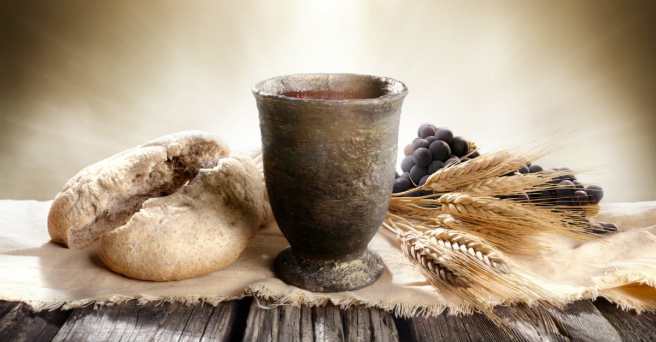
The act of taking communion is one of the most sacred acts that a believer in Jesus can do. We are told to do it often, even as often as every time we gather together with other believers. Jesus celebrated it with His disciples the night before He carried out the very act it represents. But this was not the first the symbolism of communion was given in the Bible. There are several we can point to but I’d like to focus in on one passage out of the book of Genesis. To understand the context of this passage lets rewind a bit. Abraham had just rescued Lot and many others from enemies in the region. The mysterious figure of Melchizedek, King of Salem, came out to meet Abraham to celebrate the victory. Here’s the passage:

And Melchizedek king of Salem brought out bread and wine; now he was a priest of God Most High. He blessed him and said,

“Blessed be Abram of God Most High,
Possessor of heaven and earth;
And blessed be God Most High,
Who has delivered your enemies into your hand.”

He gave him a tenth of all. The king of Sodom said to Abram, “Give the people to me and take the goods for yourself.” Abram said to the king of Sodom, “I have sworn to the Lord God Most High, possessor of heaven and earth, that I will not take a thread or a sandal thong or anything that is yours, for fear you would say, ‘I have made Abram rich.’

Genesis 14:18-23 NASB

#1-Bread and Wine: While this was a common feature in most ancient meals, it’s symbolic importance can it be ignored. They became integral parts of the Passover meal, which was a foreshadowing in itself of the very thing that the communion represents, the death of Jesus our Messiah. Jesus himself used these two elements to represent His sacrifice during the last supper.

#2-High Priest: Melchizedek is named as the priest and king of Salem. This is the city that would later become Jerusalem. Only one other figure in all of the Bible is mentioned as being both priest and king…Jesus. In Israel, those two positions were kept separate. But in Jesus, they came together as one as Jesus became both our High Priest and the King of kings. The duty of the priest was to mediate or make peace, between God and man.  Communion represents the ultimate act that brought that peace for us. Instead of daily and yearly sacrifices, Jesus made one final sacrifice for all time.

#3-God’s deliverance: In this passage, God delivered Abraham, Lot, and the people from their captors. God did the same thing on a bigger scale in the rescue from slavery in Egypt remembered in the Passover meal. God did it again in an even bigger way through the sacrifice of Jesus on the cross. Because of Him, we have been delivered from the bondage of sin and death.

More than those connections to the symbolism in communion, Abraham’s response in the passage can instruct us on our response to God’s grace in our own lives. Abraham’s heart was full of gratitude, not greedy for gain. He must have realized that God’s victory had been won and there remained nothing more precious for him to possess. Here is what Matthew Henry’s commentary says on the matter:

Observe the king of Sodom’s grateful offer to Abram, Give me the souls, and take thou the substance. Gratitude teaches us to recompense to the utmost of our power, those that have undergone fatigues, run hazards, and been at expense for our service and benefit. Abram generously refused this offer. He accompanies his refusal with a good reason, Lest thou shouldest say, I have made Abram rich: which would reflect upon the promise promise and covenant of God, as if He would not have enriched Abraham without the spoils of Sodom. The people of God must, for their credit’s sake, take heed of doing any thing that looks mean or mercenary, or that savors of covetousness and self-seeking. Abraham can trust the Possessor of Heaven and earth to provide for him.

Communion is a celebration of that ultimate and fully sufficient provision from the Possessor of Heaven and earth. Praise God for His amazing love!

Peace in Christ brothers and sisters

Would Jesus be allowed in your Bible Study?

BibleStudy-1

Have you ever stopped to think about how Jesus would respond if He walked into your Bible study gathering? Would He feel welcome? Would He be honored by what He saw? Those may seem like rhetorical questions, but they really aren’t. I think that there are Bible studies, or “small groups” as they are often labeled, out there that would not like Jesus to walk through the door. Or they would at least be in for quite the shock at what He may have to say. Why is that the case for some groups out there? Maybe because they are misrepresenting Him. Maybe because they are straying from the foundations of their faith. Maybe because they act as an exclusive group. Maybe the Bible isn’t really much of the focus in the first place. Maybe Jesus isn’t even their focus.

Allow me to give some examples of what I’m referring to. I know groups where alcohol is a big part of the gathering (and it’s not for taking communion). I know groups that are pretty closed off to outsiders or those with different views from the majority of the group (Heaven-forbid a non-believer come to Bible study). I’ve been to Bible study groups that talk about most anything other than the Bible (it’s more of a social club). I know of groups that are so legalistic and focused on the Old Testament that Jesus is rarely (if at all) mentioned (The irony).

What would Bible Study with Jesus look like? I think we can know the answer to that by taking a look at His life. Read about what He did when He was with people. Jesus was constantly talking about the word. His mission was to gather outsiders and love on people. Jesus brought the liberating truth. He prayed, He served, and He inspired hope. He saw people for who they were and called them into something so much better. He loved the least of society instead of turning His back on them. Jesus lead and loved from the heart of God. I think Jesus-inspired Bible studies would look something like what they did in the first century when those who had experienced Jesus met with one another.

They devoted themselves to the apostles’ teaching and to fellowship, to the breaking of bread and to prayer. Everyone was filled with awe at the many wonders and signs performed by the apostles. All the believers were together and had everything in common. They sold property and possessions to give to anyone who had need. Every day they continued to meet together in the temple courts. They broke bread in their homes and ate together with glad and sincere hearts, praising God and enjoying the favor of all the people. And the Lord added to their number daily those who were being saved.

Acts 2:42-47 NIV

I don’t think it’s ever a bad idea to do a little reflection on our churches, our gatherings, and our relationships to make sure they are reflecting the One whom we love. Who knows…a new shot zeal could rise up among us. We could get a new sense of purpose for why we meet and why we do what we do. That sense of belonging in Christ and the new identity that we have could be revived among us. Our eyes could be turned more to those around us, to the hurting, the broken, and the lost. A new devotion to the mission of love and truth could spring up in our hearts. We could put Jesus more on display for each other, and especially for those who don’t know Him. Who wouldn’t want that?

Peace in Christ brothers and sisters!

Faith of Women Series: the Sinful Woman

Just as this series began with a story of redemption, I thought it appropriate to end with one, since that is what the entire story of the Christian faith is about. Our series started with Rahab, a woman with a less than good reputation. But she proved to be instrumental in the story God was unfolding through the people of Israel. The woman of faith we are focusing on today was an outcast of Jewish society. Much like Rahab, she would not be the top choice in many churches. But she is nonetheless, an example for followers of Jesus to aspire to. Here’s the story out of Luke.

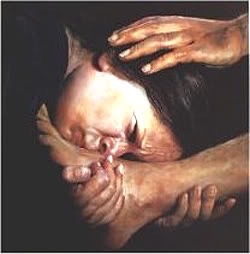
“One of the Pharisees asked him to eat with him, and he went into the Pharisee’s house and reclined at table. And behold, a woman of the city, who was a sinner, when she learned that he was reclining at table in the Pharisee’s house, brought an alabaster flask of ointment, and standing behind him at his feet, weeping, she began to wet his feet with her tears and wiped them with the hair of her head and kissed his feet and anointed them with the ointment.” Luke‬ ‭7:36-38‬ ‭ESV‬‬

In Luke 7 a broken, sobbing, unnamed woman enters the home where Jesus is dining. She anoints his feet with oil and tears, wiping them with her hair. The men present talk about her like she isn’t even there. They are offended by the “sinner” in their presence.

Much debate exists over who the woman in this story is. I would caution anyone to rush into claiming to know her identity. The safest thing to do is to remain silent when the Bible is silent. The question of who she was must be left unanswered. Two answers have, however, been suggested by various sources. They are only theories though. One suggests she was Mary of Magdalene. The belief adopted by some interpreters, and more or less generally received in the Church of Rome, is that the woman was none other than Mary the sister of Lazarus. Both of these assumptions are quite a stretch with no basis of supporting information from the gospel texts. If the name had been important, the Lord would have impressed it on Doctor Luke to include it. The point of this story is not her name, it’s her heart.

“Now when the Pharisee who had invited him saw this, he said to himself, “If this man were a prophet, he would have known who and what sort of woman this is who is touching him, for she is a sinner.”” Luke‬ ‭7:39‬ ‭ESV

We know only one thing about who this woman was: she was a sinner, That label, in this context, denotes that she was a woman well known for her lewd behavior. More than likely she was a prostitute due to the way the phrase is used elsewhere in the Bible. But no matter how much others wanted to label her that way, she wouldn’t allow it to define her destiny. In this concise passage from Luke’s gospel, we see the entirety of God’s mission in play.

“For while we were still weak, at the right time Christ died for the ungodly. For one will scarcely die for a righteous person—though perhaps for a good person one would dare even to die— but God shows his love for us in that while we were still sinners, Christ died for us.” Romans‬ ‭5:6-8‬ ‭ESV‬‬

This woman saw something special in Jesus. She saw a necessity that couldn’t be filled in any other way. Jesus was her freedom. Her past would not deter her. Quite possibly she had been involved in her sinful lifestyle the day of this life-altering encounter. But sin requires a savior. The holiness of Jesus did not deter her, it attracted her. Faith overcame her failures.

“Then turning toward the woman he said to Simon, “Do you see this woman? I entered your house; you gave me no water for my feet, but she has wet my feet with her tears and wiped them with her hair. You gave me no kiss, but from the time I came in she has not ceased to kiss my feet. You did not anoint my head with oil, but she has anointed my feet with ointment. Therefore I tell you, her sins, which are many, are forgiven—for she loved much. But he who is forgiven little, loves little.” And he said to her, “Your sins are forgiven.” Then those who were at table with him began to say among themselves, “Who is this, who even forgives sins?” And he said to the woman, “Your faith has saved you; go in peace.”” Luke‬ ‭7:44-50‬ ‭ESV‬‬

Who among us would go to such great lengths to show Jesus our love for Him? First, she had to recognize her sin and then she had to seek out the cure. Some sources suggest she was a gentile woman. Whether she was or wasn’t she still followed Jesus into the home of a Pharisee. That’s a huge no-no for a “sinful” woman. She could have very well been sealing her own death sentence. Instead of finding death, she found new life. And that’s exactly what faith does. It recognizes our need for Jesus and follows Him into any unknown danger. Her love for Him steered her course, not because she was worthy of Him, but because she knew she wasn’t and He chose her anyways. The same is true for all of us. No one in history ever deserved to kiss His feet or shower them in their tears. Which is precisely why her faith and His love are so amazing.

*I have enjoyed so much going through this series. We’ve looked at some pretty amazing women from the past, who’s faith exceeded our own. I just want to give a huge thank you to all the women in my life who have loved Jesus and followed Him into the unknown and spend their lives trying to make Him known. I’m a blessed man. Take the time to thank the women of faith in your own life. They are so important and are far too often overlooked. Thank you also to all the women of faith who have been reading this series. You’re changing the world around you!

Peace in Christ brothers and sisters

The New Dawn

Where have your convictions gone?

Laying dormant below the surface.

Waiting to arise but held in place.

Pushed to a place no one will find them.

They’ve been gone so long not even you may recognize them.

Move aside.

Let them break through.

Relinquish the self inflicted chains that bind them.

Embrace your true identity.

Take the first step back onto the path of life.

The One who breathed life into you before, can do it once more.

Awaken to the new dawn.

See the light pierce the deep darkness you’ve been wandering through.

Hear the One who spoke you into existence speak soft words of love once again.

You’ve been closed off from Him for so long.

But He’s never left your side.

Bring your worst and watch it melt away in the presence of His forgiveness.

“Welcome home my child,” He says, “Oh how I’ve missed you.”

Don’t trade in the power

Good day everyone. Today I wanted to write a follow up to my last post. If you haven’t read it yet give it a click here and check it out. It’ll definitely help this content make more sense.

If you take note of all of the incredible things people did in the Bible, the inescapable connection you’d notice is that none of them did it on their own power. God brought the animals to Noah’s ark. God directed Moses in the exodus of Israel from Egypt. God led Joshua into the promised land to take possession of it. God empowered each of the Judges who rescued Israel. God’s Spirit filled the prophets enabling them to work wonders. God’s Spirit gave birth to the church and used them to spread a world wide revival. Wonders, miracles, changed lives, raised lives, parted waters, walls crumbling, nations preserved, and hearts set free. All of these things were only possible through God’s Spirit and the power that comes along with it.

Every power possessed by humanity is extremely limited, and often ill directed, unless envisioned and driven by the Spirit of God. But even well meaning followers of God have gotten sidetracked down through the ages. Really, it’s easy to do. Even the most ardent Christian can find themselves living self reliant and disconnected.

“I am the vine; you are the branches. Whoever abides in me and I in him, he it is that bears much fruit, for apart from me you can do nothing.” John‬ ‭15:5‬ ‭ESV‬‬

Few chapters in all of the Bible depict God’s design for our lives quite like John chapter fifteen. Jesus illustrates our relationship with Him like that of a grape vine. All branches receive their nutrients from the vine itself. Whenever the connection between a branch and its roots are severed it begins to die. As long as the connection stays strong however, that branch can flourish year after year. The same is true for any tree or plant. And Jesus used that imagery to show us how to live a full life.

If you want to know the key to living a powerful life, it’s right there in that chapter. It’s captured in one word…abide. To abide is the state of being in something. In this case, Jesus is referring to Himself. The powerful life is one lived in Jesus. In other words, it’s a life lived like Him, through Him, and for Him. Paul said it in a different way.

“I have been crucified with Christ. It is no longer I who live, but Christ who lives in me. And the life I now live in the flesh I live by faith in the Son of God, who loved me and gave himself for me.” Galatians‬ ‭2:20‬ ‭ESV‬‬

Jesus is our example, our source, and our life. Far too many of us trade in that life for empty customs and traditions. It doesn’t take a non-believer to live an impotent life absent of Spiritual zeal and power. So many try to find God through their own means and their own interpretations. Some put so much emphasis on laws and rituals yet pay no regard to the law of love behind them. Look at all the people who Jesus confronted during His time on Earth. They were often rigid, greedy, self righteous, nitpicking control freaks who were absent of love. They filled the coffers at the synagogue yet disregarded the needy on their way in. In Mathew 23 Jesus calls these types of people out for being hypocrites by tithing all sorts of things yet neglecting the ‘weightier matters of the law: justice and mercy and faithfulness.‘ We should never seek the life of those living opposed to Jesus and that’s exactly what will happen when the letter of the law outweighs the love of the Law-giver in our hearts.

“If you keep my commandments, you will abide in my love, just as I have kept my Father’s commandments and abide in his love. These things I have spoken to you, that my joy may be in you, and that your joy may be full. This is my commandment, that you love one another as I have loved you. Greater love has no one than this, that someone lay down his life for his friends.” John‬ ‭15:10-13‬ ‭ESV‬‬

There it is. Love others by laying down our lives. That level of love in our lives is a good indicator of just how well we’re connected to the Vine…to Jesus. Feeling disconnected lately? Me too. The good news is, unlike the branch of a grapevine, our connection to Jesus can be mended. His love can be reborn in our hearts. We just need to stop abiding in the wrong things.