 Seven Feasts
Year-long Celebration
God’s Redemption
One Messiah
This is the fourth and last post looking at how God chose to paint a picture of the Messiah through the book of Leviticus. In the three previous posts, I talked about the process of cleansing lepers, the Day of Atonement, and the significance of blood in the Old Testament system. This post will be a little different. In Leviticus, chapter 23 appears an outline of the Biblical feasts. Instead of doing seven separate posts about each one, I’m going to lay out simple historical, prophetic, and spiritual connections to all seven in this one post. For that reason, this post will be quite lengthy but also concise and organized. Let’s begin!
Some of these feasts I’ve already posted about like Tabernacles, Trumpets, Passover and the Day of Atonement. But before I go more into each feast I’d like to make a few statements as to why I believe this is important for all Christians to know. Not only is it my opinion as a follower of Christ, but the Bible itself provides some powerful reasons for studying, understanding, and celebrating the Seven Festivals. Here are twelve of those reasons:
- The Feasts are in the Bible, and all the Bible is inspired by God. (2 Timothy 3:16-17)
- The Feasts are a shadow of things to come that teach us about the Messiah. (Colossians 2:16-17, Hebrews 10:1)
- God gave the Feasts so we could learn and understand God’s plan of redemption for the world and our personal relationship to Him. (Romans 15:4)
- All of the Festivals are, at the same time, both historical and prophetic, and mean more to Christians than Jews.
- All of the Festivals teach about the Messiah (Jesus Christ).
- All of the Festivals teach about your personal relationship with God and how you are to walk with Him as you grow in the knowledge of Him, from being a baby believer to a mature believer.
- We are “grafted in” as God’s people through Christ, called to follow God’s word. (Romans 11:19)
- These are God’s Feasts, not the Jewish feasts. (Leviticus 23:1)
- Christ himself celebrated all of them as well as the 1st-century church. (Gospels and Acts)
- The feasts bring about knowledge of what God has called His people (not just Jews) to do to celebrate and worship Him.
- God’s Holy Feasts can take you deeper in your relationship with God. They have such significant meaning and unlock the meaning of scripture in an incredible way.
- God is a “calendaring” God, which is demonstrated by major events in Biblical History occurring on or around Feasts and how they reveal God’s redemptive plan for mankind.
The Festivals of the Lord found in Leviticus, chapter 23, were given to us by God so His people could understand the coming of the Messiah and the role that the Messiah would play in redeeming and restoring both man and the earth back to God following the fall of Man in the Garden of Eden. The Festivals are divided into two major portions, depending upon whether they occur in the spring or the fall. The Spring Festivals teach about the First Coming of the Messiah, and the Fall Festivals teach about the Second Coming of the Messiah.
The Apostle Paul, in Colossians 2:16-17 refers to the Feasts as a “shadow of things to come.” The first four Feasts or Festivals, which are Passover, Unleavened Bread, First Fruits, and Pentecost, primarily teach about the significant events in the First Coming of the Messiah and why these events were an important part of God’s redemption of man. Pentecost marked the beginning of the Church (body of Christ).
The last three Feasts, which are the Feast of Trumpets, also known as Rosh Hashanah, the Day of Atonement (Yom Kippur), and the Feast of Tabernacles or Booths (Sukkot), give us a fascinating insight concerning important events that surround the Second Coming of the Messiah. God gave the Festivals to teach about the death, burial, and resurrection of the Messiah, the empowering of the believers by the Holy Spirit, the resurrection of the dead, the coronation of the Messiah, the wedding of the Messiah, the Millennium, and much more.
I want to demonstrate the incredible relevance of these feasts in three ways. First, I’d like to give a simple (and I mean simple) quick reference chart showing the meanings of all seven feasts. Second, I’ll provide some more scripture references for your own personal study if you so wish to join the journey. And third, I’ll break down three Hebrew words connected to the feasts.
| Feast |
Historical meaning |
Messianic meaning |
Spiritual meaning |
| Passover |
Israel’s deliverance out of Egyptian bondage |
Death of Christ on the Cross |
Repent and trust by faith in the shed blood of Jesus. Saved by the blood |
| Unleavened Bread |
The going out of Egypt in haste after the tenth plague |
The burial of Jesus along with our sin |
Sanctification and separation from evil |
| First Fruits |
Crossing the Red Sea and crossing into the Promised Land. |
The resurrection of Jesus and ascension to heaven |
Walking in newness of life |
| Pentecost |
Giving the Commandments at Mount Sinai (Commissioning Israel) |
Pouring out of the Holy Spirit and birth of the Church (Commissioning followers of Jesus) |
Immersion (baptism) in the Holy Spirit and faith in God |
| Trumpets |
Jewish New Year |
The resurrection of the dead and Rapture of the believers |
Hear the calling of God for our lives just as Jesus’ sheep hear His voice |
| Day of Atonement |
The priest entered the Holy of Holies and Cleansing of the people’s sins |
The day of Christ’s Second Coming |
Surrendering ourselves to God so that we may live in His Presence |
| Tabernacle |
Entering the Promised Land/Great Rejoicing and when Jesus became the tabernacle of God’s fullness here on earth |
The Messianic Era/Millennium where we will live in the presence of Christ again after He returns |
A daily and eternal rest in the Messiah. |
So that you don’t take my word for anything in the first chart, I’d like to provide you with another chart with scripture references from the Old and New Testaments. Bear in mind that this is not an exhaustive study and there are so many more verses and stories in the Bible that unlock the importance of these feast days. But this will get you started.
| Feast |
Scripture…Old and New Testament |
| Passover |
Exodus 12:14, 28-50 John 2:23 and 3:1-17
Leviticus 23:4-8 Luke 22:7-20
Joshua 5:10-11 Mark 14
Ezra 6:14-22 Matthew 26
Numbers 9:1-2, 15-23
2 Chronicles 30 and 35 |
| Unleavened Bread |
Leviticus 23:4-8 Romans 6:1-23
Exodus 12, 13, 23:15, 34 1 Corinthians 5:1-8
Numbers 28:16-18
Deuteronomy 16
|
| First Fruit |
Leviticus 23:9-14 1 Corinthians 15
James 1:18 |
| Pentecost |
Exodus 12:6,12 and 19:1, 11 Acts 2:1-4
Leviticus 23:15-22 1 Corinthians 16:7-8
Acts 20:16
John 14:15-26 |
| Trumpet |
Leviticus 23:23-25 Revelation 8:6-11:19
1 Thessalonians 4:15-17 |
| Yom Kippur |
Leviticus 23:26-32 Revelation 17-20
Leviticus 16 |
| Tabernacles |
Zechariah 14:16 Revelation 7:9-10 (Lev 23:40)
Leviticus 23:33-44 John 7:2-11
1 King 8:2,65 Revelation 20-22
Nehemiah 8:1-3
Ezra 3:1-5 |
| General Bible Verses |
1 Kings 19:18 Mark 7:6-9
Ezekiel 8:13-14 Colossians 2:8
Deuteronomy 12:3-4 1 Corinthians 10:21
Ezekiel 20:18-21 Matthew 5:17, 18 |
The third and last thing I’d like to give you is a word study. Below are three important Hebrew words and what they say about these Holy Feasts.
|
Translating the word “FEAST” in Leviticus 23
|
|
MO’ED
|
In verse 2, the word for feast is the Hebrew word ‘mo’ed‘- “Speak unto the children of Israel, and say unto them, concerning the feasts (mo’ed) of the Lord…” The word ‘mo’ed‘ means an appointment, a fixed time or season, a cycle or year, an assembly, an appointed time, a set time or exact time. By understanding the Hebrew meaning of the English word “feast”, we can see that God is telling us that He is ordaining a “set time or exact time or an appointed time” when He has an appointment with humanity to fulfill certain events in the redemption. |
|
CHAG
|
In verse 6 is another Hebrew word translated as “feast”- “And on the fifteenth day of the same month is the feast (chag) of unleavened bread…” The Hebrew word ‘chag‘, which means a “festival”, is derived from the Hebrew root word ‘chagag‘, which means to move in a circle, to march in a sacred procession, to celebrate, dance, to hold a solemn feast or holiday. God gave the Festivals as cycles to be observed yearly so that, by doing them, we can understand God’s redemptive plan for the world, the role that the Messiah would play in that redemption, and our personal relationship to God concerning how we grow from a baby Bible believer to a mature Bible believer. |
|
MIQRA
|
In Leviticus 23:2 it is written, “…the feasts of the Lord, which ye shall proclaim to be holy convocations…” The Hebrew term translated as convocation in Leviticus 23:2,4 is ‘miqra‘, which means “a rehearsal“. God gave the Festivals to be yearly “rehearsals” of the future events in the redemption. Because God gave the “rehearsals” to teach us about the major events in the redemption, if we want to understand those events, then we need to understand what God was teaching us by these rehearsals. |
God is so awesome to tell us the full story of His redemptive plan! Through the feasts, we get to celebrate grace, redemption, God’s goodness, and the Messiah all year long! What a great New Year’s resolution. To go deeper with Jesus through His feasts.
Peace in Christ brothers and sisters








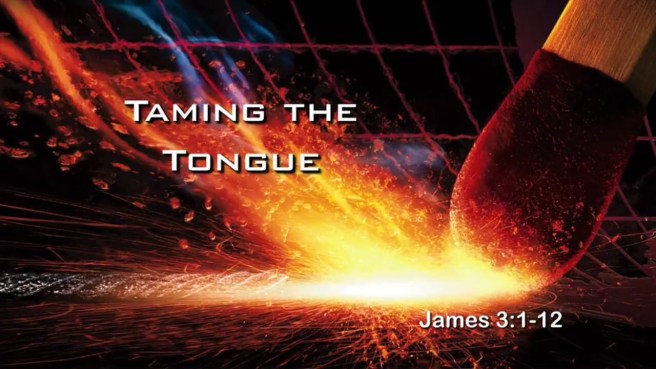 Thanks to the technology revolution the tongue is not only physical, but it is also digital. Texting and social media are the main forms of communication in today’s modern society. It has allowed for rapid and frequent connection with friends and loved ones alike. The exchange of ideas has become as quick as a click. Along with all the good it has also brought on a new way of slandering, gossiping, and criticizing others, by saying things we’d never say in front of others.

 It doesn’t seem to matter what store we are in, my kids ask for something. They don’t even need to know what it is for them to beg and plead for it. It’s frustrating. Very very frustrating. I’m sure I did it as a child. In fact, I remember wanting to go to the stores with my grandma because I knew she’d get me something. My kids are the same way. As are the rest. Because humans are that way. Young and old, we want stuff. Most of which we don’t need. But stuff is fun, attractive, and entertaining.
 Christianity is an active faith. One that stirs the heart into motion. It moves the believer towards a community of love, not just with friends and family, but with the despised and destitute also. For the Christian, family has no skin tone nor nationality. Shameful pasts can be erased in a moment and acceptance is found when a humble heart kneels at the foot of a cross. No one is unwelcome and no one is too dirty for the cleansing power of God’s grace. The Christian sees everyone as equal because he or she has come to terms with their own brokenness and need. We are all light years from God’s perfection, even the best among us. That is why God has invited us all to go to those whom the world has beaten down and rejected. Three things should always remain open for the Christian: their home, their arms, and their hands. The good and faithful servant reaps a harvest of love no matter where they find themselves and no matter the cost.


